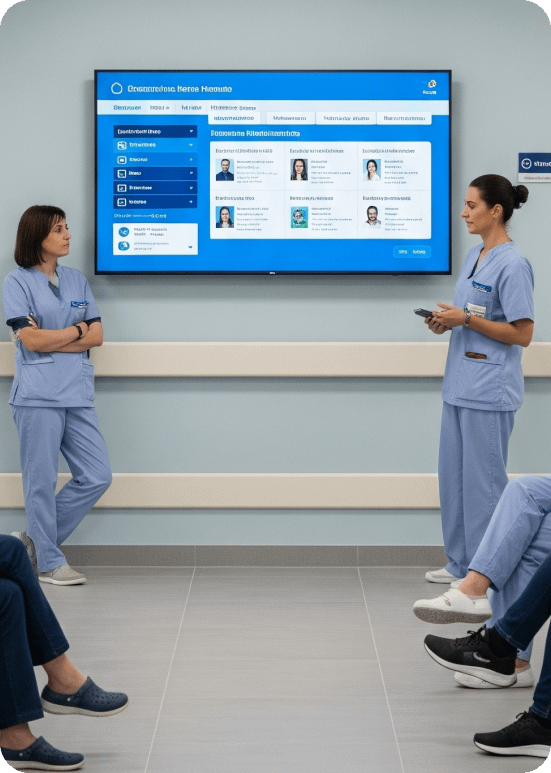
10 Best Digital Signage Software for Hospitals in 2026

What makes the best digital signage software for hospitals in 2026 different from ordinary screen solutions used in retail or offices? In healthcare, digital signage is not decoration, it directly supports patient communication, operational clarity, and safety. According to a 2024 Statista report, the global digital signage market is projected to surpass $32 billion by 2026, with healthcare listed as one of the fastest-growing sectors. Meanwhile, a Press Ganey patient experience study shows that clear in-hospital communication significantly improves patient satisfaction scores. Hospitals are investing in smarter platforms because reliable communication improves trust.
In this article, you’ll learn which digital signage software solutions are truly hospital-ready, how they compare in reliability and security, and which platforms offer offline protection, emergency alerts, and enterprise scalability. We’ll also break down practical benefits, from reducing perceived wait times to improving internal staff communication, so you can confidently choose the right solution for your hospital in 2026.
What Makes Digital Signage Software for Hospitals Truly “Hospital-Ready”?

A frozen screen in an emergency room isn’t just a glitch, it’s a breakdown in trust, which is exactly why understanding what makes digital signage software for hospitals truly hospital-ready matters more than ever.
Hospitals operate in high-pressure, life-critical environments where digital signage solutions must perform flawlessly across healthcare facilities, not just display content, but support communication, compliance, and patient confidence.
Before diving into the top platforms, it’s important to recognize that hospital digital signage has very different demands compared to retail or cafés. Healthcare environments require:
- Unwavering reliability: 99.9% uptime is essential, a blank screen in a waiting area increases anxiety and looks unprofessional.
- Simplicity for staff: Nurse managers, HR teams, and administrators should update content in seconds, without IT support.
- Enterprise-level power: The system must handle secure scheduling, department-specific messaging, and mass emergency alerts seamlessly.
According to a 2023 Deloitte healthcare technology report, 75% of patients say clear communication improves their overall care experience. In high-stress healthcare facilities, reliable digital signage software directly supports that expectation.
With those critical standards in mind, here are the 10 best digital signage solutions designed to meet the complex needs of hospitals in 2026, built for performance, security, and real-world healthcare operations.
Which Digital Signage Software for Hospitals Are the Top 10 Solutions in 2026?
When screens guide anxious families, support staff communication, and broadcast life-saving updates, choosing the right platform becomes mission-critical, which is exactly why identifying the top digital signage software for hospitals requires a healthcare-specific lens.
Unlike retail comparisons, this evaluation looks at how signage software performs inside a medical facility where uptime, security, and emergency alerts directly affect patient care and staff coordination.
We assessed each solution based on 99.9% reliability, offline caching to prevent black screens, emergency broadcast override, enterprise security architecture, scalability across hospital systems, hardware flexibility, integration with healthcare providers’ systems, and ease of use for non-technical teams managing digital signage content.
According to HIMSS, over 80% of healthcare providers prioritize secure digital infrastructure to improve patient experience and operational resilience.
That’s why hospital digital signage must go far beyond basic digital displays. With that framework in mind, here are the top solutions ranked for healthcare performance in 2026.
1. AIScreen

When reliability affects patient care and communication can’t fail, AIScreen stands out as the best digital signage software for hospitals in 2026.
Designed specifically for enterprise-grade environments, AIScreen delivers hospital-grade uptime with advanced offline caching, meaning even during network outages, waiting room digital signage never turns into a black screen. In a medical facility, that stability directly impacts patient experience.
Why AIScreen leads hospital digital signage in 2026:
- Hospital-grade uptime: Engineered for 24/7 performance across dense digital signage networks.
- Offline caching mode: Screens continue playing digital signage content even if internet drops.
- Emergency alerts broadcast override: Instantly override all digital displays across departments during critical events.
- Centralized cloud CMS: Manage single clinics or multi-location hospital systems from one dashboard.
- Granular user permissions: HR, nurse managers, and department heads update content without IT access risks.
- Enterprise security architecture: MDM compatibility, secure encryption, role-based access.
- Real-time scheduling: Display health education updates, wayfinding, or patient wait times instantly.
- Hardware flexibility: Works across smart TVs, media players, and enterprise devices for smooth digital signage deployment.
- Scalable infrastructure: From one medical facility to nationwide healthcare providers.
According to Deloitte’s Digital Health Survey, 76% of patients say clear communication inside hospitals reduces anxiety. AIScreen supports enhancing patient care by ensuring messaging is always visible, timely, and secure.
From digital menu boards in cafeterias to emergency alerts across surgical wings, AIScreen supports every layer of digital signage for hospitals, without overwhelming staff. Its intuitive interface ensures hospital digital signage remains powerful yet simple enough for daily operational use. AIScreen has pre made templates and in built canva apps that help you make the screen looks more professional.

Best For: Healthcare providers and hospital systems that require enterprise security, maximum uptime, and scalable digital signage networks focused on improving patient care and patient experience.
2. Kitcast

When simplicity and stability are top priorities, Kitcast offers a streamlined signage software experience optimized heavily for Apple TV environments.
Kitcast is known for clean UI and smooth playback, making it suitable for waiting room digital signage and non-critical patient communication displays.
Pros:
- Very intuitive dashboard
- Strong Apple TV optimization
- Stable 4K playback
- Enterprise security support
Cons:
- Premium pricing
- Limited deeper healthcare workflow integrations
3. NoviSign

For hospitals exploring IoT triggers and interactive use cases, NoviSign stands out with sensor-based automation capabilities.
Its strength lies in IoT integrations, enabling digital displays to change based on motion sensors or RFID triggers. However, complexity can increase for non-technical healthcare staff.
Pros:
- Strong IoT & sensor integrations
- Interactive kiosk capabilities
- Wide device compatibility
Cons:
- Higher learning curve
- Interface can feel cluttered
4. ScreenCloud

If hardware flexibility is your priority, ScreenCloud supports a broad range of devices and integrations.
It works well in mixed hardware environments where healthcare providers need a unifying platform for varied digital displays.
Pros:
- Large app marketplace
- Hardware agnostic
- Google & Microsoft integrations
Cons:
- Per-screen pricing scales quickly
- Fewer healthcare-specific optimizations
5. Yodeck

For small clinics operating under tight budgets, Yodeck’s Raspberry Pi model is attractive. While cost-effective, Raspberry Pi hardware may not meet enterprise reliability expectations for larger hospital systems.
Pros:
- Budget friendly
- Free single screen plan
- Preconfigured hardware options
Cons:
- Hardware fragility concerns
- Limited enterprise scalability
6. OptiSigns

OptiSigns focuses on Fire TV compatibility and mobile content control. It works well for digital menu boards or break room digital displays but may face stability challenges in dense hospital networks.
Pros:
- Affordable
- Fire TV compatibility
- Mobile management
Cons:
- Consumer-grade hardware reliance
- Limited enterprise scheduling depth
7. Rise Vision

Originally education-focused, Rise Vision brings strong safety templates and alert systems to healthcare.
However, branding flexibility can feel limited for larger hospital digital signage deployments.
Pros:
- Strong template library
- Safety & alert focused
- Education crossover experience
Cons:
- Limited deep hospital customization
- Design feels education-centric
8. TelemetryTV

For data-driven hospital command centers, TelemetryTV excels at live dashboards and analytics. It supports granular permissions but often requires IT-heavy management.
Pros:
- Excellent live data dashboards
- Strong permissions control
- Data integration strength
Cons:
- Steep learning curve
- Complex interface
9. Spectrio

Spectrio emphasizes ready-made digital signage content and managed services. It helps healthcare facilities maintain active screens without in-house design teams.
Pros:
- Large syndicated content library
- Managed service model
- Social media integrations
Cons:
- Licensing cost
- Reduced layout flexibility
10. Raydiant

Raydiant’s retail background makes it suitable for hospital cafeterias and gift shops. It handles digital menu boards well but offers fewer patient-care-focused features.
Pros:
- Retail-style tools
- Employee recognition apps
- Easy setup
Cons:
- Limited patient care optimization
- Retail-oriented feature focus
How Do the Top Digital Signage Software Solutions for Hospitals Compare in 2026?
When hospital administrators compare platforms, the real question isn’t features; it’s which digital signage software solution truly performs under healthcare pressure in 2026.
To make that decision easier, here’s a structured comparison table focused on reliability, ease of use, offline mode, emergency alerts, security readiness, scalability, and ideal hospital use cases. Use this chart to quickly identify which solution fits your hospital’s specific technical environment and budget.
Comparison of Top Digital Signage Software for Hospitals
| Software | Primary Platform Support | Best For… | Key Advantage |
|---|---|---|---|
| 1. AIScreen | Android, WebOS, Tizen, Windows, Fire TV | Multi-Hospital Systems & Enterprise Healthcare | Reliability, Offline Mode & Security Readiness |
| 2. Kitcast | Apple TV, Android, Fire TV | Mission-Critical Displays | Reliability & Ease of Use |
| 3. NoviSign | Android, Windows, Chrome | IoT / Sensor Triggers | Widget Variety |
| 4. ScreenCloud | Hardware Agnostic | Legacy Hardware Mix | App Store |
| 5. Yodeck | Raspberry Pi | Small Clinics (Budget) | Free 1-Screen Plan |
| 6. OptiSigns | Fire TV Stick | Break Rooms | Mobile App Management |
| 7. Rise Vision | Chrome, Windows | University Hospitals | Safety Templates |
| 8. TelemetryTV | Linux, Windows, Chrome | Command Centers | Live Data Dashboards |
| 9. Spectrio | Proprietary / Android | Waiting Rooms | Syndicated Content Library |
| 10. Raydiant | Proprietary / Fire TV | Hospital Cafeterias | Retail-Style Apps |
In terms of overall healthcare readiness, AIScreen ranks highest in reliability, scalability across hospital systems, offline protection against black screens, and enterprise security architecture, making it particularly suitable for complex digital signage networks inside large medical facilities.
Why Isn’t “Good Enough” Digital Signage Software for Hospitals Enough for Healthcare?

When a patient walks into a waiting room already anxious about test results or surgery, even a frozen screen can amplify stress, which is exactly why asking why “good enough” digital signage software for hospitals isn’t enough for healthcare is a critical conversation.
Hospitals are zero-tolerance environments. In a healthcare setting, downtime doesn’t just look unprofessional, it affects internal communications, compliance messaging, and patient trust.
Digital signage today must perform flawlessly inside medical offices, waiting room areas, and high-traffic corridors where digital screens guide, inform, and reassure vulnerable patients.
The Cost of Complexity
The cost of complexity shows up fast in a busy waiting room or medical office where staff don’t have time to learn complicated dashboards. If updating digital signage content takes too long, it simply won’t happen, and outdated messaging can confuse patients in a sensitive healthcare setting.
Complex tools slow the marketing department, delay internal communications, and create friction across multiple waiting room screens. In healthcare, simplicity ensures communication stays clear, current, and consistent.
Security and Stability
Security and stability are essential in any healthcare setting where networks are tightly protected. Unstable digital signage today can introduce vulnerabilities or cause downtime that affects patient trust.
Secure signage software must support MDM compatibility, granular user permissions, and strong uptime guarantees. In waiting room and medical office environments, reliable digital screens protect communication flow without adding operational risk.
What Does an Expert Say About Digital Signage Software for Hospitals?
When patients are sitting in a waiting room watching the clock, every minute feels longer, which is why understanding what experts say about digital signage software for hospitals matters more than most realize.
Research published in the Journal of Healthcare Management shows that effective digital signage can reduce perceived wait times by up to 35%, while studies from PwC highlight that improved communication significantly lowers patient anxiety levels.
In a healthcare environment, digital signage isn’t decoration, it’s a patient-care communication tool.
As Alex Chyrva, explains, when hospitals use reliable signage software to deliver clear updates, health education, and timely announcements, they strengthen patient trust and operational clarity. The key, however, is reliability, because in medical settings, even brief downtime can undermine communication when it matters most.
How Can Digital Signage Software for Hospitals Improve Patient Care and Experience?
When hospitals move beyond comparing features and start focusing on outcomes, the real question becomes how digital signage software for hospitals can improve patient care and experience in measurable ways.
The answer lies in using digital screens not just for announcements, but for patient engagement, education, navigation, and internal coordination, all managed from one platform that simplifies content creation without requiring deep technical expertise.
1. Reduce Perceived Wait Times
Long waits feel even longer in a hospital waiting room, and one of the most effective ways to reduce perceived wait times is by keeping patients mentally engaged rather than watching the clock. Psychology tells us that occupied time feels shorter than unoccupied time.
By displaying health tips, calming visuals, staff introductions, or real-time appointment queue updates, hospitals can dramatically improve the waiting room experience and boost patient satisfaction. Engaging content keeps attention away from the clock.
With flexible scheduling inside an all in one platform, hospitals can rotate morning rush updates, pediatric-friendly visuals, or late-night quiet loops across existing devices without disruption. This approach strengthens patient engagement while improving communication consistency across medical clinics.
2. Effective Wayfinding
Hospitals are complex environments, and poor navigation increases stress. Effctive wayfinding signage, including interactive maps, multilingual department directories, and live directional updates, helps patients reach the right location faster.
Real-time content updates mean changes in room assignments or department relocations can be reflected instantly across screen sharing systems or lobby displays.
Whether hospitals use their own hardware or mixed existing devices, centralized control from one platform ensures accuracy and clarity across all medical clinics.
3. Internal Staff Communication
Digital signage isn’t only for patients, it’s a powerful internal staff communications tool. Screens in break rooms and staff-only areas can display shift changes, HR updates, compliance reminders, and emergency alerts without relying on email, supporting strategies often discussed when selecting the best digital signage for healthcare software for modern hospital communication.
Centralized dashboard control across hospital networks allows leadership teams to push urgent updates instantly through secure screen sharing. This helps improve safety affordably while ensuring doctors and nurses stay informed without interrupting patient care workflows.
4. Inclusion and Accessibility
Modern healthcare demands inclusivity, and inclusion and accessibility must be built into every communication touchpoint inside a medical environment.
Digital signage software allows medical clinics to display multilingual welcome messages, ADA-friendly visuals, captioned announcements, and accessibility alerts tailored to diverse patient populations.
Flexible templates and scheduling tools simplify content creation, enabling hospitals to adapt messaging quickly, whether it’s language-specific guidance or emergency instructions.
And while many organizations ask unrelated questions like “how can I use courtroom digital signage,” the real opportunity in healthcare lies in using digital displays strategically to enhance patient satisfaction, support accessibility, and strengthen the overall waiting room experience.
Why Is AIScreen the Smart Choice for Digital Signage Software for Hospitals in 2026?
When hospitals demand stability, security, and simplicity, AIScreen is the smart choice for digital signage software for hospitals becomes more than a headline, it reflects what modern healthcare environments truly need. AIScreen delivers hospital-grade reliability, offline resilience to prevent black screens, enterprise security architecture, emergency broadcast capability, centralized management, and intuitive tools that staff can use without technical complexity. In healthcare, “good enough” simply isn’t good enough.
As the leading provider of hospital-ready digital signage software in 2026, AIScreen is built for scalability across departments, clinics, and multi-location hospital systems. If your organization is ready to modernize patient communication safely and securely, schedule a demo or start your deployment with AIScreen today and strengthen patient experience with confidence. Contact us.
FAQs
Is digital signage software for hospitals HIPAA compliant?
Digital signage software for hospitals is not designed to store patient medical records, but it must operate within secure infrastructure. Platforms like AIScreen use enterprise-grade encryption, role-based permissions, and secure architecture so hospitals can display general status updates or announcements without exposing protected health information. Security and controlled access are essential in healthcare environments.
What happens to digital signage software for hospitals if the internet goes down?
Digital signage software for hospitals must continue working even during connectivity issues. AIScreen uses offline caching, meaning scheduled content remains stored locally on the device. If hospital Wi-Fi drops, digital screens continue playing without interruption, avoiding black screens in waiting areas or critical communication zones.
Can digital signage software for hospitals be managed across multiple buildings from one dashboard?
Digital signage software for hospitals can be centrally managed through a cloud-based dashboard. AIScreen allows healthcare teams to control screens across floors, departments, buildings, or even multiple hospital systems from one interface. Screens can be grouped by location, such as ER waiting room or cafeteria, for targeted messaging.
How does digital signage software for hospitals help address staff shortages?
Digital signage software for hospitals supports staff efficiency by automating common communication. By answering frequent patient questions, like visiting hours, lab locations, or parking guidance, digital screens reduce front-desk workload and free nurses and administrative teams to focus on direct patient care.