
How to Create a Digital Signage Content Strategy: Best Practices
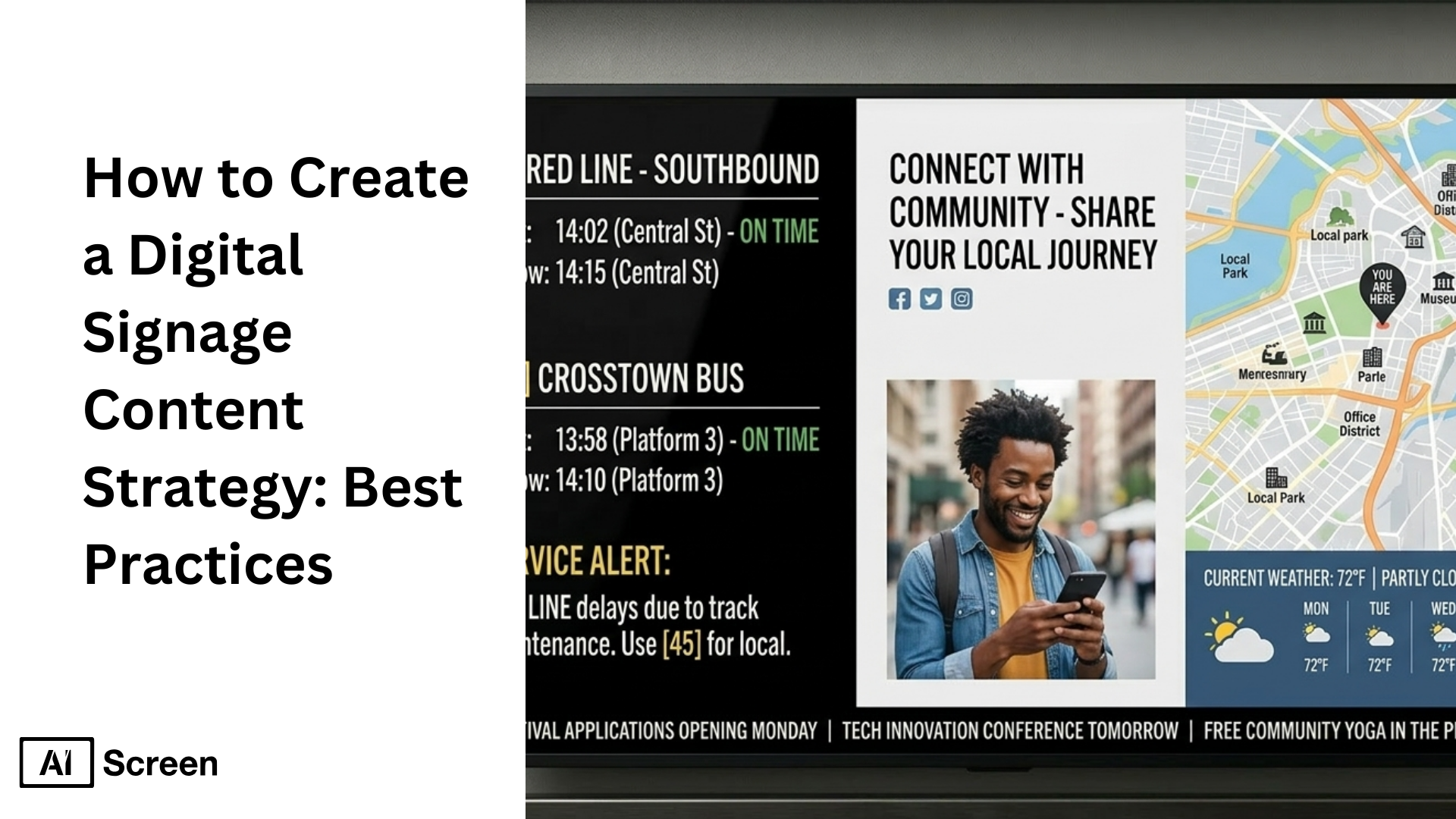
To create a digital signage content strategy, you need more than just attractive visuals on digital screens, you need a clear plan that connects your messaging, audience, and business goals. Digital signage is a powerful communication tool, but its success depends on how well your content is structured and delivered. According to Grand View Research, the global digital signage market is expected to reach $45.94 billion by 2030, showing how rapidly businesses are investing in digital displays.
In this article, you will learn how to create a digital signage content strategy step by step, from defining your target audience and setting measurable goals to creating engaging content and optimizing performance. You will also discover digital signage best practices, content ideas, and how to use the right tools to boost engagement, improve communication, and increase sales across different locations and screens.
Do You Really Need a Digital Signage Content Strategy?
Yes, you really need a digital signage content strategy, because digital signage is not just about putting content on digital screens, it’s about driving results. Simply creating digital signage content without a clear content strategy often leads to wasted effort, unclear messaging, and poor content’s performance. If you would rather have an expert shape that plan with you, digital signage consulting pairs your content strategy with proven rollout experience.
A few key reasons why a strong digital signage content strategy matters:
- Content that your target audience actually wants to see: Without a defined target audience, your signage content can quickly become repetitive or irrelevant. Research shows digital signage has only 3 to 10 seconds to grab attention (Nielsen), so your messaging must be clear, engaging, and tailored.
- A solid foundation for effective communication: Digital signage is a powerful communication tool used across internal communications, waiting areas, menu boards, and different locations. A structured content strategy ensures your main messages stay consistent and easy to understand.
- Faster and more effective messaging: A clear content strategy allows you to deliver helpful information using visual cues, high contrast, and legible fonts. This improves clarity, especially when considering viewing distance and different screens. AI is expected to be used for real-time content adjustments based on viewer demographics and conditions in 2026.
- Better engagement and higher recall: Organizations that refresh content regularly see up to a 25% increase in audience recall (Intel). Keeping content fresh with dynamic content like short videos, social media feeds, and real-time updates helps keep customers engaged.
- Easier content creation and management: Easier content creation and management: Using a content management system makes content creation, scheduling, and updates much easier. It also helps you track what works using data insights and A/B testing to improve effective digital signage content over time, especially when learning how to manage content across platforms.
- More traffic and interaction: Adding interactive elements like QR codes, call to action prompts, or social media feeds can drive users to take the desired action, increasing foot traffic and engagement across channels. Interactivity options like QR codes or touchless navigation enhance user engagement.
- Clear, structured, and memorable content: Following digital signage best practices like the 3×5 rule (three lines of five words) ensures your body text is readable and your content delivers clear messages. This creates memorable content that viewers feel connected to.


How to Create a Digital Signage Content Strategy: Step-by-Step Guide
Creating a digital signage content strategy is about crafting a message that fits your audience, your timing, and your business goals. According to Intel, companies that use data-driven content strategies see a 32% higher engagement rate on their screens.
Here are a few tips and your complete roadmap with content creation best practices and digital signage to build a strategy that turns every screen into a storytelling tool with AIScreen. When adapting content originally created for websites, blogs, or campaigns, reviewing messaging with a best plagiarism detector can help ensure reused copy remains original, compliant, and aligned with brand standards across all displays.
Step 1: Establish Clear Goals For Your Digital Signage Content Strategy
Establish clear goals for your digital signage content strategy before creating digital signage content, because without clear direction, your digital signage will only fill digital screens without delivering real results.
Start by defining why you are using digital signage:
- Increase sales through menu boards and promotions
- Improve internal communications across different locations
- Attract attention and boost engagement in high foot traffic areas
- Share helpful information in waiting areas
Your goals can be measurable:
- Drive traffic using QR codes
- Increase product sales
- Grow signups or call to action clicks
Or behavior-focused:
- Improve safety awareness
- Guide customers with clear messages
- Build brand awareness
Using dynamic content like short videos, social media feeds, and real-time updates helps keep content fresh and customers engaged. Studies show dynamic digital signage content increases engagement compared to static content (Intel).
For example, Lenovo used digital signage to drive social engagement with a selfie wall powered by tablets.
Clear goals help you:
- Create effective digital signage content
- Deliver the right message to the right audience
- Improve content’s performance and increase sales

Step 2: Set Targets That Are Easy to Measure
Set targets that are easy to measure in your digital signage content strategy so you can clearly understand how your digital signage content is performing and whether it supports your business goals.
Focus on simple, trackable metrics:
- Website traffic from a campaign-specific URL or QR code
- Promo code redemptions from digital displays
- Social media follows, shares, or mentions
- Email signups or survey responses
- Sales data like products sold or in-store conversions
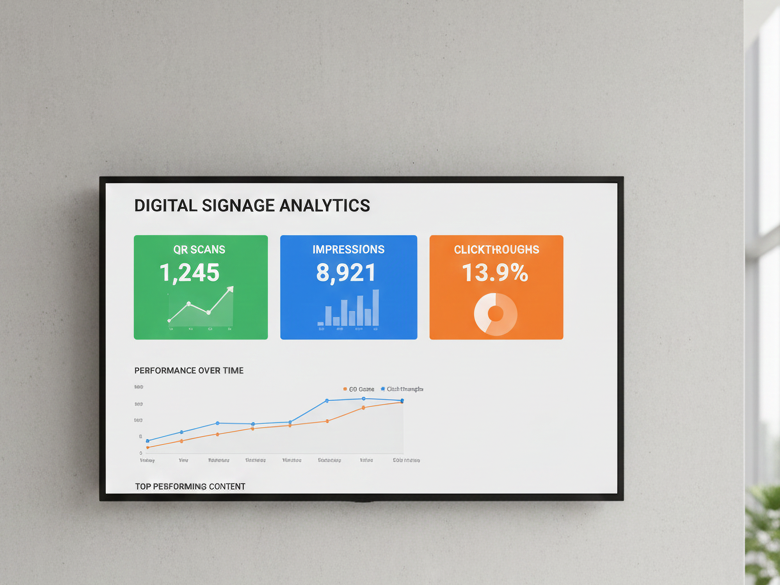
Adding a clear call to action helps turn engaging content into measurable results. Whether it’s “scan now,” “get 10% off,” or “join today,” these actions make it easier to track content’s performance.
Using an analytics dashboard allows you to monitor these KPIs in real time and adjust your content strategy based on data insights. This is a key part of digital signage best practices.
For example:
Coca-Cola’s Share a Coke campaign generated user-generated content through personalized bottles, increasing social media engagement.
The same approach works for internal communications:
- Use polls on digital screens
- Track engagement through internal tools
- Encourage team participation via shared platforms
Step 3: Define Your Target Audience
Define your target audience in your digital signage content strategy before creating digital signage content, because effective digital signage content only works when it speaks to the right audience at the right time.
Start by building clear buyer personas:
- Identify customer goals, habits, and motivations
- Understand what success looks like for each segment
A strong digital signage content strategy requires knowing:
- Who your audience is
- What they need in that moment
- What action you want them to take
Segment your audience for better results:
- By location (lobby, checkout, waiting areas, cafeteria)
- By behavior (browsing, buying, waiting)
- By time of day (morning, lunch, evening)
This is where modern digital signage software becomes powerful. With multi-screen segmentation, you can display different content on different screens based on audience zones and context.
For example:
A London restaurant, Mamuska, aligned their digital signage content with foot traffic to support marketing goals.
A restaurant mapped out its audience based on:
- Weekday vs weekend foot traffic
- Meal times like breakfast, lunch, and dinner
- Customer intent at each stage
They used this data to show targeted messaging:
- Promotions during peak hours
- Upsell items like desserts at checkout
- Quick offers for customers in a hurry
This made their digital signage content design more relevant, improved engagement, and helped increase sales.
Step 4: Create Content That Speaks to Your Audience
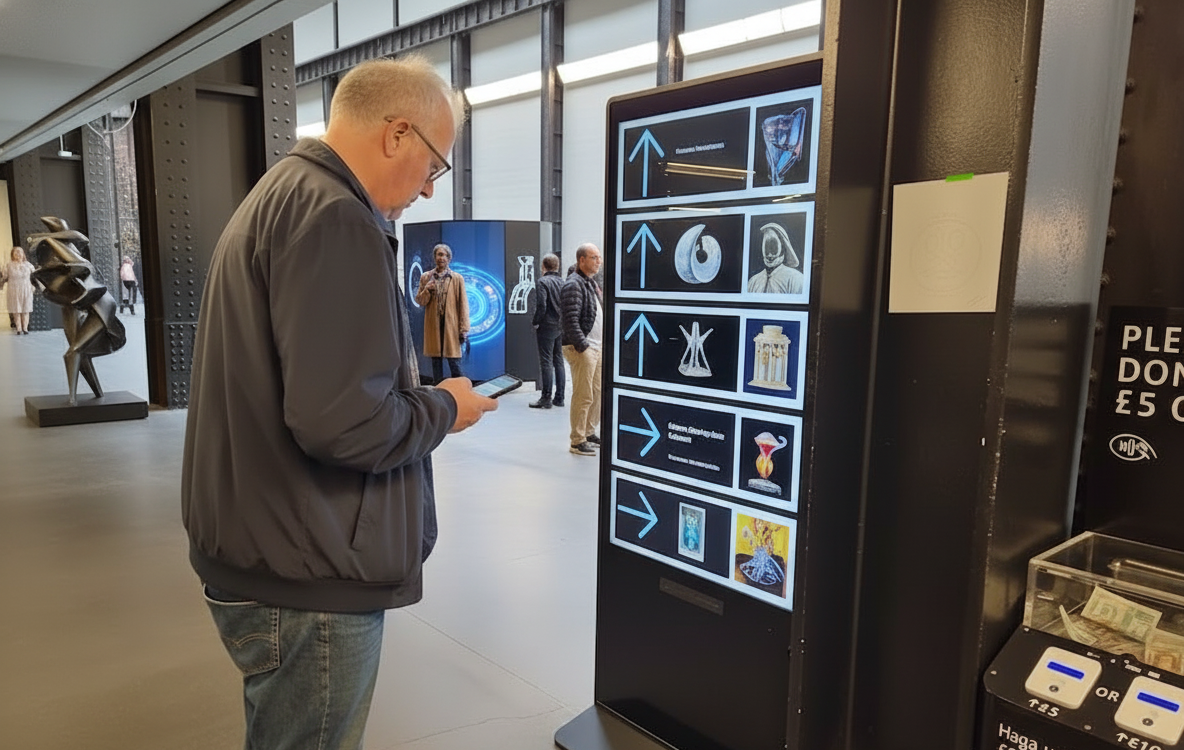
Create content that speaks to your audience by focusing on what they need in that moment and how your digital signage content can help, inform, or entertain them. This is a key part of building a strong digital signage content strategy.
Are they waiting in line, sitting in a waiting room, or just passing by your digital screens? Good digital signage content should feel relevant and useful, not just something filling the display.
Just make sure your content fits the screen, location, and audience.
Here are a few content ideas to get started:
- Social media feeds: Great for boosting engagement and showing real-time updates.
- News, weather, or general info: Useful in waiting areas and shared spaces alongside your main messages.
- Visual content: Short videos, images, and infographics attract attention and improve understanding.
- Humor and notices: Light, simple messages can create memorable content and connect with viewers.
Before publishing, do a quick check. Is your content helpful? Does it match the location and audience? If your signage is showing promotions but not solving real needs, you are missing the opportunity to deliver effective digital signage content.
Step 5: Segment Content by Time and Place
Segment content by time and place to make your digital signage content more relevant, timely, and effective across different screens and locations. This is a key step in building a strong digital signage content strategy.
Start by thinking about context:
- Who is seeing the screen at that moment?
- What time of day is it?
- What does your audience need right now?
- Morning viewers may prefer quick updates or helpful information
- Evening audiences may respond better to promotions or short videos
Keep your content aligned with viewing time. If people only glance at digital displays for a few seconds, use short, clear messages. Research shows digital signage has just 3 to 10 seconds to capture attention (Nielsen), so simplicity is critical.
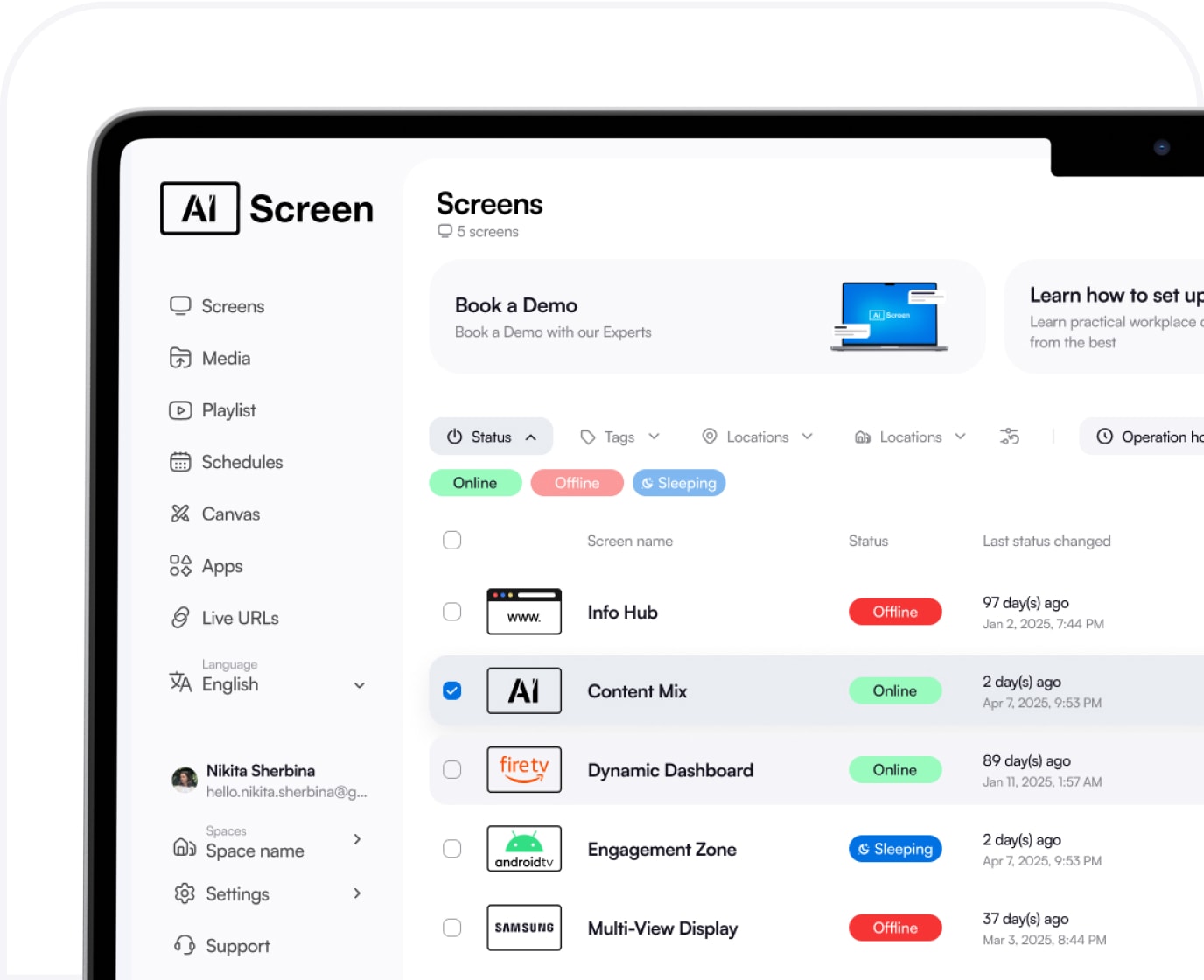
With AIScreen cloud-based digital signage software, you can easily schedule and manage playlists across different locations and different screens. This ensures the right message appears at the right time for the right audience.
Step 6: Build for Audience Engagement
Build for audience engagement by creating digital signage content that your audience actually cares about and wants to interact with. This is a critical part of any digital signage content strategy.
Ask a simple question: will my audience engage with this content? If not, it becomes background noise on digital screens.
Focus on content that invites participation and interaction:
- Competitions or giveaways
- Polls, votes, or quick surveys
- Social media conversations
- Customer stories or testimonials
- Real-time stats like sales or goals achieved
- Employee recognition or behind-the-scenes content
Modern digital signage software like AIScreen makes this easier. With integrations like Canva, Instagram, Power BI, and Google Slides, you can automate dynamic content, display real-time data, and keep content fresh without constant manual updates.
Step 7: Review, Optimize, and Continuously Improve
Review, optimize, and continuously improve your digital signage content strategy because the most effective digital signage content is built through ongoing testing and refinement.
Once your playlist is live, watch it directly on the digital screens with your team. Check if the body text is readable from the right viewing distance, if the slides stay long enough on screen, and if the messaging flows naturally. Small adjustments in pacing, visual hierarchy, or color contrast can make a big difference in clarity.
Digital signage works best when it stays flexible. With cloud-based digital signage software, you can easily edit, update, and test new formats anytime without replacing hardware or reloading content manually.
Try simple optimization methods:
- A/B test different slide designs or headlines
- Experiment with different call to action messages
- Test visual layouts, images, or short videos
Then use analytics to improve results. Track metrics like view time, audience interactions, or conversions to understand what content performs best.
What Types of Content Work Best for Digital Signage?
Using a content management system makes content creation, scheduling, and updates much easier. It also helps you track what works using data insights and A/B testing to improve effective digital signage content over time, especially when exploring 30 examples of extent content for digital signage.
Bring Your Digital Signage Strategy to Life with AIScreen!
Bring your digital signage strategy to life with AIScreen by turning your ideas into clear, engaging, and results-driven digital signage content across all your digital displays. With the right digital signage content strategy, you can deliver the right message to the right audience, keep content fresh, and improve content’s performance over time.
AIScreen is a leading provider of digital signage software that makes content creation, scheduling, and optimization simple. From managing different screens and locations to using dynamic content and real-time updates, it gives you the right tools to boost engagement, increase sales, and achieve your business goals. Contact us.
FAQs
Why is a content strategy important for digital signage?
A content strategy is important for digital signage because it gives your screens purpose and direction. It helps you plan messages that align with business goals across different screens, ensuring consistency and audience engagement. Without a strategy, your displays may look good but fail to drive results. A clear plan turns digital signage into a tool for communication and growth.
How often should I update my digital signage content strategy?
You should update your digital signage content strategy at least every quarter or whenever your business goals change. Frequent reviews help keep your visuals fresh and relevant to current campaigns, ensuring you maintain quality content. Regular updates also let you adapt to seasonal trends or audience feedback. This approach ensures your content stays engaging and continues to deliver results.
What are the key metrics for measuring signage content success?
The key metrics for measuring signage content success include audience engagement, dwell time, and conversion rates. You can also track QR code scans, social media mentions, or website visits generated from your campaigns. Internal signage can be measured through employee participation or feedback. Using built-in analytics tools makes performance tracking much easier to ensure you deliver the right message.
How do I choose content types that best fit my audience?
You can choose the right content types by understanding who your audience is and what motivates them. Consider factors like location, time of day, and viewing behavior to tailor your messages. For example, fun videos may attract retail shoppers, while data dashboards suit offices. Matching content style to audience intent, including dynamic content, boosts engagement and recall.
Can I manage and automate digital signage content using AIScreen?
Yes, you can manage and automate digital signage content using AIScreen’s content management system with complete ease. Its cloud-based CMS lets you schedule, update, and monitor displays from one dashboard, provided you have the right hardware. You can even integrate tools like Canva, Google Slides, and Power BI for dynamic visuals in a quick service restaurant setting.
