
What is Gas Pump Advertising and How It Works?
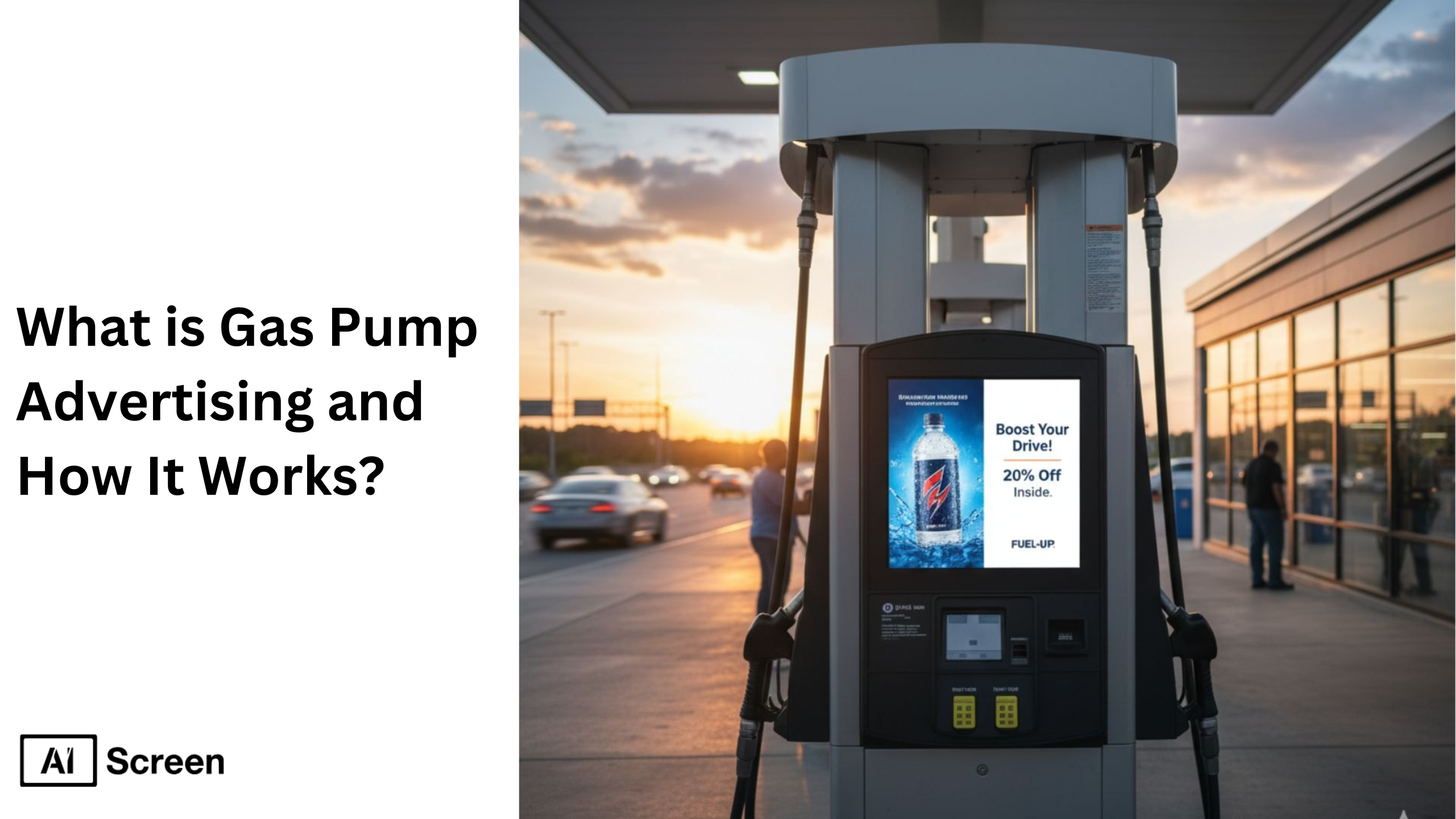
Gas pump advertising works because it captures undivided attention during dwell time at gas stations, making it a unique opportunity to reach drivers in prime locations. With strategic placement and high visibility, brands benefit from repeated exposure, reinforcing brand awareness, and influencing decision making at the right place. According to Nielsen, nearly 70% of drivers actively notice advertisements while fueling, making gas stations one of the most attention-rich environments in OOH marketing.
In this blog, we explore what gas pump advertising is, the main ad formats, how digital pump advertising works, real-world examples that drive results, cost considerations, digital signage software and how brands can launch and measure effective gas station advertising campaigns.
What Is Gas Pump Advertising?
Gas pump advertising is a form of out-of-home advertising that delivers ads on gas pumps, digital screens, and fuel stations to engage a captive audience. While fueling, customers spend several minutes waiting, creating a moment of focused consumer attention.
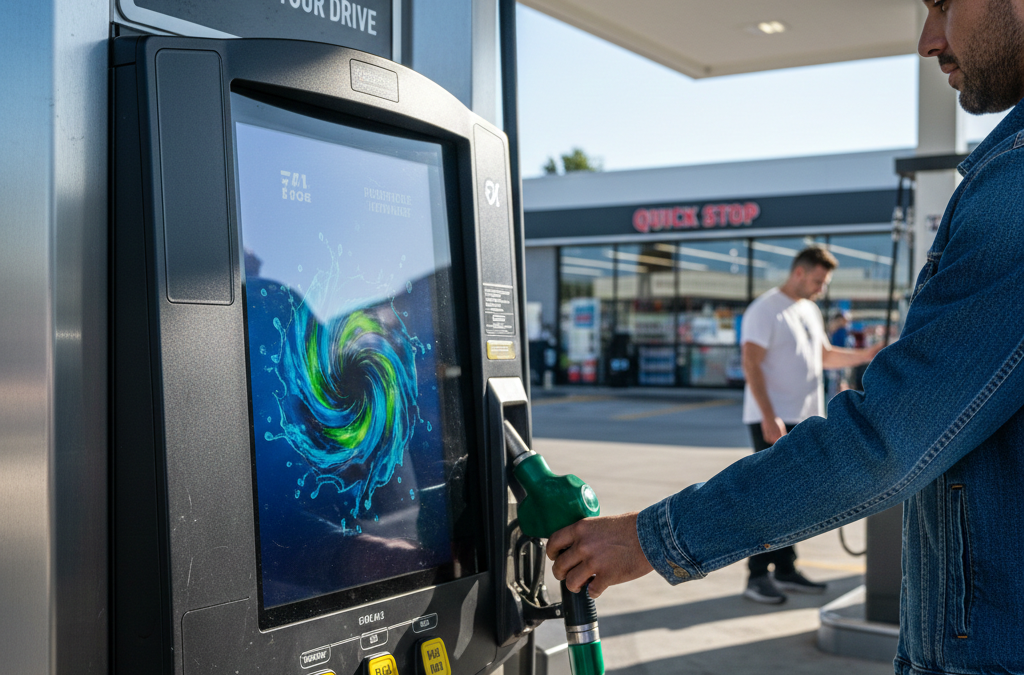
It helps brands reach drivers, promote products, and influence purchase decisions near convenience stores, c store setups, or quick service restaurants. According to Nielsen, nearly 70% of consumers notice gas station ads, making it a high-impact channel.
Main Types of Gas Pump Advertising Formats:
- Pump Toppers: Pump toppers (or pump tops) sit at eye level, ensuring high visibility. These static or digital displays deliver quick messaging and are ideal for local promotions and reinforcing brand awareness.
- Nozzle Ads: Nozzle ads are placed directly on gas pumps, offering repeated exposure during frequent visits. They help brands engage customers physically, increasing brand recall and interaction.
- Video Screens: Digital pump screens and video screens provide maximum impact using motion and sound. They boost consumer engagement by over 60%, making them ideal for storytelling and promotions.
- Pump Decals: Pump decals offer consistent exposure throughout the fueling process. They guide customers to nearby stores, ice box or ice chest displays, and support steady engagement.
How Does Digital Gas Pump Advertising Work?
Digital gas pump advertising works by combining location, data, and creative messaging to engage customers during waiting moments. According to the Out of Home Advertising Association of America (OAAA), OOH media drives 4X more online activity per dollar spent compared to traditional TV or radio ads.
- Selecting Target Locations: Advertisers choose prime locations with high traffic, such as busy fuel stations or areas near ev charging stations and electric vehicles hubs to target the right audience.
- Choosing the Ad Format: Formats like pump toppers, nozzle ads, and digital screens are selected based on campaign goals and target audience behavior.
- Uploading Creative via Digital Signage Software: Campaigns are managed through a digital signage solution, allowing businesses to control screens remotely. You can also explore how to set up digital signage at gas stations? step-by-step guide for implementation.
- Running and Monitoring Campaigns: Ads run automatically across screens, capturing consumer attention during several minutes of dwell time. Analytics track impressions, engagement, and behavior.
- Optimizing Based on Insights: Advertisers refine campaigns based on insights, improving engagement, messaging, and overall performance.
What are the Types of Gas Pump Advertising Formats?
When you pull up to a gas station, you’re surrounded by tiny moments waiting to happen, a glance at a screen, a logo that sticks, a message that makes you smile. That’s the beauty of gas pump advertising for visitors at gas stations.
According to OAAA’s Local Impact Study, local businesses using gas station advertising saw an average 17% increase in foot traffic within the first 60 days of their campaign. Each format captures attention differently, but together, they turn the few minutes you spend fueling up into a powerful brand moment.
1. Gas Pump Topper Advertising
Pump toppers provide instant visibility at eye level, making them effective for local businesses promoting deals and offers. They deliver quick messaging with strong recall.
2. Gas Pump Nozzle Ads
Nozzle ads engage users directly, helping brands stay top-of-mind during repeated interactions. Ideal for promotions and impulse-based products.
3. Gas Station Digital Screen Advertising
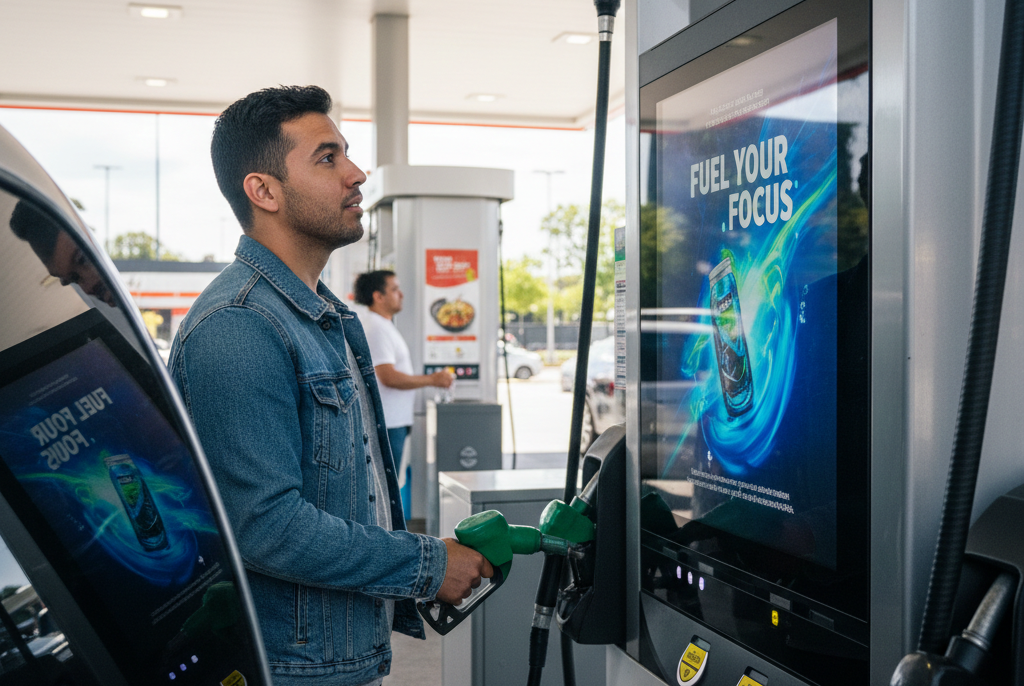
Digital screens combine visuals, motion, and sound to engage customers deeply. They are perfect for campaigns targeting diverse audiences and increasing engagement.
4. Forecourt and Canopy Advertising
Large-scale ads across fuel stations create maximum impact and brand dominance. They ensure visibility for both drivers and commuters passing by.
What are the Examples of Gas Pump Advertising That Drive Results?
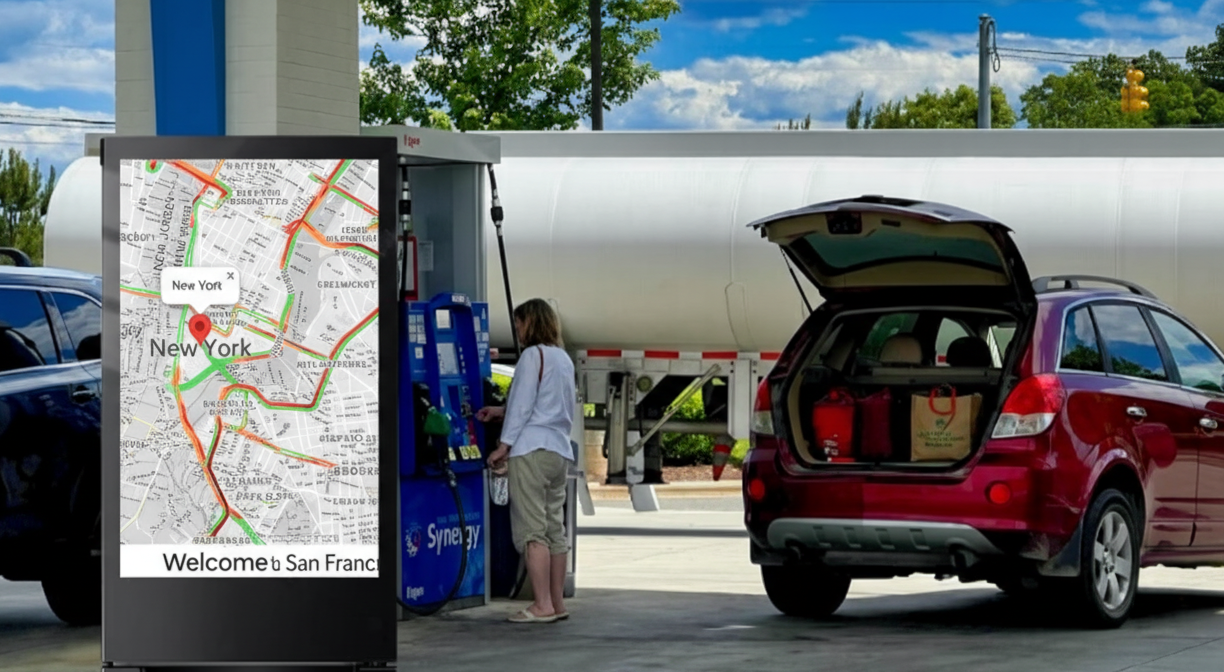
Gas pump advertising is more than just a quick glance while refueling. It’s a moment of connection between brands and real customers, who exhibit varied consumer behaviors. Across the country, companies are turning these few minutes at the pump into unparalleled opportunities for powerful storytelling moments that increase brand recall, boost sales, and improve customer engagement.
According to MediaPost, digital pump screens have a recall rate of over 60%, far exceeding traditional billboard engagement. Let’s look at some gas pump advertising examples that have made a measurable impact.
1. Coca-Cola, Seasonal Beverage Promotions
Coca-Cola uses pump toppers and digital screens to promote seasonal drinks. These campaigns target local audiences and busy commuters, driving in-store purchases.
2. McDonald’s, Highway Coupon Campaigns
McDonald’s uses QR-based gas station ads to target travelers. These campaigns convert fueling moments into purchase decisions, increasing store visits.
3. Local Dealerships, Test Drive Promotions
Dealerships use localized ads to promote test drives, targeting drivers already in a vehicle mindset. This improves conversions and engagement.
The addition of QR codes and NFC tags takes engagement further; a quick scan lets users access digital coupons, videos, or brand stories.
What are the Factors That Influence Gas Pump Advertising Cost?
Several variables determine how much you’ll spend on gas station ads, and understanding them helps you maximize value:
- Geographic Location and Traffic: A fuel station in a busy business district or near highways attracts higher foot traffic and, naturally, higher ad rates. High-traffic locations also increase impressions and repeated exposure.
- Ad Format: Static pump toppers are more affordable than full-motion digital video screens, but digital formats offer dynamic storytelling and stronger engagement. Platforms like AIScreen make it easier to manage and update these digital screens with real-time, high-impact content.
- Campaign Duration and Creative Production: Longer campaigns or ads with custom video production increase overall cost but often deliver better brand recall. Using pre-built templates and content tools from AIScreen can reduce production time while maintaining professional quality.
Typical Cost Range
- Pump toppers: $150–$300/month
- Digital screens: $500–$1000+/month
These costs are lower than billboards while delivering better engagement and brand recall due to direct interaction with customers.
How Do In-Store Ads Influence Purchases?
Gas pump advertising drives purchase decisions by influencing customers right before they enter nearby stores. These ads combine location-based messaging with real-time visibility, similar to how point-of-sale strategies guide buyers inside retail spaces. Ever noticed how a quick message at the pump makes you think about grabbing a drink or snack?
That’s where concepts like what is POS marketing? naturally align, as both focus on influencing decisions at the final stage. By connecting outdoor exposure with in-store prompts, brands create a seamless journey that improves recall, boosts conversions, and strengthens overall campaign impact.
Launch Hyper-Targeted Gas Station Advertising in Minutes!
Gas station advertising can be launched quickly using modern tools like AIScreen. Businesses can leverage digital screens, pumps, and forecourt displays to engage customers in real time.
With digital OOH technology, you can target specific locations, audiences, and time slots, ensuring your ads reach the right people. According to Nielsen, 57% of consumers search online after seeing digital ads, showing strong campaign impact.
This approach helps brands support marketing goals, increase visibility, and drive sales in a real-world environment.


FAQs
What is gas pump advertising used for?
A gas pump advertising is used for capturing attention during those few minutes while customers fuel up at the station. It helps brands connect with a captive audience in high-traffic areas, promoting products, local businesses, or services directly to drivers.
Is gas station advertising suitable for small businesses?
Yes, gas station advertising is suitable for small businesses because it targets local residents and commuters nearby. It’s a cost-effective way to build visibility without the high cost of billboards or TV.
What types of gas station pump advertising formats work best?
The gas station pump advertising formats that work best are pump toppers, nozzle ads, and digital screens. Each format grabs attention at different touchpoints: toppers for visibility, nozzles for interaction, and digital displays for motion storytelling, showcasing their ability to attract customers .
How do I get started with a gas station advertising campaign?
You can get started with a gas station advertising campaign by choosing high-traffic stations that match your target audience. Then, upload your creative to a digital signage software like AIScreen as an example to schedule and manage content remotely.
How can I measure the success of my gas pump advertising campaign?
You can measure the success of your gas pump advertising campaign using metrics like impressions, QR code scans, and engagement rates. Digital screens offer real-time analytics to show which messages connect best.
