
What are the Types of Indoor Signage?
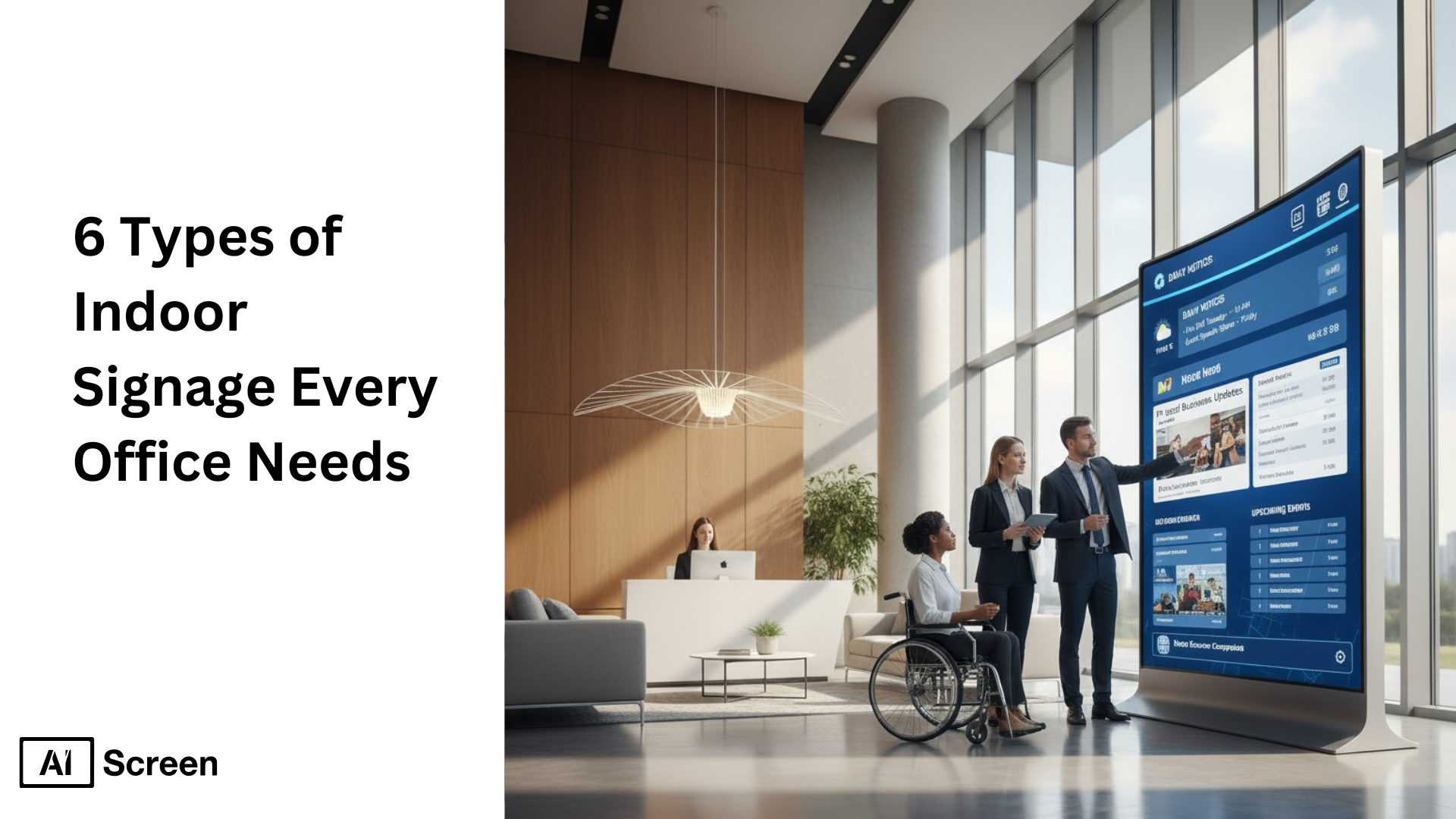
Smart AI-powered design is changing the way modern offices use signage to reinforce company branding and improve the visitor experience. According to the latest research, clear indoor signage can boost employee engagement by up to 25% and make wayfinding 35% faster for both staff and visitors in high-traffic office spaces. Studies also show that effective office signage increases brand recognition and professional image, especially when ADA-compliant, directional, and lobby signs are all present.
In this article, you will discover “6 types of indoor signage every office needs” from wayfinding signs and branded lobby displays to motivational wall wraps and digital signs. Wondering why interior office signage matters so much for your company’s culture, compliance, and employee engagement? Let’s break down how these sign strategies can create a welcoming environment, make visitors feel at home, and leave a lasting impression on everyone who walks through your doors.
Modern facilities manage these displays with digital signage software so signage stays accurate and easy to update.
Why Does Lobby Office Signage Matter?
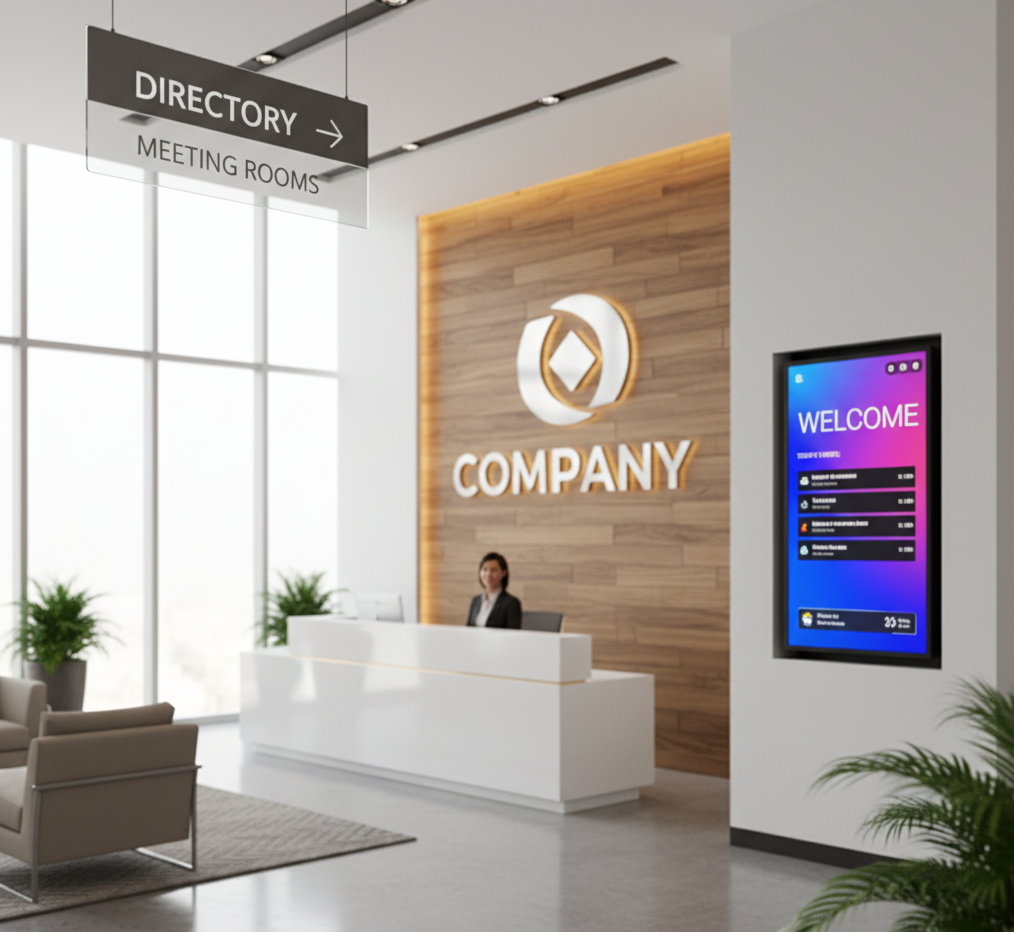
What makes lobby signage so crucial? It’s the very first impression your office makes and a powerful way to showcase your company’s brand identity.
Options range from dimensional logos and elegant acrylic signs to illuminated and digital welcome screens, perfectly blending style with professionalism.
Why invest in consistent interior signage design? Matching your lobby signs with your overall office signage strategy reinforces brand recognition, boosts your professional image, and sets the tone for the entire office environment. Following the 10 rules for design digital signage content keeps every lobby display consistent and on brand.
It welcomes visitors warmly and lets employees and visitors know they’re in the right place with clear, stylish cues.
Why Use Directional Office Signage?
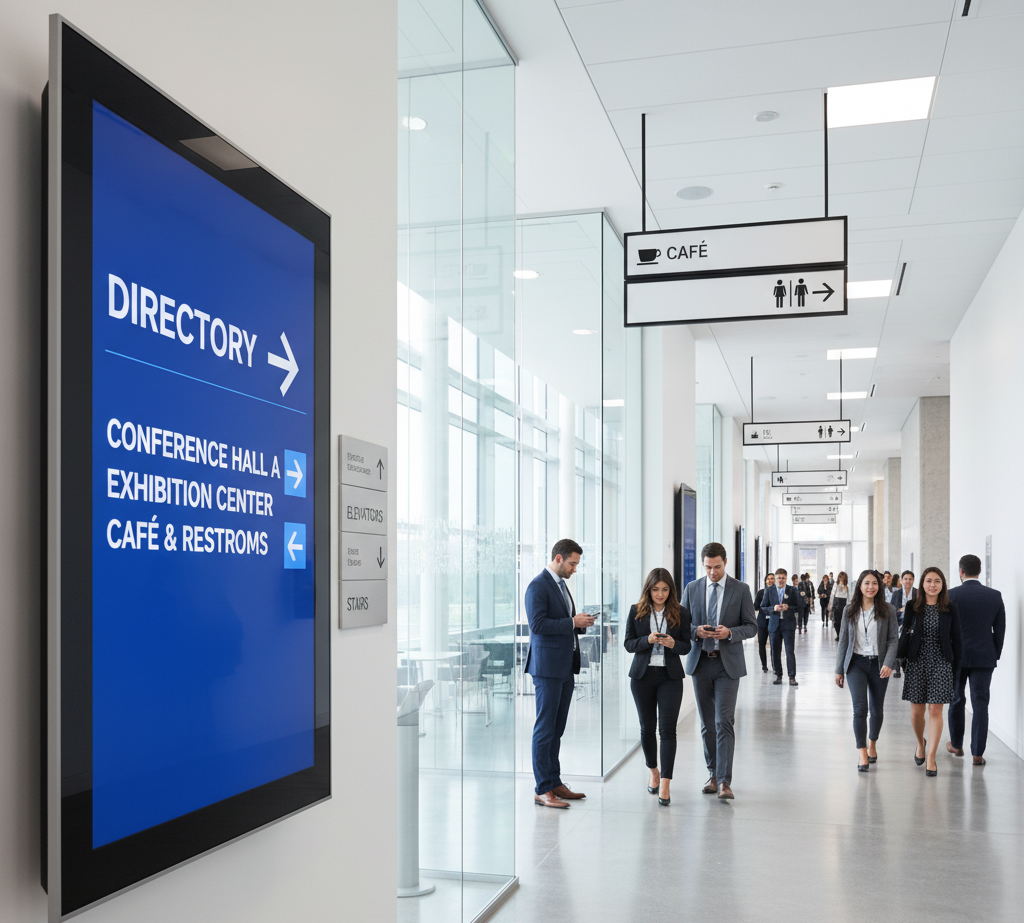
How important is directional signage in an office? It’s your navigation superhero, ensuring smooth movement through hallways, conference rooms, and departments without anyone feeling lost.
You will find both classic static wayfinding signs with arrows and sleek interactive digital directories guiding employees and visitors alike.
Why choose both static and digital options? Static signs provide clear, consistent guidance that reinforces brand recognition and maintains a professional office environment.
Meanwhile, digital signage adds flexibility with real-time updates and interactive elements. Together, they create a seamless signage strategy that makes your workspace easier to navigate while strengthening your company’s brand.
Click to learn more about what is wayfinding digital signage.


Do Wall Wraps Count as Office Signage?
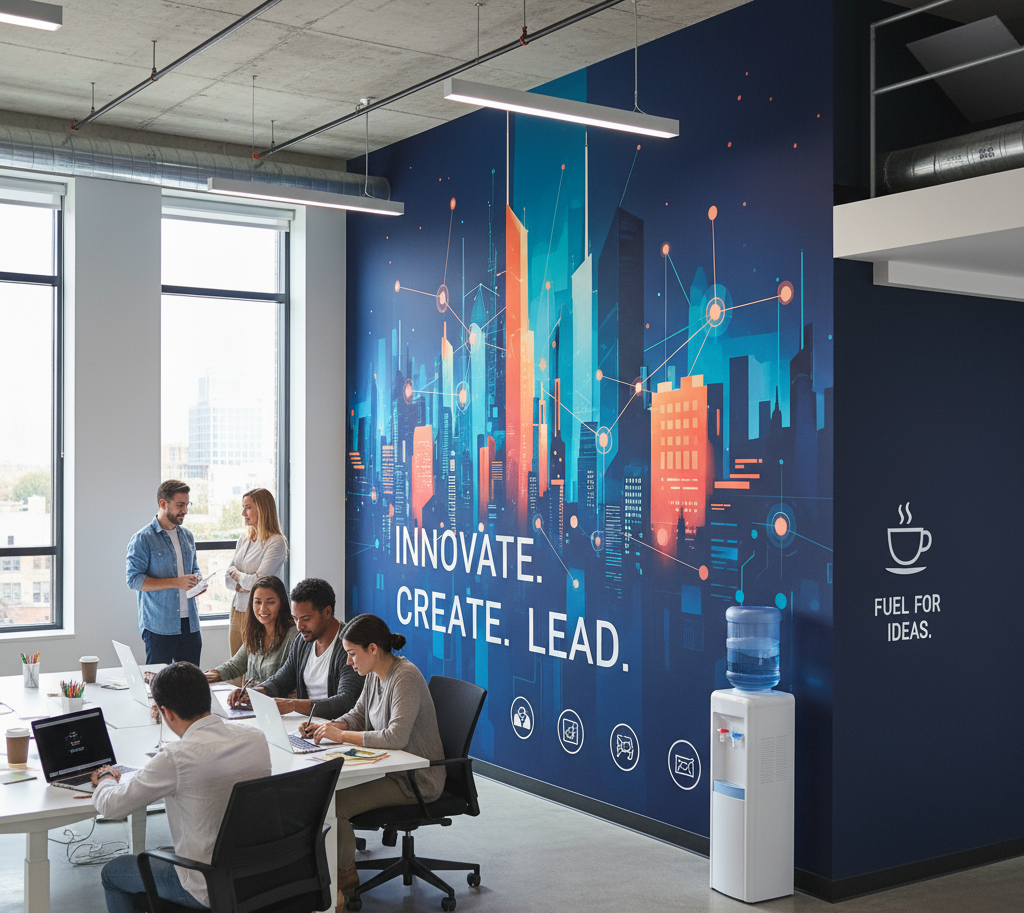
Why let bland walls waste space when they can tell your brand story? Wall wraps and decals transform plain office walls into engaging canvases filled with motivational messages, branded visuals, and informative infographics that reflect your company culture.
Think of them as silent storytellers, welcoming employees and visitors while reinforcing your brand identity. Curious why they are a must-have in the “6 types of indoor signage every office needs”?
These interior office signs offer a cost-effective, flexible, and visually striking way to turn any wall into a high-quality signage asset.
They reinforce branding, boost visual appeal, and create a lively atmosphere that keeps your office environment aligned with your company logos and values, from bold mission statements in common areas to inspiring quotes in meeting rooms.
What Are Interior Office Signage Banners?
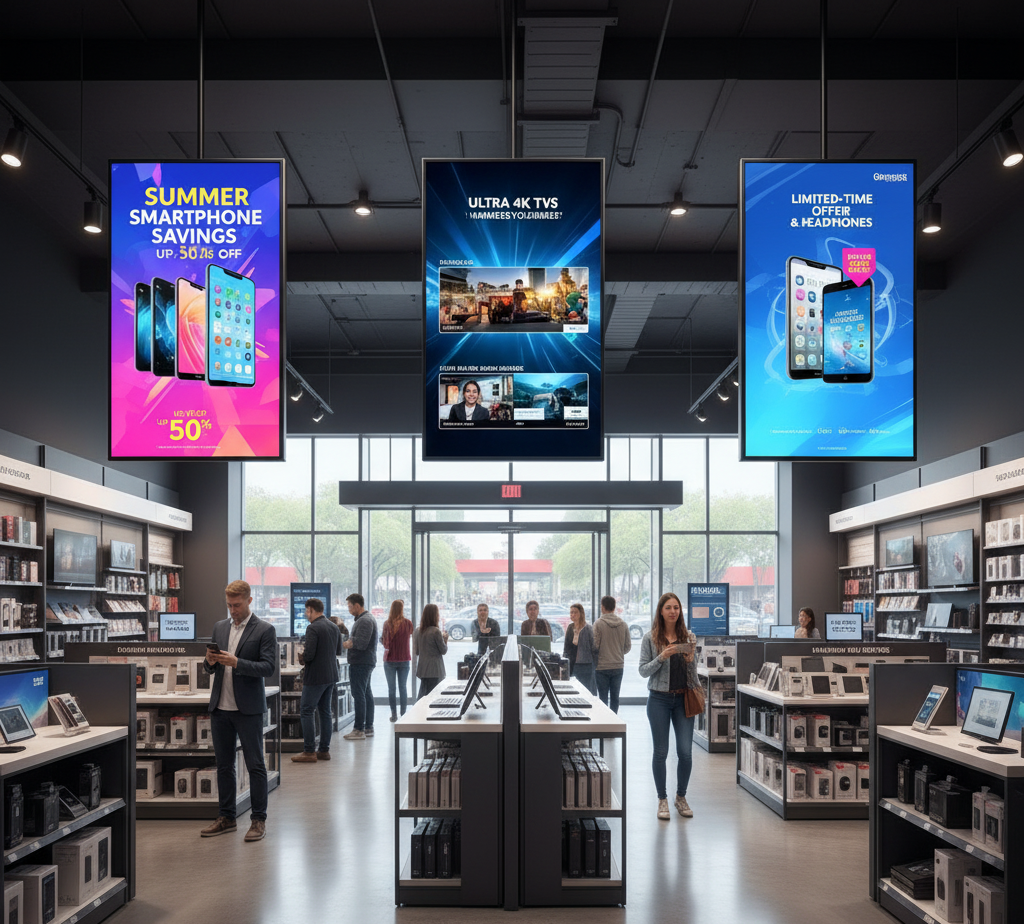
Wondering how interior banners can boost your office vibe? They are perfect for celebrating milestones, highlighting team achievements, or promoting seasonal promotions within your workspace.
Fabric or retractable banners maintain a clean, professional look that complements your interior office signage seamlessly. Why add banners to your office signage mix?
Because they are versatile and easy to update, making them ideal for temporary messages that strengthen your brand identity and engage both employees and visitors.
Whether placed in reception areas, hallways, or near conference rooms, these banners add visual appeal while reinforcing your company culture and values with style.
Why Does ADA-Compliant Office Signage Matter?
Why is ADA-compliant signage a must-have in every office? It ensures accessibility for everyone, including people with disabilities, reflecting your company’s commitment to inclusivity and brand identity.
Essential elements include braille lettering, tactile surfaces, and correct mounting heights as per the 2010 ADA Standards for Accessible Design.
What does compliance actually look like? Signs should feature raised characters readable by touch, be placed at a height accessible to wheelchair users (generally 48-60 inches from the floor), and avoid glare or obstructions.
Following these guidelines not only meets legal requirements but also reinforces brand recognition and creates a welcoming, safe environment for all employees and visitors in your office space.
How Do Environmental Graphics Support Office Signage?
What exactly are environmental graphics, and why do they matter in an office? Think of them as the perfect blend of art, storytelling, and spatial design that transforms your workspace into an inspiring environment.
Using color psychology, brand patterns, and interactive visuals, environmental graphics boost employee engagement and make your office space feel alive and aligned with your company’s brand image.
How do these graphics fit into the “6 types of indoor signage every office needs”? They serve as a cohesive layer over your interior office signage strategy, reinforcing brand recognition while enhancing the overall aesthetic appeal.
Whether through wall wraps, window graphics, or immersive digital displays, environmental graphics create a memorable experience that strengthens your company culture and improves the visitor experience.
How Digital Signage Transforms Indoor Spaces?
Ever wondered how digital signage can revolutionize your office communication? Digital displays bring real-time announcements, internal news, and even corporate dashboards right to your workspace, making information accessible and engaging.
With remote management and content automation, updates happen seamlessly, with no need for manual changes or printed notices. Why does it matter?
Digital signage not only enhances clarity and consistency but also reduces email overload and unnecessary meetings.
It reinforces brand recognition by showing company achievements, safety signs & alerts, and motivational messages across high-traffic areas, boosting employee engagement and creating a connected, efficient office environment that truly stands out.
Why Is Office Signage a Must-Have?
Wondering why digital signage is essential for your office space? Digital signage elevates office efficiency by delivering real-time updates, internal news, and corporate dashboards that keep your team informed and aligned.
According to recent surveys, 86% of businesses report improved productivity and stronger employee engagement thanks to digital displays.
How does it impact your brand identity and culture? Digital signage reinforces brand recognition consistently across interior custom office signs, promotes a professional image, and enhances visitor experience in high-traffic areas.
From lobby signs to wayfinding signs and conference room displays, integrating digital signage software within your office signage strategy creates a dynamic, connected environment that boosts morale, streamlines communication, and leaves a lasting impression.
Frequently Asked Questions
What is the difference between informational and directional indoor signage?
The difference between informational and directional indoor signage reveals that informational interior office signs provide crucial details like company policies or safety instructions, enhancing your office environment. On the other hand, directional wayfinding signs guide visitors and employees through hallways, conference rooms, and high foot traffic areas, reducing confusion and enhancing visitor experience.
How does indoor signage help improve customer experience and navigation?
Indoor signage helps in improving customer experience and navigation, like lobby signs, reception area signs, directional signs, and digital signage reinforce brand recognition and create a welcoming atmosphere where visitors feel welcomed. Clear signage solutions ensure safety compliance and make navigation easy, boosting overall professional image and comfort.
How can I choose the right type of indoor signage for my space?
To choose the right type of indoor signage, evaluate your office space and identify key areas like reception desks, meeting rooms, and emergency exits. Incorporate a mix of static signage, vinyl signs, and digital signage that align with your company’s brand. The right signage strategy balances visual appeal with functionality.
Why should businesses invest in high-quality indoor signage?
You should invest in high-quality indoor signage, meaning durable, aesthetically pleasing reception signs, neon signs, and door signs that reinforce branding and build customer trust. Custom interior signs and office building sign design showcase company logos and brand colors, enhance aesthetic appeal, and comply with safety regulations, making a lasting impression.
Can wayfinding and ADA signage be part of indoor signage systems?
Yes, both wayfinding signs and ADA-compliant signs are essential components of well-designed signs for indoor signage. They ensure accessibility, guide traffic efficiently, and help businesses comply with the disabilities act and ADA signs guidelines, improving safety and inclusivity for your target audience of professionals in the office.
Digital signage transforms traditional indoor signage by displaying real-time information across office spaces, especially when businesses follow proven content strategies that ensure clarity and engagement. Digital displays allow businesses to share announcements, internal dashboards, or updates instantly without printing new signs.
To understand this integration better, explore what is wayfinding digital signage, which explains how digital systems enhance navigation with real-time directions, interactive maps, and smart routing. This approach helps businesses create seamless experiences, reduce confusion, and ensure consistent communication across both indoor and outdoor environments.
Why Choose AIScreen for Indoor Office Signage?
Indoor office signage works best as one connected system, from lobby signs and directional wayfinding to ADA-compliant displays and environmental graphics. Choosing the right mix for your space keeps your office on brand, easy to navigate, and ready to update the moment your message changes.
