
What Is New in Digital Signage News?
Have you wondered how fast the digital signage industry is growing, and why so many businesses are investing in newer display technology now? Grand View Research data shows the global digital signage market was valued at about USD 28.83 billion in 2024 and is projected to reach USD 45.94 billion by 2030, growing at a Compound Annual Growth Rate (CAGR) of 8.1% from 2025 to 2030.
In this blog, I’ll cover industry news, key trends, and the latest innovations in digital signage, with a focus on AIScreen digital signage software. We’ll explore what’s shaping the global digital signage landscape, where things are headed, and what that means for you. If you are ready to deploy, our digital signage software installation services can help you set up displays and content the right way.
How Is Sharp Changing Digital Signage News?
Sharp Imaging and Information Company of America, a division of Sharp Electronics Corp., has recently enhanced the MultiSync PN-Mxx2 and PN-Pxx6 Display Series to deliver greater flexibility, higher performance, and long-term durability. These digital signage displays are designed to meet the growing needs of businesses using digital signage systems or managing a digital signage network across multiple venues.
The new lineup includes the PN-M552, PN-M652, and PN-P556 models, available in 55-inch (54 6/10-inch diagonal) and 65-inch (64 ½-inch diagonal) class sizes. Brightness has been significantly upgraded, with the PN-M552 and PN-M652 reaching 550 nits, while the PN-P556 goes up to 700 nits. Combined with luminance stabilization technology, these displays maintain crisp visuals over extended use.
When was the last time your screens looked washed out under direct daylight? With wide color gamut panels, especially on the PN-P556, these models ensure vibrant clarity, making them a strong choice for immersive experiences and digital out-of-home applications.
Connectivity and security have also been enhanced. The models feature USB-C input with 65W power delivery, SDM-S / SDM-L slots for modular, cable-free installations, and a robust set of security features: IEEE 802.1X authentication, disabled LAN/USB data ports, administrator passwords, browser control, address filtering, and internal encryption.
For businesses using AIScreen digital signage software, these upgrades mean smoother integrations, stronger performance, and fewer risks of downtime. Improved image quality and security allow digital signage content to run seamlessly across various industries, from retail to healthcare to event technology.
Overall, Sharp’s upgraded MultiSync models reflect how the digital signage technology sector is evolving. As interactive experiences, energy-efficient displays, and immersive technologies continue shaping the digital signage landscape, these models stand out as a game-changer in public spaces, trade shows, and enterprise environments that demand future-proof, secure, and reliable display technology.
What are the 5 Ways to Pop Digital Signage News?
Here are the top five ways to elevate your digital signage content and captivate your viewers in today’s fast-moving digital signage industry. As the digital signage sector adapts to new technologies and increasing demand, brands must focus on strategies that cut through the noise and deliver impact across multiple media.
Use visually striking designs
Strong visuals remain the backbone of compelling digital content. In a world where display technology is constantly improving, from LED panels to microLED displays, clarity and contrast make all the difference. High-resolution images, bold typography, and motion-rich graphics bring out of home campaigns to life, whether it’s on the Las Vegas Strip or a busy transit hub.
A cohesive color palette, strong contrast for deeper blacks, and clean layouts keep visuals sharp and focused. With professional content creation, digital signage moves beyond sharing information to delivering immersive customer experiences.
Focus on concise and engaging messaging
Audiences in public spaces move quickly, so your screens must deliver targeted content that sticks. Simple, action-driven phrases paired with visuals help you engage audiences instantly. Messaging should be minimal, no more than 7–10 words per screen, while still sparking curiosity or prompting action.
Concise storytelling is key to revolutionizing retail and driving impact in digital out of home campaigns. Whether you’re promoting flash sales or introducing new innovations, well-crafted words paired with bold visuals can transform passersby into engaged customers.
Lean into real-time and dynamic content
Unlike static posters, digital signage thrives on agility. Dynamic content powered by artificial intelligence and real-time data ensures your displays are always fresh and engaging. Imagine screens showing weather-triggered offers, social media feeds, or time-sensitive promotions. This kind of adaptability makes digital signage rollouts far more effective.
In a dynamic world, AI-driven digital signage even enables predictive updates, allowing users to receive the right information at the right time. QR codes, motion sensors, and location-aware features further enhance personalization, turning passive viewers into active participants.
Optimize for your target audience
The heart of every successful campaign is knowing your audience. Chief strategy officers and marketing teams now rely on analytics to fine-tune content creation and measure engagement. Personalized displays, location-specific updates, and context-driven offers create stronger connections and personalized experiences that resonate across industries.
More businesses are investing in sustainable technology and energy efficient displays to support this personalization while reducing operational costs. Whether your signage is in healthcare, education, or hospitality, optimizing content to reflect unique audience needs ensures long-term success.
Embrace emerging technologies
The future of the digital signage industry is defined by new technologies. From virtual try-ons in retail stores to self-service kiosks in airports, innovation is reshaping customer interaction. Artificial intelligence and AI-driven digital signage personalize campaigns in real time, while AR, 3D, and motion sensors add interactivity that traditional signage can’t match.
These new innovations are revolutionizing retail and public spaces alike. On the show floor at trade expos or in high-traffic areas like Las Vegas, brands using digital out-of-home solutions with advanced display technology are setting themselves apart as industry leaders.


What’s New in Affordable Digital Signage News?
Finding the right balance between affordability and quality in the digital signage industry can feel overwhelming. With so many options in hardware, software, and content creation, businesses often face unique challenges while trying to maximize impact without overspending.
The good news? Low-cost doesn’t have to mean low-quality. By focusing on smart choices, you can deploy digital signage rollouts that are reliable, professional, and scalable. Here are five considerations to help you stay on budget while still delivering engaging, professional signage.
1. Invest in Pro-Grade Displays Instead of Consumer TVs
It’s tempting to grab an inexpensive consumer TV for signage, but most are not designed for 24/7 operation. They lack the durability, brightness, and display technology features that professional-grade displays offer.
Pro displays may cost more upfront, but they reduce downtime, last longer, and provide consistent visual quality. Features like anti-glare screens, weatherproofing for outdoor signage, and professional mounting systems are worth the investment. In the long run, this approach saves money while elevating customer experience.
2. Choose Between System-on-Chip (SoC) and Dedicated Media Players
A major decision for budget-conscious businesses is whether to use an SoC display or invest in a separate media player. SoC displays are more affordable, all-in-one solutions that work well for simpler signage needs.
However, they can struggle with performance-heavy tasks such as UHD content or interactive campaigns. Media players, while costlier upfront, provide more power, flexibility, and endurance, making them ideal for industries that require cutting edge performance and scalability. Choosing wisely ensures your system is well equipped for both current and future demands.
3. Explore Alternative Display Types Like E-Ink
New innovations are opening the door to alternative display types such as electronic ink (E-Ink). These solutions use very little energy, making them a sustainable option for menus, transportation signage, or retail price tags.
With color and even video-capable E-Ink evolving quickly, they’re becoming a practical choice for businesses seeking affordable signage with lower operating costs. In environments where brightness and power efficiency are crucial, E-Ink can offer a broader range of possibilities compared to traditional LCD or LED displays.
4. Select the Right Digital Signage Software
Software is the backbone of any signage setup. An overly complex CMS can lead to wasted spend, while an underpowered system risks poor performance and security issues. The smartest move is to select a digital platform that is intuitive, secure, and scalable.
Cloud-based solutions are increasingly popular, allowing users to manage content remotely, while on-premises systems may be required for industries handling sensitive data. The choice depends on your industry needs, but the right software ensures smooth scheduling, secure operation, and long-term ROI.
5. Prioritize Content Without Overspending
Even the best hardware and software fall flat without engaging digital content. Instead of overspending on production, businesses can mix in-house creativity with modern tools that support fast and cost-effective design.
AI-assisted design platforms are helping brands create personalized experiences in just minutes, and augmented reality features or interactive elements can be introduced to make signage more memorable.
As industry leaders in new technologies continue to release latest trends in immersive tools, it’s now easier than ever for even small businesses to create impactful visuals that connect with customers, from Gen Z shoppers to seasoned professionals.
Is DOOH the Latest Digital Signage News?
The global digital out-of-home (DOOH) advertising market is on track to reach $21.35 billion in revenue by 2030, according to ResearchAndMarkets.com. Growing at an annual rate of 13% between 2020 and 2030, this rapid rise shows just how central digital signage has become to modern advertising strategies.
Several drivers are fueling this momentum. Businesses across retail, transportation, healthcare, and hospitality are increasingly adopting advanced display technology to deliver more engaging and immersive messages. At the same time, rapid digitization and urbanization in emerging countries are creating environments where dynamic media displays naturally fit into daily city life.
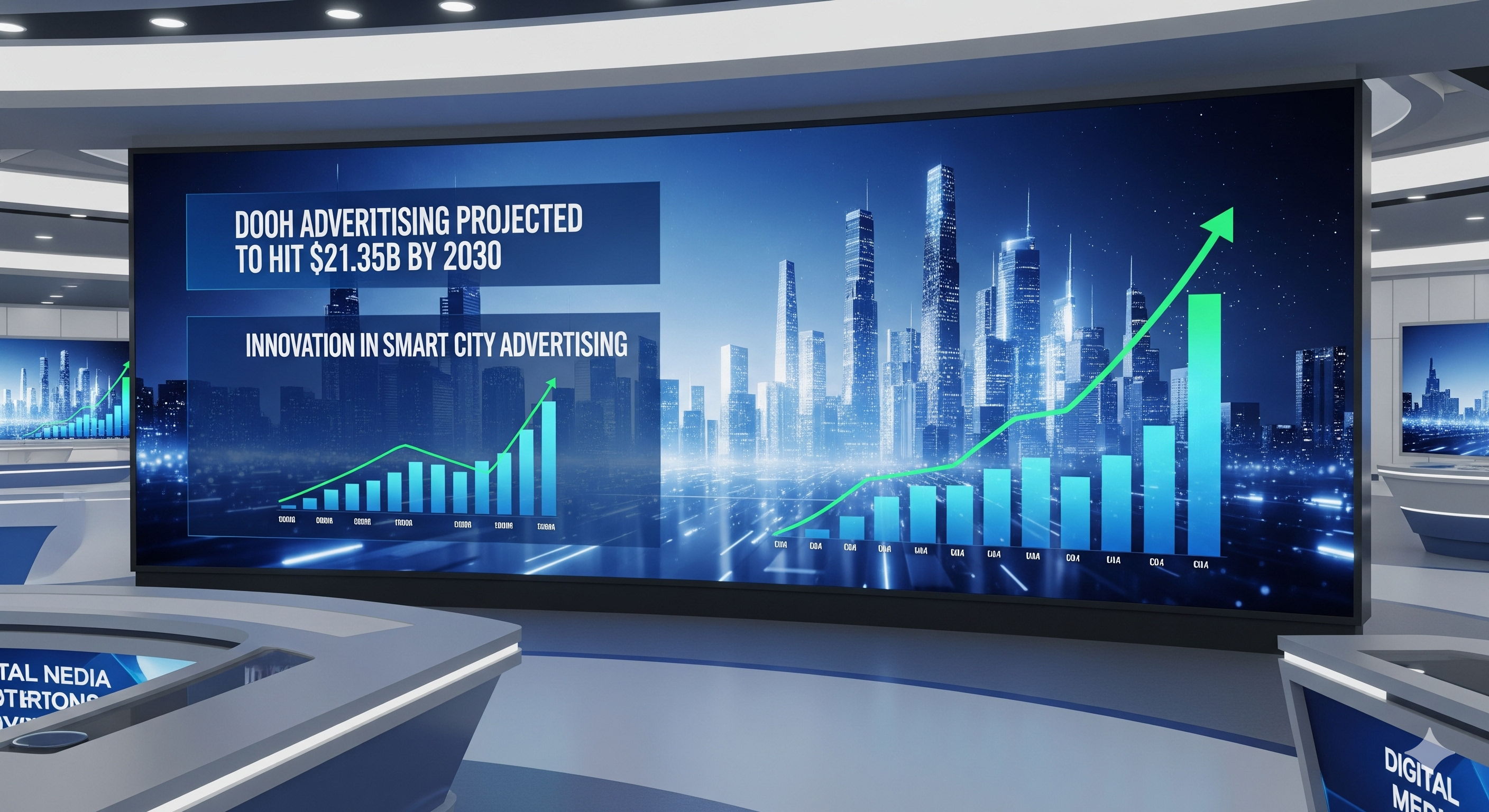
The proliferation of smart cities is also accelerating the use of innovations, from sensor-based targeting to programmatic ad buying, while ongoing technological advancements such as interactive self-service kiosks and AI-powered personalization are transforming how audiences experience advertising.
For businesses, this shift presents a clear opportunity to stay ahead in a fast-evolving industry. To capitalize on these latest trends, companies should look at investing in flexible display technology that supports high-resolution content, leveraging real-time data to adapt campaigns to specific locations or times, and experimenting with immersive formats such as augmented reality, 3D billboards, or interactive digital signage.
Around the world, success stories highlight the impact, whether it’s smart transportation hubs across Asia or the massive, storytelling displays lighting up Las Vegas. DOOH is reshaping how brands connect with people in public spaces.
With global players, AIScreen.io leading the way, the industry is setting a new benchmark for digital experience. For organizations ready to embrace new technologies and adopt future-ready strategies, DOOH advertising offers more than visibility; it delivers a powerful platform to create memorable, measurable, and meaningful connections with audiences.
How Does Drive-Thru Digital Signage News Help?
As the restaurant industry continues to rebound from the pandemic, convenience, ordering ease, and speed have become non-negotiable for customers. Drive-thru sales hit $133 billion in 2022, up 30% from pre-pandemic levels, according to Technomic.
While the pandemic may have subsided, the appetite for quick, contactless, and streamlined service is only growing. The key to staying competitive lies in embracing display technology and digital signage innovations that transform the drive-thru into a faster, smarter, and more engaging experience.
1. Greet Customers the Smart Way
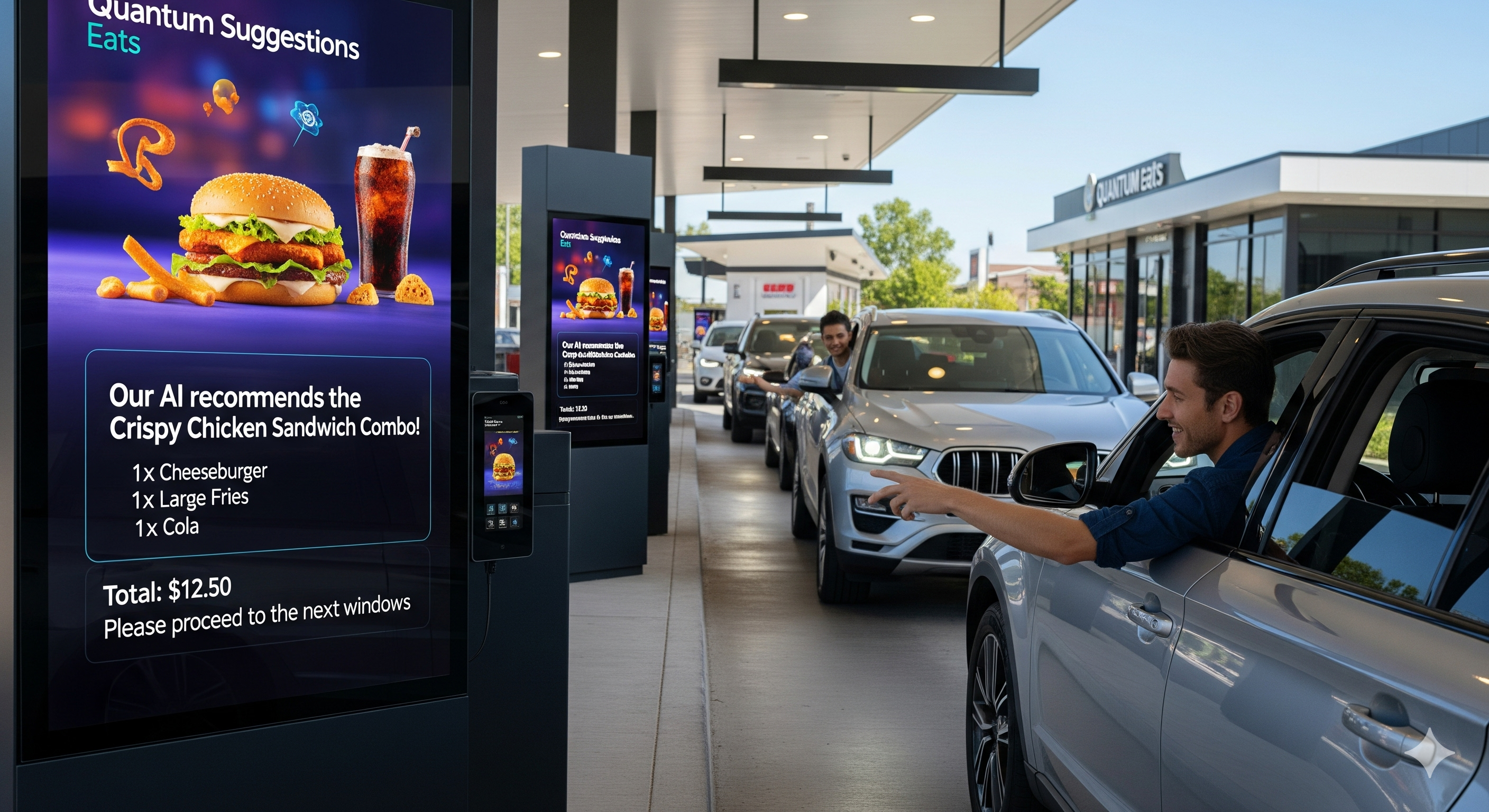
The first impression begins the moment a customer pulls into the lane. Digital signage today allows franchises to greet customers instantly with vibrant visuals, promotions, or seasonal highlights. Digital menu boards make it easy to update offerings across multiple locations, whether it’s coffee and muffins for the morning rush or combos tailored to lunch crowds.
Through advanced content scheduling and cloud-based management, updates are seamless, and franchises can respond quickly to shifting customer preferences or new innovations in the food industry. This approach not only speeds up decision-making but also keeps menus relevant and enticing.
2. Personalize the Experience with AI
Customer satisfaction thrives on personalization, and the latest trends in digital signage are harnessing artificial intelligence to achieve just that. AI-driven systems can recognize customer preferences, offer recommendations, and even switch languages to provide a more personal interaction. Imagine a loyal customer who frequently orders the same burger, AI can prompt the exact order as they arrive.
This integration of AI with digital signage technology reduces errors, streamlines ordering, and delivers targeted suggestions that make customers feel valued. From a media perspective, these smarter, data-driven systems are revolutionizing how quick-service restaurants engage audiences in real time.
3. Reduce Errors and Build Loyalty
Few things frustrate customers more than an incorrect order. New technologies are solving this challenge by enabling digital signage to display order confirmations in real time. Customers can verify their selections before reaching the window, reducing mistakes and saving valuable minutes.
At the same time, weather-tested, glare-resistant screens ensure visibility even in harsh outdoor conditions. Working with a managed service provider makes deploying and maintaining this technology easier, guaranteeing reliable connectivity, backup support, and smooth operation at all times. The result is a streamlined process that boosts efficiency, satisfaction, and ultimately, repeat business.
In today’s competitive landscape, franchises that integrate advanced display technology and digital signage into their drive-thru operations are better positioned to stay ahead.
As we see in markets from small towns to the vibrant Las Vegas strip, media-driven, tech-enhanced drive-thrus are no longer a novelty, they’re the standard. By reducing wait times, personalizing service, and enhancing order accuracy, digital signage is not just improving operations, it’s reshaping the customer experience.
How Do Malls Use Digital Signage News?
Shopping malls are far from outdated, they are evolving into hubs that merge digital and physical retail innovation. Changing consumer preferences and the growth of online shopping have pushed malls to rethink their identity, shifting from simple collections of stores to vibrant, experience-driven destinations.
By integrating digital signage, malls are reshaping customer journeys, driving foot traffic, and positioning themselves to stay ahead in an increasingly digital-first world. If you’re unsure which is right for your environment, check out this digital signage vs. video walls: an in-depth comparison to explore the strengths and use cases of each.
Creating Immersive Retail Experiences
Modern malls are no longer just shopping centers; they are curated environments designed to deliver unforgettable moments. Luxury destinations like Bal Harbour Shops have demonstrated how pop-up concepts and flexible layouts can reinvent the mall experience.
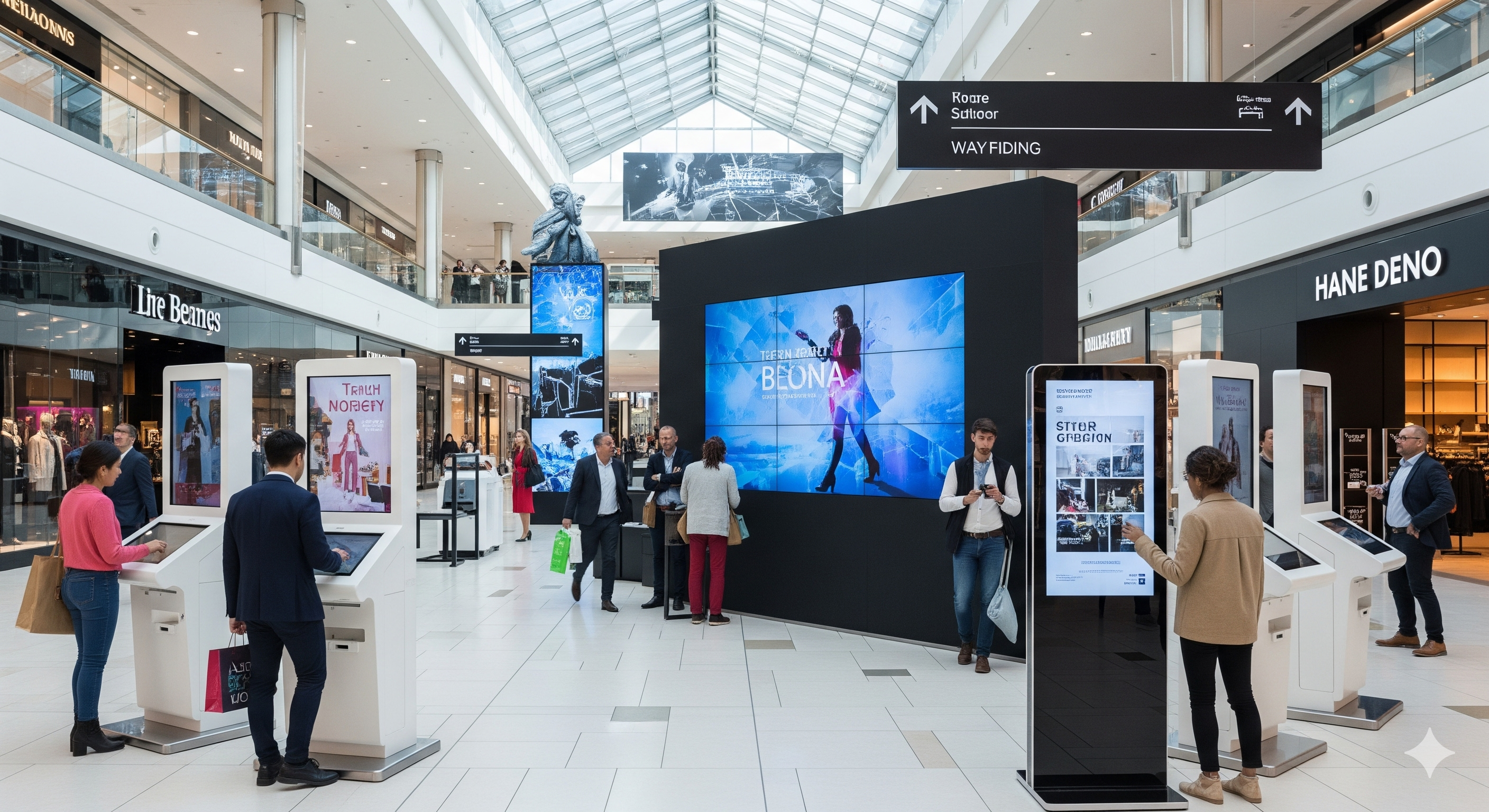
Digital signage plays a central role here, powering interactive kiosks, promotional displays, and dynamic storytelling that bridges online and offline retail. For digitally native brands, malls provide the perfect testing ground to create tactile experiences that complement their e-commerce presence. Media-rich displays highlight products, promote special deals, and offer immersive customer experiences that online platforms cannot replicate.
Blending Navigation and Engagement
Navigating large malls has always been a challenge, but interactive digital signage has transformed this aspect into an opportunity for engagement. A connected wayfinding solution allows shoppers to easily locate stores, events, or amenities, with touchscreen kiosks and QR code integrations providing real-time, personalized directions. A well-placed digital information board can also share store directories, event schedules, and promotions at key entry points.
These tools not only reduce friction but also open new avenues for promotional content, increasing visibility for retailers. Large-scale interactive walls, such as Adidas’ installations in flagship locations, further showcase how display technology can create dynamic learning experiences that influence purchasing behavior. By combining guidance with engagement, malls deliver both practicality and entertainment.
Shaping the Future of Malls
The mall of the future is designed to be more than a retail destination, it’s a cultural and social hub. Developers are embracing technology-driven layouts that accommodate co-working spaces, social zones, and event venues, creating a broader community appeal. Digital signage supports these transformations by offering adaptable, real-time media that keeps environments fresh and responsive.
From AR-powered try-ons to sustainability campaigns displayed on eco-focused screens, malls are using signage to highlight innovation and values that resonate with modern shoppers. High-profile developments like Hudson Yards in New York City exemplify this shift, combining architecture, culture, and retail to create environments that feel alive and connected.
Digital signage ensures malls remain relevant in an era dominated by e-commerce. Enhancing navigation, improving customer engagement, and supporting experiential retail, it provides a strong foundation for malls to thrive. Those that embrace new technologies and integrate media-driven strategies will not only survive but redefine the shopping experience for years to come.
What’s the Market in Digital Signage News?
The digital signage software market is forecasted to exceed $25 billion by 2029, a sharp rise from $7.88 billion in 2021, according to Data Bridge Market Research cited in Benzinga.com. Retail is projected to be the decade’s strongest growth sector, driven by the demand for digital advertising and marketing such as DOOH.
Features like cloud-based management, real-time updates, and system integration are powering this expansion. But here’s the real question, how can businesses ensure their digital displays don’t just look modern, but actually strengthen their digital signage strategy?
With the rapid expansion into emerging markets and the rise of new media technologies, digital signs are no longer optional, they’re essential for creating impactful, customer-focused experiences. Tracking digital signage dwell time shows how well those experiences hold attention.
How Do You Start Digital Signage News with AIScreen?
Getting started with digital signage is simple with AIScreen. Its cloud-based platform lets you design, schedule, and manage content across any TV or screen without technical barriers.
With affordable pricing, dynamic templates, and interactive features, AIScreen helps businesses engage audiences, improve communication, and deliver memorable experiences. Whether you’re a small business or enterprise, AIScreen ensures professional-quality signage that’s easy to set up and scale as you grow.
Frequently Asked Questions
What is the future of digital signage technology?
The future of digital signage is driven by AI, IoT, and immersive display technologies. Businesses will use smarter, more interactive systems to connect with audiences. Expect hyper-personalized, data-driven experiences that boost engagement.
How is AI being used in digital signage?
AI analyzes audience behavior to deliver relevant content in real time. It powers predictive ads, dynamic scheduling, and even facial recognition for targeted engagement. This makes displays smarter and more impactful.
How can digital signage help businesses reduce costs?
It eliminates recurring printing and distribution costs for posters or flyers. Updates can be pushed instantly, saving time and labor. Centralized control ensures efficient management with fewer resources.
How are cloud-based digital signage solutions transforming the industry?
Cloud platforms allow remote management across multiple screens and locations. They enable instant content updates with minimal effort. This flexibility helps businesses scale faster and adapt to changes.
How does digital signage improve outdoor advertising?
It offers high-brightness visuals that stand out in any environment. Content can be updated instantly to stay relevant and timely. Interactive features increase customer engagement and brand visibility.
