
Top 10 Restaurant Signage Examples That Drive Visibility and Sales
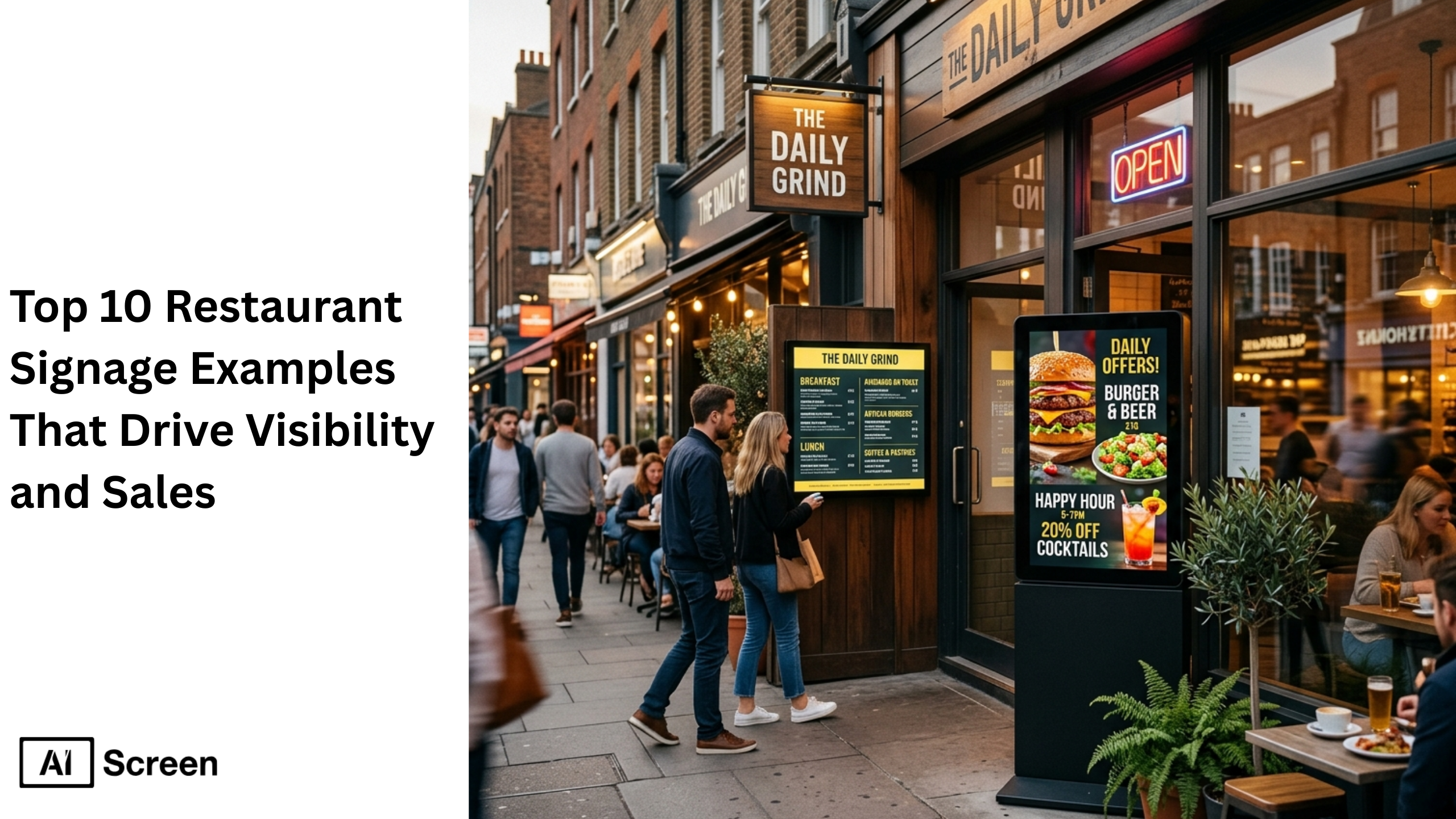
Restaurant signage examples show how restaurant signs and restaurant sign ideas influence visibility, branding, and customer decisions before diners even enter your establishment. The right combination of illuminated signage, wayfinding signage, contrasting colors, and smart signage design helps attract customers, guide foot traffic, and communicate your brand identity. According to QSR Magazine, fast-casual restaurants using dynamic menu boards report an 8-12% faster ordering process during peak hours.
In this blog, you’ll explore the top 10 restaurant signage examples used across modern restaurants, cafés, bars, and food trucks. Each example explains how a specific sign works, why it matters, and how it improves customer experience, visibility, and sales with digital signage software.
Which Top 10 Restaurant Signage Examples Help Boost Visibility and Sales?
The top 10 restaurant signage examples boost visibility and sales by shaping how customers notice, understand, and interact with a restaurant from the street to the dining space. Effective restaurant signage attracts customers, communicates brand identity, and guides guests through the entire dining experience.
These examples combine exterior signage, digital menu boards, sidewalk signs, wayfinding signage, and indoor promotional displays to support branding and customer engagement. When signage design uses the right font, lighting, images, and contrasting colors, it becomes a powerful communication tool. Platforms discussed in best digital signage software for restaurants in 2026 highlight how restaurants can manage content centrally while reducing printing costs.
1. Exterior Building and Freestanding Digital Signage
Exterior building signage is the first visual signal that attracts customers and communicates your restaurant’s brand identity. Channel letters, neon signs, monument signs, and illuminated signage help your restaurant sign stand out and remain visible day and night.
Strong exterior signage design increases foot traffic by making your establishment easy to locate from the street. Durable materials, clean fonts, and balanced lighting create an elegant and professional appearance that builds trust with potential diners.
Freestanding pylons and building-mounted signs reinforce your logo and guide guests toward the entrance. These restaurant signs set the tone for the entire dining experience before customers even step inside.
2. Digital Window Graphics
Digital window graphics instantly communicate promotions, hours, and menu highlights to people walking past your restaurant. Vinyl graphics, brand images, and customized designs transform ordinary windows into powerful storytelling displays.
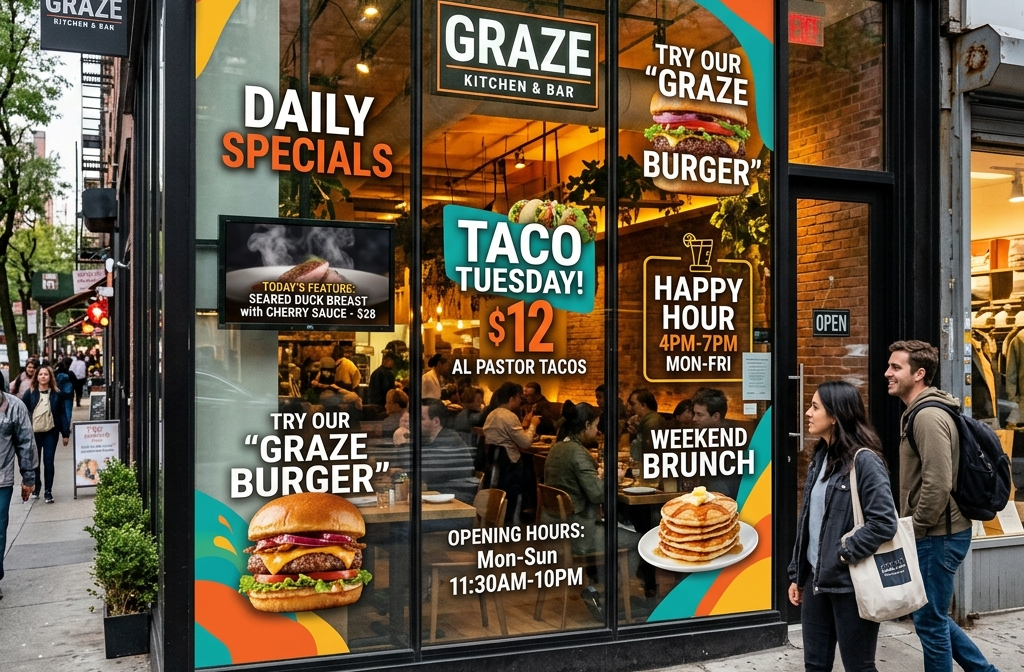
Using contrasting colors and clear typography improves visibility while maintaining a cohesive brand identity. Window graphics also help showcase menu items, seasonal offers, or signature dishes that attract customers from the street.
A study by ResearchGate found that colorful, high-contrast signage can increase customer dwell time by up to 20%. Well-designed window graphics elevate exterior signage and create an inviting atmosphere that encourages passersby to explore the restaurant.
3. Sidewalk Digital Signs
Sidewalk signs capture attention directly within a pedestrian’s walking path. Chalkboard signs and A-frame boards highlight daily specials, promotions, or fun menu messages that grab attention quickly.
These outdoor restaurant signage pieces attract walk-in diners by presenting fresh ideas and seasonal offers in a casual, approachable way. Restaurant owners often rely on sidewalk signs because they are affordable and easy to update.
Placed near a busy street, bar entrance, or café storefront, sidewalk signage helps guide foot traffic toward your location while reinforcing your restaurant’s personality.
4. Digital Menu Boards
Digital menu boards organize menu items and guide customers through the ordering process quickly. Backlit boards, chalkboard menus, and digital displays make menu sections easier to read while highlighting featured dishes. LED boards can showcase dynamic daily specials in restaurants.
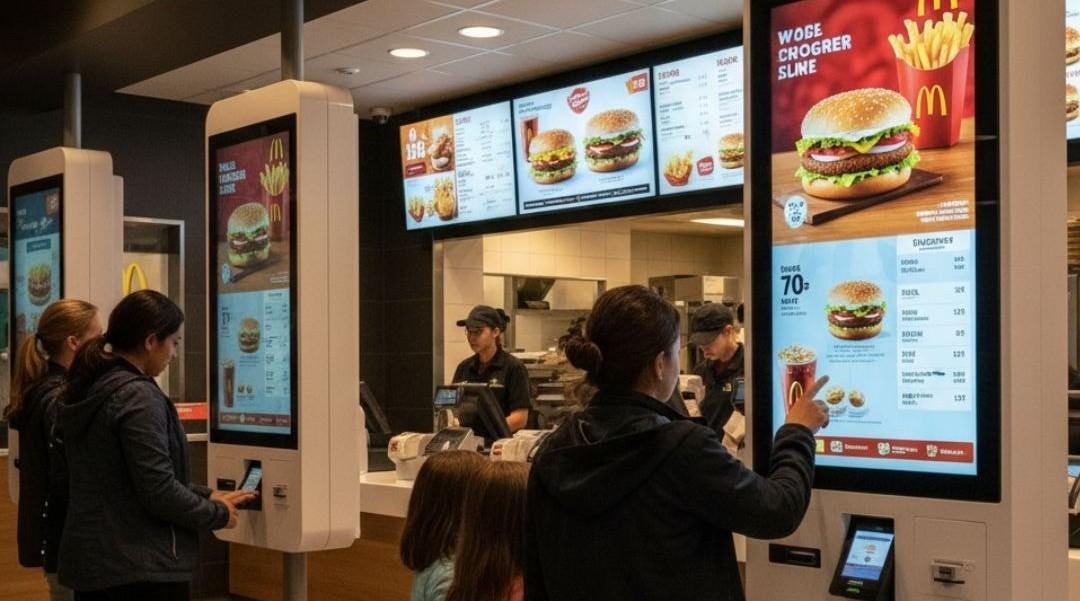
Consistent fonts, images, and layout improve clarity and help diners explore new menu items with confidence. Clear menu boards reduce confusion during busy service periods and improve ordering speed and it can act as a work of art and enhance the overall branding of a restaurant.
According to Statista, 45% of millennials say digital displays in restaurants influence their ordering decisions. Digital menu boards combine modern design with functionality, making them one of the most effective restaurant signage examples for increasing sales.
5. Digital Displays
Digital displays allow restaurants to showcase menu items, promotions, and brand visuals through animation, motion graphics, and video content. These screens attract attention faster than static signs and create a modern atmosphere inside the restaurant.
Restaurants can update prices, promotions, or menu combinations instantly without printing new materials. This flexibility makes digital signage both efficient and cost-effective. Bright and fun signage can set the tone for the customer experience from the moment they arrive.


6. Digital Flags and Banners
Flags and banners increase street-level visibility through height, movement, and bold graphic design. These signs are commonly used to advertise grand openings, seasonal promotions, or new menu launches.
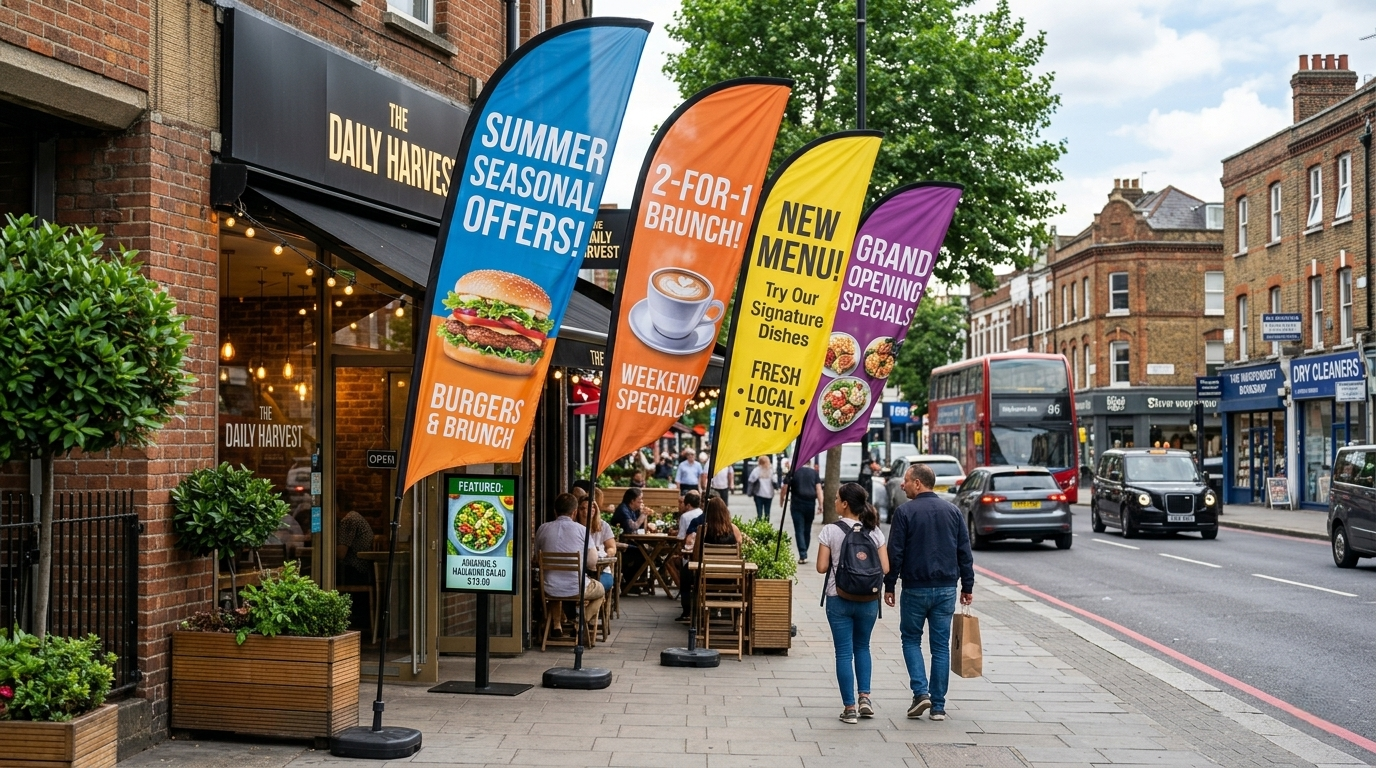
Because they move naturally in the wind, banners grab attention from both pedestrians and drivers. Restaurants often combine banners with exterior signage to reinforce brand identity and highlight special events.
Their lightweight structure and customizable graphics make them a flexible signage solution for cafés, bars, and restaurants of all sizes.
7. Directional Signage
Directional signage improves customer flow by helping guests navigate the restaurant easily. Wayfinding signage such as entry signs, pickup counters, restroom markers, and drive-thru arrows guide diners without confusion.
Clear signage design reduces stress during busy hours and helps customers move smoothly from the entrance to seating or ordering areas.
Matching fonts and colors with your brand style ensures these functional signs blend naturally into the restaurant environment. Effective wayfinding signage improves both service efficiency and overall customer experience.
8. Safety and Accessibility Signage
Safety and accessibility signage ensures restaurants comply with regulations while protecting guests and staff. These signs communicate important information such as fire exits, sanitation rules, allergen warnings, and accessibility guidance.
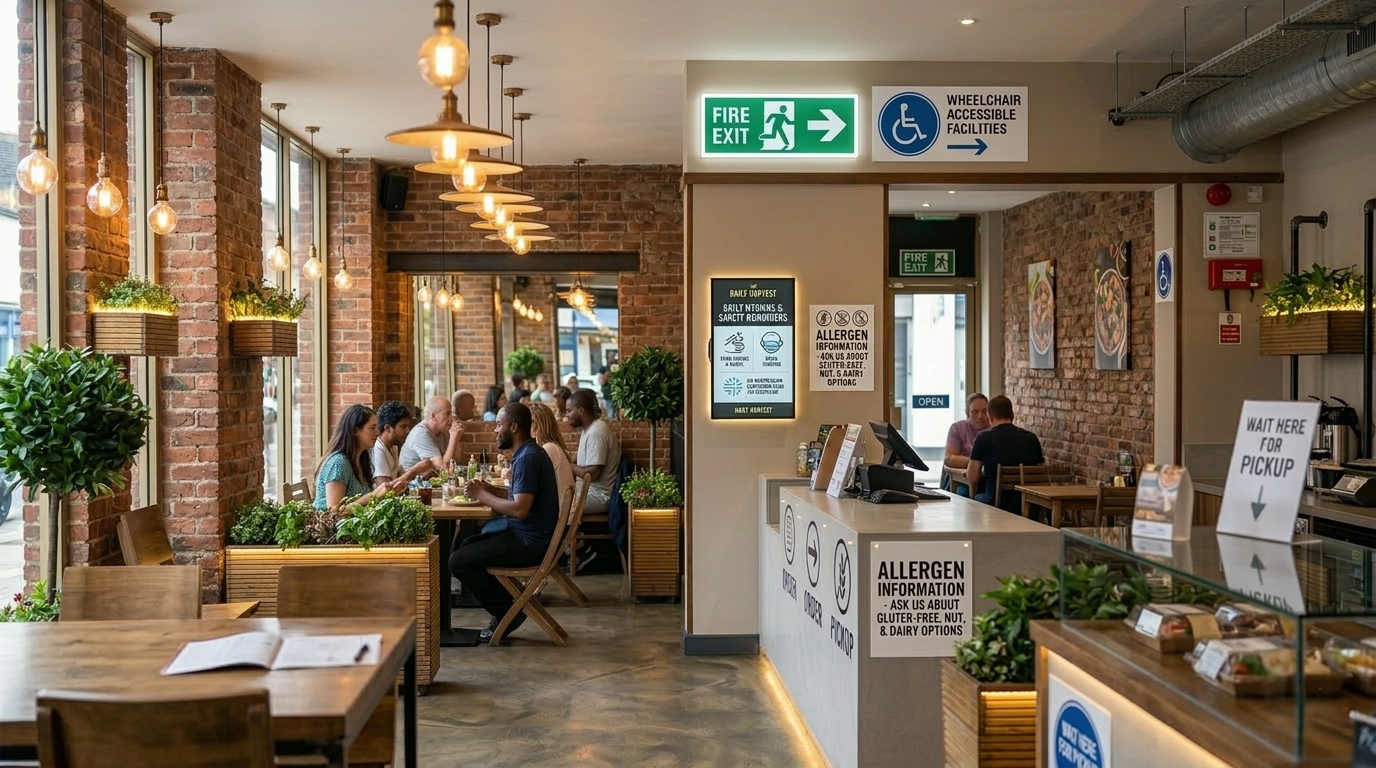
When safety signage integrates with the restaurant’s overall signage design, it maintains visual consistency while fulfilling legal requirements. Clear messaging also builds trust with diners.
Accessible signage supports an inclusive environment where all customers feel safe and informed throughout their visit.
9. Wall Murals and Art Displays
Wall murals and art displays transform restaurant interiors into memorable visual experiences. Custom artwork, graphic murals, and brand storytelling visuals strengthen emotional connections with customers.
These visual elements reinforce the restaurant’s theme and ambiance while making the space more engaging for diners. Murals often become photo-worthy backgrounds that customers share on social media, increasing organic visibility.
10. Indoor Promotional Signage
Indoor promotional signage highlights special offers, seasonal dishes, and loyalty programs inside the restaurant. Tabletop displays, counter signs, and wall posters guide attention toward specific menu items.
Strategically placed promotional signs increase upselling opportunities while maintaining a clean and organized dining environment. These signs support the restaurant’s branding by using consistent fonts, colors, and graphic styles.
How Do Digital Displays Improve Restaurant Signage?
Digital displays improve restaurant signage by turning static visuals into dynamic, real-time communication tools that adapt to customer behavior and business needs. They help restaurants update menus, promotions, and pricing instantly while maintaining consistent branding across locations.
But how do restaurants keep signage fresh without redesigning everything daily?
Modern setups use digital systems to rotate offers, highlight best-selling items, and align visuals with peak hours. This approach connects naturally with evolving concepts like trending restaurant signage design ideas in 2026, where motion graphics, personalization, and smart layouts drive stronger engagement and faster decision-making at the point of order.
How Digital Signage Elevates the Dining Experience?
Digital signage improves the dining experience by making menus easier to understand and visually engaging. Rotating displays can highlight best-selling items, chef specials, or seasonal dishes, helping customers decide faster.
Platforms like AIScreen simplify this process by allowing teams to manage content from a central dashboard, schedule updates, and keep every display in sync. Screens can shift from breakfast visuals to dinner promotions automatically, keeping the environment fresh. By combining visuals, animations, and clear messaging, digital signage ensures smoother ordering, stronger communication, and a modern dining experience.
Frequently Asked Questions
What types of outdoor signage do restaurants commonly use?
Restaurants commonly use building signs, channel letters, neon signage, monument signs, banners, and sidewalk boards. These exterior signage solutions improve visibility and help attract customers from busy streets.
How do top restaurants use signage to improve customer experience?
Top restaurants use signage to guide guests through their journey from entrance to ordering and seating areas. Digital menu boards, directional signs, and promotional displays reduce confusion and improve the overall dining experience.
Can themed or seasonal signage examples increase restaurant sales?
Yes, seasonal signage attracts attention by promoting limited-time offers and festive menus. These designs create excitement and encourage repeat visits throughout the year.
What are examples of eco-friendly restaurant signage?
Eco-friendly signage examples include recycled wood signs, repurposed metal signage, biodegradable vinyl decals, and energy-efficient LED displays. These options support sustainable branding while maintaining strong visibility.
Can QR-code signage improve ordering or menu access?
Yes, QR-code signage allows customers to access menus, place orders, or join loyalty programs instantly from their smartphones. This improves convenience and reduces the need for printed menus
