
What is Digital Shelf Analytics Software?

Digital shelf analytics software is a data-driven eCommerce solution that tracks, measures, and optimizes how products perform across the digital shelf, including marketplaces, retailer websites, search engines, and mobile apps. It collects and analyzes key digital shelf metrics such as product visibility, search rankings, pricing, availability, content accuracy, and ratings & reviews, helping brands improve online discoverability and conversion performance. According to Statista and McKinsey, over 70% of consumers start their buying journey online, making digital shelf analytics ebook (DSA) essential for modern eCommerce performance.
In this guide, you’ll learn how digital shelf analytics multiple platforms and digital signage software use AI-driven data analytics to convert raw digital shelf data into actionable insights. These insights help brands improve search rankings, content consistency, competitive benchmarking, and customer engagement, enabling smarter decisions and stronger revenue growth in omnichannel eCommerce environments.
What is Digital Shelf Analytics (DSA)?
Digital Shelf Analytics (DSA) is the process of monitoring and analyzing how products perform across online marketplaces, eCommerce platforms, and digital retail channels. Businesses use DSA tools powered by AI and machine learning to track product visibility, pricing, search rankings, customer reviews, stock availability, and competitor performance on platforms like Amazon and Walmart, helping brands optimize digital merchandising, improve conversion rates, and increase online sales performance.
How To Understand Your Digital Shelf Analytics Data and Performance Metrics?
To understand your Digital Shelf Analytics data, focus on key metrics like search visibility, product rankings, pricing, availability, and content quality across online marketplaces and product pages. These insights help you see how your products perform against competitors and how customers interact with your listings. By using this data, you can quickly identify gaps and improve your digital shelf performance and sales.
What Digital Shelf Data is Available to Measure Performance?
Digital shelf data available to measure performance includes a continuous stream of online marketplace insights that explain how products are discovered, evaluated, and purchased across marketplaces, search engines, and product detail pages.
A structured Digital Shelf Analytics framework connects key SEO entities such as search visibility, keyword rankings, content compliance, pricing competitiveness, stock availability, ratings and reviews, click-through rate (CTR), and conversion rate to core business outcomes like traffic, sales, and margin growth.
Key categories of digital shelf data include:
- Product visibility data: Measures search rankings, share of search, and product discoverability across marketplaces and retail platforms.
- Content compliance data: Evaluates product titles, images, descriptions, and content consistency for accuracy and optimization.
- Competitive intelligence data: Tracks pricing, promotions, competitor listings, and category positioning for benchmarking.
- Performance metrics data: Includes conversion rates, click-through rates (CTR), and engagement metrics to assess listing effectiveness.
- Inventory data: Monitors stock availability, out-of-stock rates, and supply consistency to prevent lost sales opportunities.
Combining these datasets enables brands to generate actionable insights, optimize their digital shelf presence, and drive stronger eCommerce performance.
What are the Most Essential Digital Shelf Performance Metrics?
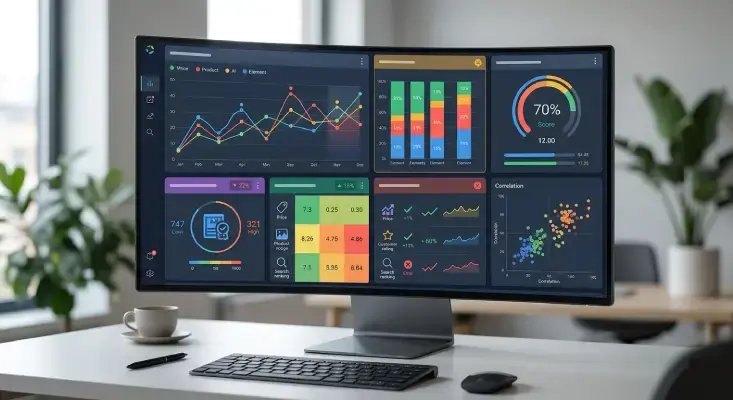
The most essential Digital Shelf Performance Metrics are those that directly connect to business outcomes such as visibility, conversion, and profitability across ecommerce channels.
Key digital shelf performance metrics include:
- Share of Search: Measures how often a product appears in search results compared to competitors, directly impacting product visibility and discoverability.
- Click-Through Rate (CTR): Tracks how many users click on a product after seeing it, reflecting content effectiveness and user interest.
- Conversion Rate: Shows the percentage of users who complete a purchase, linking product pages and pricing strategy to actual revenue generation.
- Content Compliance Score: Evaluates the accuracy and completeness of product titles, images, and descriptions, ensuring content consistency and optimization.
- Availability Rate: Measures how often products are in stock, directly affecting lost sales prevention and customer satisfaction.
- Price Competitiveness: Compares product pricing with competitors, influencing buying decisions and market positioning.
By aligning these metrics with business goals, brands can transform digital shelf analytics data into actionable insights that drive growth, profitability, and competitive advantage.
What are Top Tips For Digital Shelf Analytics and Reporting?
Top tips for Digital Shelf Analytics (DSA) and reporting focus on transforming raw online store data into clear, actionable insights that drive measurable outcomes like visibility, conversion, and revenue growth.
1. Align Digital Shelf Metrics with Business Priorities
Aligning Digital Shelf Analytics metrics with core business priorities ensures that ecommerce data directly supports outcomes like revenue growth, brand visibility, and market expansion across online marketplaces and retail channels.
2. Standardize Metrics and KPIs Across All Channels
Standardizing Digital Shelf Analytics metrics and KPIs across all online retail channels ensures consistent performance measurement across marketplaces, brand websites, and direct-to-consumer (D2C) platforms.
3. Differentiate Between Insights and Quality Assurance
Performance insights reveal opportunities to improve search visibility, conversion rates, and competitive positioning, while quality assurance ensures content accuracy, compliance, and data consistency across product listings. Balancing both helps brands stay proactive in optimization while maintaining control over digital shelf performance.
4. Prioritize Insights Over Volume
Tracking too many metrics creates noise and slows decision-making. Focus on high-impact signals like search visibility, conversion rate, and pricing gaps to quickly identify opportunities and fix issues. This helps improve digital shelf performance more efficiently.
5. Evaluate Personalization and Customer Experience Tracking
Track how personalized content and dynamic pricing impact engagement and conversion rates across product listings. Focus on user behavior, content relevance, and customer journey signals to understand performance. This helps improve customer experience and optimize digital shelf results.
How Does Digital Shelf Analytics Work?
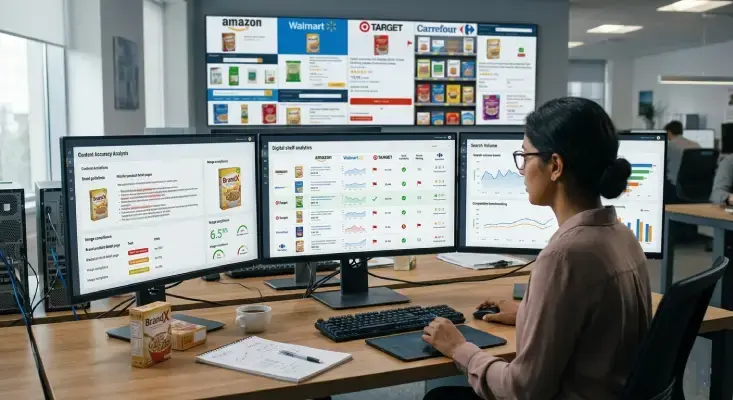
Digital Shelf Analytics works by capturing every user interaction; such as search queries, clicks, and product views; across retail digital signage platforms, marketplaces, and product detail pages, and transforming this data into actionable performance insights.
- Data Capture: Collects real-time data on search rankings, pricing, availability, and product content across platforms.
- Data Cleansing: Removes errors, duplicates, and inconsistencies to ensure data accuracy and reliability.
- Data Analysis: Interprets patterns in performance metrics, competitor data, and user behavior signals.
- Actionable Insights: Generates insights and alerts to optimize visibility, pricing strategy, and content effectiveness.
How Do Digital Shelf Analytics Software Tools Collect Data?
Digital Shelf Analytics software tools collect data using automated web scraping and crawling technologies to extract SKU-level insights from online marketplaces, retail websites, and search platforms. They track key SEO entities such as search rankings, pricing, product content, availability, and ratings to monitor digital shelf performance. This AI-driven, real-time data collection helps brands identify changes in visibility, competitor activity, and optimization opportunities.
How Do Brands Use Digital Shelf Data for Optimization?
Brands use Digital Shelf Analytics data to identify performance gaps and optimize key SEO entities such as search visibility, pricing strategy, content quality, and product availability across online retail channels.
- Out-of-stock (OOS) frequency: Tracks how often products are unavailable, helping brands reduce lost sales and improve inventory management.
- Pricing fluctuations: Monitors price changes across competitors and channels to maintain price competitiveness and margin optimization.
- Ratings & reviews: Evaluates customer feedback and sentiment to enhance product credibility and conversion rates.
- Share of search visibility: Measures how often products appear in search results, improving discoverability and traffic acquisition.
These insights enable continuous optimization of the digital shelf, allowing brands to enhance customer engagement, product positioning, and revenue growth across multiple channels.


Digital Shelf Monitoring vs. Digital Shelf Analysis: What’s the Difference?

Digital shelf monitoring and digital shelf analysis are two core components of digital shelf analytics, where monitoring focuses on real-time tracking of pricing, availability, and product content changes across the online stores ecosystem, while analysis interprets this data to uncover trends, performance gaps, and optimization opportunities.
Key Differences Between Digital Shelf Monitoring and Analysis
| Aspect | Digital Shelf Monitoring | Digital Shelf Analysis |
|---|---|---|
| Definition | Real-time tracking of product data changes | Interpretation of collected data for insights |
| Focus | Pricing, availability, content updates | Trends, performance insights, optimization |
| Purpose | Identify immediate issues like stockouts or price drops | Improve strategy based on data patterns |
| Approach | Continuous data collection across platforms | Data evaluation and decision-making |
| Example | Detecting out-of-stock products on marketplaces | Forecasting demand and optimizing inventory strategy |
Why Digital Shelf Analytics Important for Brands and Manufacturers?
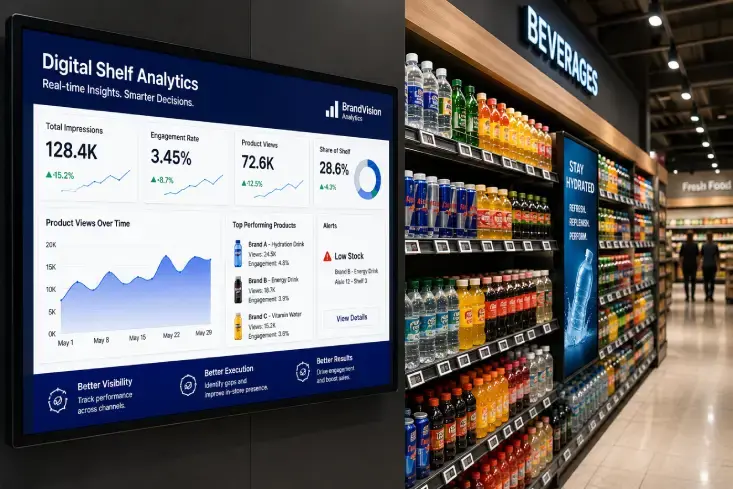
Digital Shelf Analytics is important for brands and manufacturers because it connects key SEO entities like search visibility, pricing, content quality, and product availability with measurable outcomes such as conversion rate, revenue growth, and brand consistency.
- Digital shelf monitoring for product visibility and search rankings: Enables real-time tracking of search rankings, share of search, and product discoverability, helping brands maintain strong visibility across the digital shelf.
- Digital shelf data insights for optimization opportunities: Provides actionable insights from content compliance, performance metrics, and availability data, allowing continuous optimization across SKUs and retail channels.
- Digital shelf analysis of competitive positioning and pricing: Supports evaluation of price competitiveness, promotions, and competitor strategies, improving market positioning, ROI, and long-term omnichannel performance.
What are the Types of Digital Shelf Analytics?
The main types of Digital Shelf Analytics include search visibility analytics, content compliance analytics, pricing and promotion analytics, availability tracking, and competitor benchmarking.
1. Content Performance Analytics
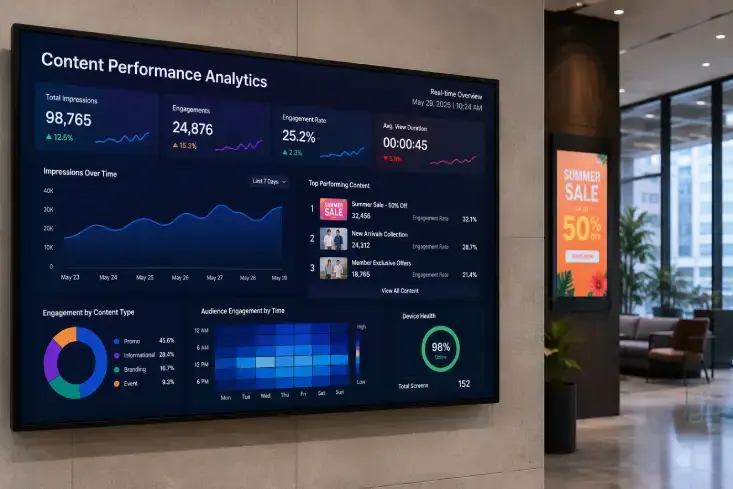
Content performance analytics focuses on optimizing product detail pages (PDPs) by evaluating title accuracy, product descriptions, images, and content compliance across platforms. It ensures consistent and high-quality product content, improving search relevance, user experience, and conversion rates.
2. Search and Visibility Analytics
Search and visibility analytics measures how products appear in eCommerce search engines using metrics like share of search, keyword rankings, and product discoverability. It helps brands improve search visibility, drive organic traffic, and strengthen digital shelf positioning.
3. Pricing and Promotion Analytics
Pricing and promotion analytics tracks price changes, MAP compliance, competitor pricing, and discount strategies across channels. This enables brands to maintain price competitiveness, optimize promotional campaigns, and protect profit margins.
4. Availability and Stock Analytics
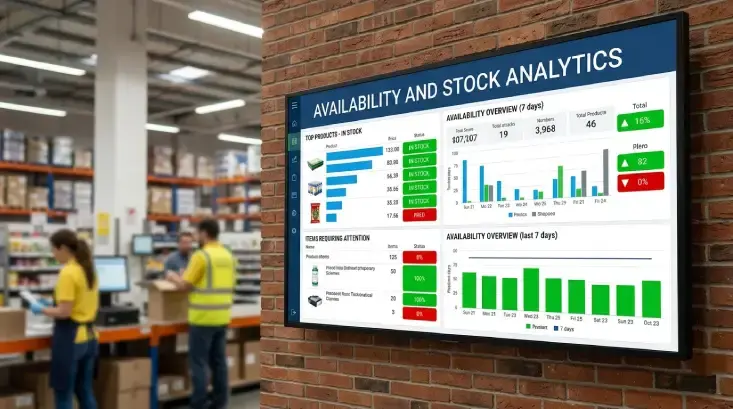
Availability and stock analytics monitors inventory levels, out-of-stock (OOS) rates, and distribution coverage to ensure consistent product availability across the digital shelf. It helps prevent lost sales and improves supply chain visibility and efficiency.
5. Ratings and Reviews Analytics
Ratings and reviews analytics analyzes customer feedback, review scores, and sentiment patterns to identify product issues and improvement opportunities. This supports better customer experience, product optimization, and brand trust across the eCommerce journey.
How to Get Started with Digital Shelf Analytics?
Getting started with Digital Shelf Analytics begins with identifying the right performance signals such as product visibility, search rankings, pricing trends, content accuracy, and stock availability across online sales channels.
Step 1: Choose a Reliable Digital Shelf Analytics Software
Start by selecting a digital shelf analytics platform that supports real-time dashboards, automated alerts, custom KPIs, and cross-platform compatibility. The right tool should integrate with multiple eCommerce channels, enabling centralized monitoring of product performance, pricing, and availability.
Step 2: Identify Key Digital Shelf Metrics
Define the most relevant digital shelf metrics based on your product category, target audience , and sales channels. Focus on metrics like share of search, conversion rate, pricing competitiveness, and content compliance to align analytics with business goals and performance outcomes.
Step 3: Collect and Clean Digital Shelf Data
Use automated tools for data collection across marketplaces and retailer platforms, ensuring consistent tracking of SKU-level data, search rankings, and inventory status. Clean and structure the data to remove errors and duplicates, improving data accuracy and reliability for analysis.
Step 4: Analyze and Act on Digital Shelf Insights
Interpret digital shelf data to identify gaps in product visibility, pricing, and content quality, then apply insights to optimize product detail pages (PDPs), pricing strategies, and promotional campaigns. This step connects analytics with real business actions and revenue impact.
Step 5: Track and Optimize Digital Shelf Performance
Continuously monitor digital shelf performance metrics, benchmark against competitors, and run experiments to improve search rankings, conversion rates, and availability. Ongoing optimization ensures sustained growth, competitive positioning, and omnichannel consistency.
How to Measure Digital Shelf Analytics Performance
Measuring Digital Shelf Analytics performance starts with setting clear benchmarks and monitoring how products are discovered, displayed, and purchased across online platforms. By analyzing factors like visibility, pricing alignment, content accuracy, and availability, brands can understand what drives customer decisions. This structured evaluation helps identify gaps, improve product positioning, and strengthen overall digital shelf effectiveness.
- Product findability: Track search rankings, share of search, and product discoverability to measure how easily customers can find products across marketplaces and search engines.
- Product content quality: Evaluate content accuracy, completeness, and compliance of product detail pages (PDPs) to ensure consistency and improve conversion performance.
- Stock availability: Monitor availability rate and out-of-stock levels to prevent lost sales and maintain consistent digital shelf presence.
By combining these metrics with competitive benchmarking, brands can compare their digital shelf position against competitors and identify gaps in pricing, visibility, and content strategy, ensuring continuous optimization and performance growth.
How Does Digital Shelf Analytics Connect with On-Premise vs Cloud-Based Digital Signage Software?
Understanding how digital shelf analytics connects with on-premise vs cloud-based digital signage software is essential for optimizing data-driven content delivery and omnichannel performance. The right deployment model impacts real-time updates, scalability, and centralized content management, helping brands align their digital signage strategy with customer engagement and eCommerce growth goals.
Keep Learning About Digital Shelf Analytics with AIScreen Digital Signage Software!
Turn your digital shelf analytics insights into action with AIScreen digital signage software, designed to support data visualization, real-time dashboards, and performance tracking across the eCommerce ecosystem. By centralizing digital shelf data, AIScreen helps businesses monitor product visibility, pricing, and content performance, enabling smarter, faster data-driven decisions.
With advanced analytics dashboards and real-time reporting capabilities, AIScreen empowers brands to improve digital shelf optimization, customer engagement, and revenue growth. Start leveraging actionable insights today to enhance your competitive positioning and omnichannel performance.
FAQs
What digital shelf data should I monitor regularly?
The digital shelf data you should monitor includes product visibility, search rankings, pricing, content compliance, availability, and ratings & reviews across the eCommerce ecosystem, as these metrics directly impact conversion rates and sales performance.
How often should digital shelf monitoring occur?
Digital shelf monitoring should occur continuously or at frequent intervals to track real-time changes in pricing, availability, and product content, ensuring consistent digital shelf performance and competitive positioning.
Can digital shelf analytics improve customer engagement?
Yes, digital shelf analytics improves customer engagement by optimizing product content, personalization, and search visibility, helping brands deliver more relevant and effective shopping experiences.
Is digital shelf analytics software useful for companies not selling directly online?
Yes, digital shelf analytics software is valuable for brands not selling directly online, as it helps monitor retailer performance, product listings, and brand visibility across third-party marketplaces and distribution channels.
How can Digital Shelf Analytics impact brand consistency?
Digital shelf analytics improves brand consistency by ensuring accurate and uniform product content, pricing, and messaging across all digital touchpoints, strengthening brand identity and customer trust.
