
What Are 7 Compelling Retail Signage Ideas?
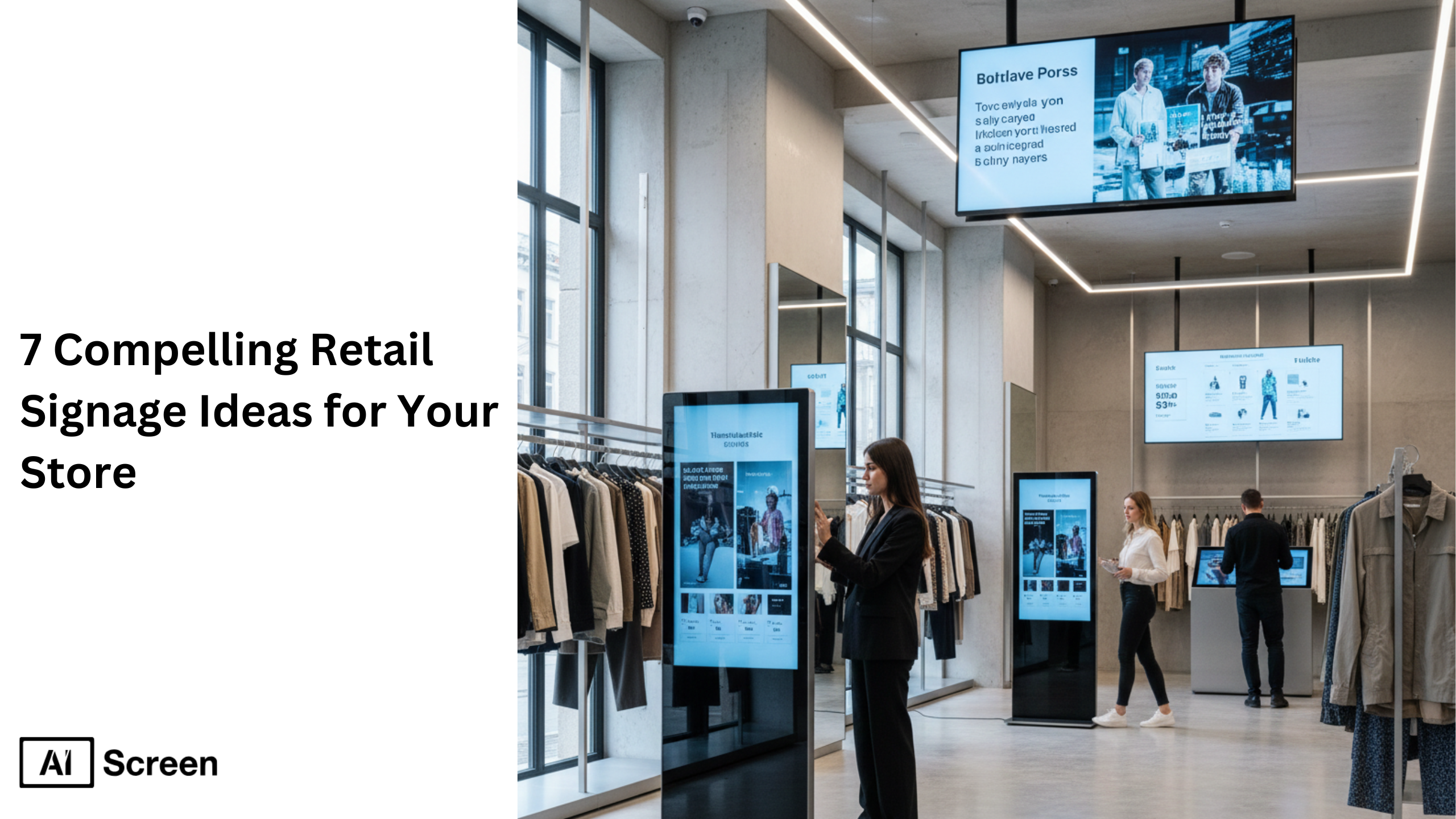
retail store signage concepts
Retail signage is a powerful tool for in-store communication, customer engagement, and visual merchandising. When done right, compelling signage can guide shoppers, reinforce your brand identity, and even drive conversions. Clear, attention-grabbing signs act like a “silent salesperson,” influencing purchase decisions subtly but effectively. In fact according to CCR-Mag, 76% of consumers have walked into a store they’d never visited before simply because its signage caught their eye.
In this blog, we’ll walk you through 7 compelling retail signage ideas for your store. Each idea focuses on a different principle, from choosing the right font to testing your layout, to help you create signage that not only looks good but also works hard. Whether you’re designing for foot traffic, seasonal promotions, or loyalty programs, these tips will help you build retail signage that draws in potential customers and boosts sales.
1. Keep Retail Sign Short and Direct
Concise messaging improves clarity and ensures customers absorb information quickly. The most effective signage respects shrinking attention spans and communicates the main idea without distractions. According to behavioral research, shoppers typically read fewer than 20 words per sign, highlighting the importance of brevity in effective signage.
Just as we once struggled to write tweets under 140 characters or compress a video into two minutes, today’s consumers absorb even shorter content, influenced by fast, visual-driven platforms like Instagram and Snapchat.
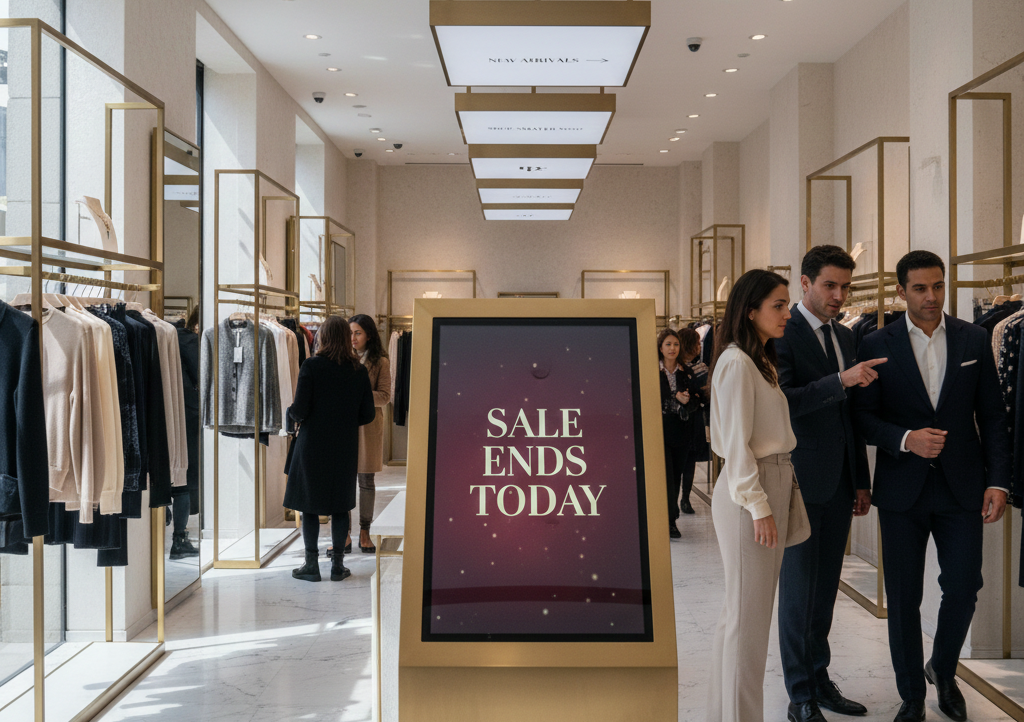
When designing store sign ideas, focus on a clear message that instantly grabs attention in high foot traffic areas such as fitting rooms, checkout points, or storefront entrances. Customers are in a hurry, respect that urgency. Use minimal words and direct phrasing to reduce cognitive load and maintain impact. Strong persuasive signs often lead with outcome-focused statements such as “Sale ends today”, “Shop smarter now”, or “Limited time only” to trigger fast decision-making. Limit each sign to one key idea, whether promoting a sale sign or guiding customers inside your shop.
For better retail sales, consider the environment where the sign appears, busy store aisles or promotional zones need instant clarity. The best-performing signage encourages quick action, aligns with your business logo, and supports your effort to sell by making the next step obvious. Short, direct signage becomes more than a display, it becomes a silent salesperson. Pairing these concise messages with digital signage software lets you refresh every store screen in seconds and keep each promotion timely.
2. Choose Retail Sign Fonts That Are Easy to Read
When designing any retail signage design, typography plays a defining role in how quickly and accurately the message is received. Clear, easy-to-read fonts without decorative complications ensure that even passing customers in high foot traffic zones can interpret the message instantly. High contrast between text and background dramatically improves visibility, supporting effective signage whether your display is indoors or outdoors.
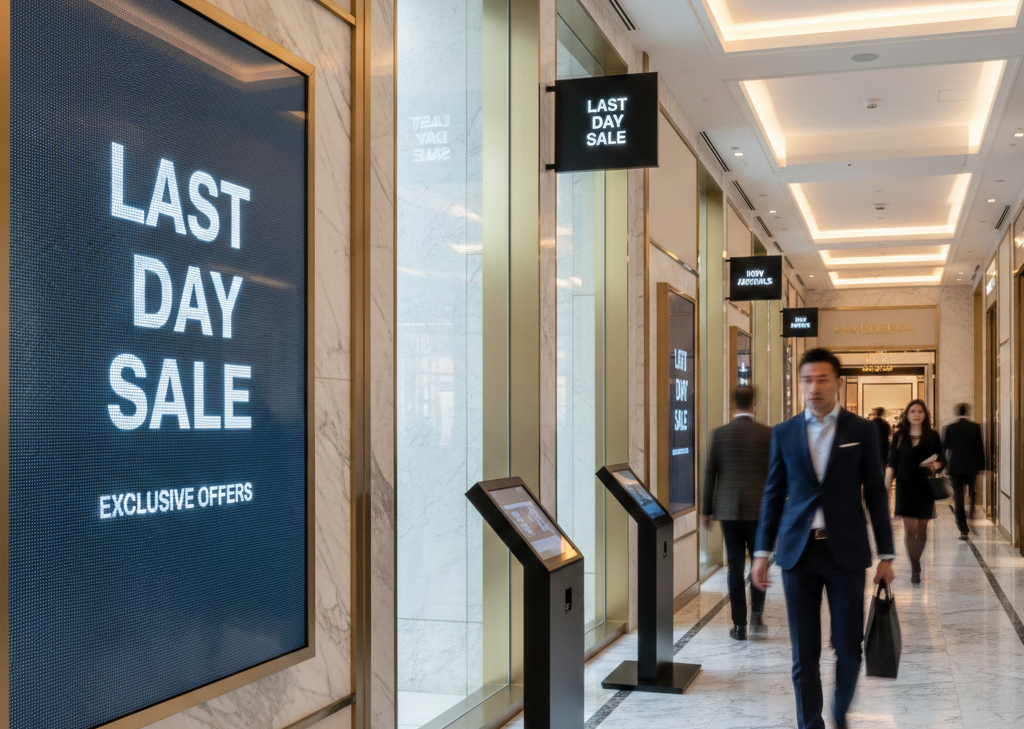
Sometimes a handwritten chalkboard may work in a casual setting, but when driving retail sales, your signage must perform consistently. If customers cannot quickly read your message, they’ll simply walk past, a lost opportunity. As Baby Boomers age, readability becomes even more crucial, making small and overly stylized fonts less effective. Use bold fonts, especially for urgency-based sale sign messaging like “Last Day Sale” or “Offer Ends Soon”, to grab attention instantly.
Strategically selecting fonts also supports brand alignment. Using consistent typefaces across persuasive signs, storefront branding, and promotional messaging builds familiarity and trust, two factors proven to increase sales and customer retention.
The most successful signage ensures that readers don’t have to strain to understand the sign, especially in environments with quick movement such as shop entrances or store aisles. Whether your goal is brand exposure, faster decision-making, or highlighting a limited time offer, readable typography turns signage into a reliable business asset.
3. Highlight the Customer’s Reasons for Choosing Your Product or Service
Encouraging value-driven messaging helps persuade and inform potential buyers by focusing on benefits, not just features. In-store signage examples become far more effective when they speak directly to customer motivations rather than listing product specifications.
Think from the customer’s perspective: What are they actually buying this for? To be a hero to his son? To look fabulous for a date? To have easy-to-manage hair? Then tell them through persuasive signs, “Be a hero tonight with this.” “Make heads turn!” “Manage curly hair with this.”
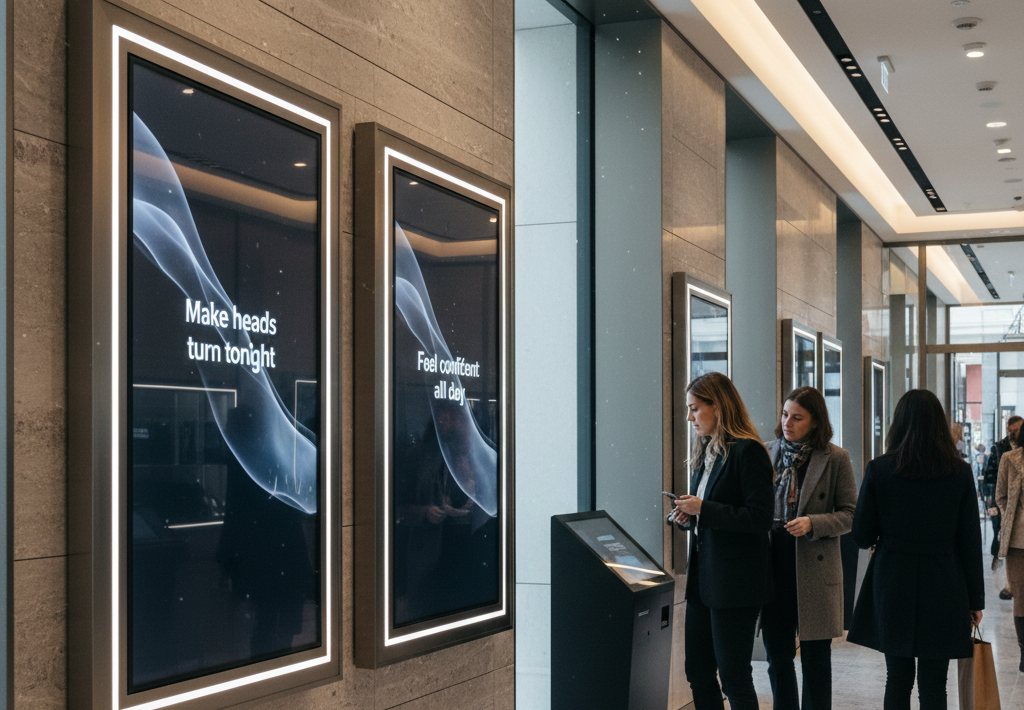
Use emotional triggers and relatable situations to create compelling signage that resonates with your target audience. When your retail signage clearly addresses real-life scenarios, it strengthens brand recognition and increases sales because potential customers connect instinctively with the sign’s message. This strategy reflects effective signage principles seen across retail signage design, ensuring customers feel understood and encouraged to take action.
The best in-store signage examples simplify the decision-making process by highlighting how the product will enhance the customer’s experience. Rather than saying “High-quality shampoo,” write “Manage curly hair with ease, feel confident all day.” These small but powerful edits help store signage ideas grab attention, influence impulse purchases, and attract customers directly at decision points like checkout areas, fitting rooms, or high-traffic storefront signs. When customers visualize using the product, conversion rates rise, making this one of the strongest tips to create compelling retail signage.
How Does Retail Digital Signage Planning Shape These Ideas?
Every idea above works best when it sits inside a wider strategy, and that is where retail digital signage planning comes in. Mapping which message belongs at the entrance, the aisle, and the checkout before you print or schedule anything keeps each sign purposeful and consistent. Good planning decides placement, timing, and content flow so your store communicates one clear story rather than a scatter of competing signs.
A strong retail digital signage plan also helps teams coordinate promotions, product launches, seasonal campaigns, and in-store updates across multiple screens. By organizing content around customer movement and key decision points, retailers can keep messaging relevant, reduce visual clutter, and create a smoother shopping experience from entry to checkout.
4. Use “you” and “your” in Your Messaging
Discussing how direct language makes signage feel personal and conversational increases engagement and relevance, making it one of the most effective store signage ideas. Customers buy when they start visualizing themselves using your products, and incorporating the words you or your makes the message stronger. Notice how much more persuasive these phrases sound: “You’ll be a hero tonight with this.” “You’ll make heads turn!” “Manage your curly hair with this.”
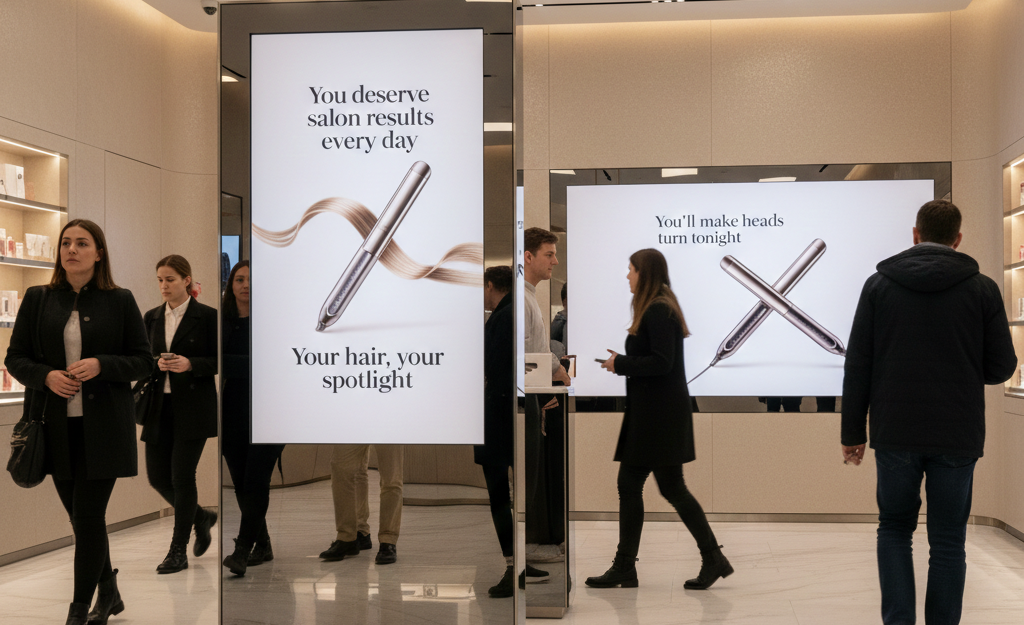
A study by Harvard Business Review, found that marketing messages using second-person pronouns like you and your increased emotional response and engagement by up to 34%, helping brands connect more effectively with their audience. This proves how powerful personalized messaging can be in signage design.
Using “you” transforms general retail signage into compelling communication that encourages people to act. The most effective retail signage uses readable fonts, eye level placement, and light backgrounds to emphasize the message clearly.
Incorporating the customer directly helps draw attention, boost sales, and create urgency, especially for sale sign, limited time offers, or attractive imagery. When customers see themselves benefiting from the product, they instinctively respond, leading to more customers entering your shop and ultimately buying.


5. Remember That Less Is More
Emphasizing minimalist design principles increases clarity and improves message retention. The most effective in-store signage examples focus on one core message per sign, supported by strategic whitespace. A recent article in The Wall Street Journal observed that people are now shortening digital communication down to just a few words, initials, or symbols, proving our collective shift toward succinct messaging. Apply the same approach to your signage: edit ruthlessly until the meaning remains but the fluff is gone.
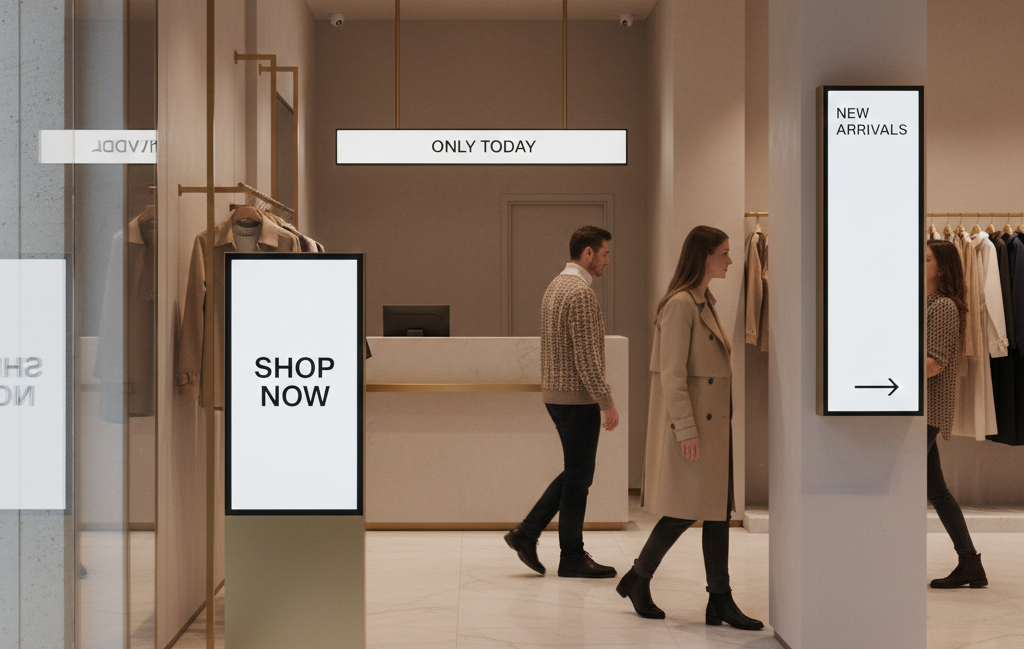
Signage design with bold fonts and limited elements ensures readability, so customers instantly understand the main message. Whether you’re designing outdoor signage, floor graphics, or directional signs, keep the focus on clarity. Smaller signs with less text are more effective in capturing customers’ attention at quick glance points such as checkout areas, opening hours displays, or even interactive kiosks.
The strongest retail signage design uses clear branding, one sign = one message, and encourages immediate action. Use phrases like “Shop now”, “Last chance”, or “Only today” to create urgency. Limiting distractions helps customers interpret the sign faster, increasing conversion rates and supporting your business goals. Minimalism ensures your signage remains eye-catching without overwhelming, ultimately improving retail sales and brand building.
6. Test Your Retail Signage
Explaining the importance of testing signage ensures that even well-designed signs perform as intended. It’s exciting to see a new sign above your window display that you believe is perfect—until you notice it’s too faint to be seen through tinted glass or the fonts are unreadable to cars going 25 mph. If you’re located on a busy street, have someone drive by and describe the sign’s message. If they don’t understand it instantly, edit, edit, edit.
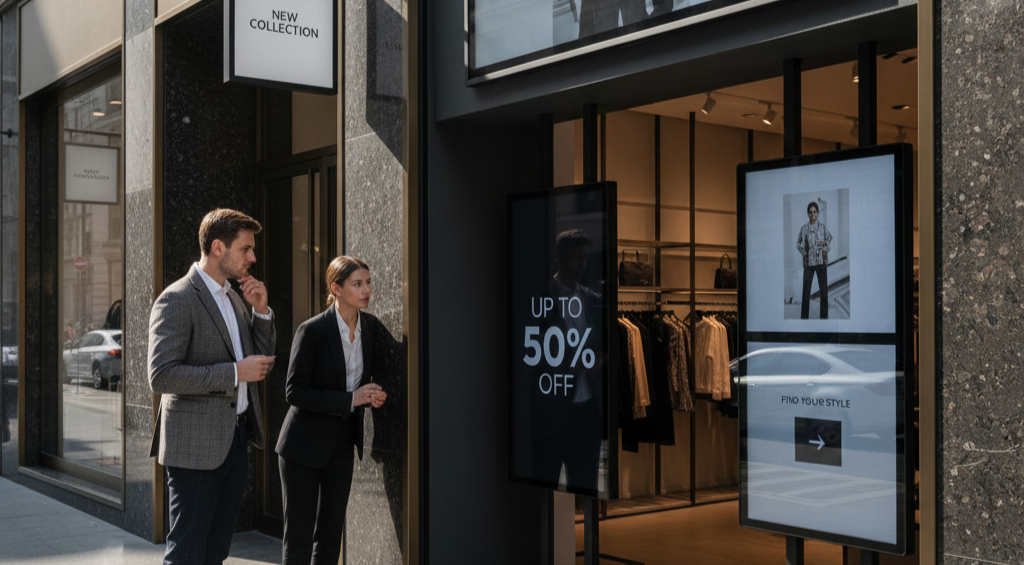
Testing placement, readability, and clarity from various angles and distances helps ensure effective retail signage. View the sign from eye level, 10 meters away, and in different lighting conditions. Check if it’s still clear in both daylight and evening. This practice improves signage for your retail and enhances the shopper experience by ensuring the sign is practical, engaging, and visible.
Ultimately, testing ensures promotional signs and storefront signs truly attract customers rather than blend into the background. Regular reviews allow retailers to refine the main message emphasis, ensure readability through readable fonts and light backgrounds, and adapt based on real-world conditions. When businesses test and adjust signage accordingly, they increase sales, improve navigation, and grab attention more consistently.
7. Enjoy the Creative Process
Encouraging creativity helps you stand out in competitive retail environments. Boring signs are, well, boring, your goal is to grab a casual browser’s attention. Use double entendres, puns, or playful text to reflect your store’s personality, while maintaining brand identity. Yes, some people may not find it funny, but the majority of potential customers will, and they may even share it on social media. Such content often draws attention, increases engagement, and attracts customers organically.
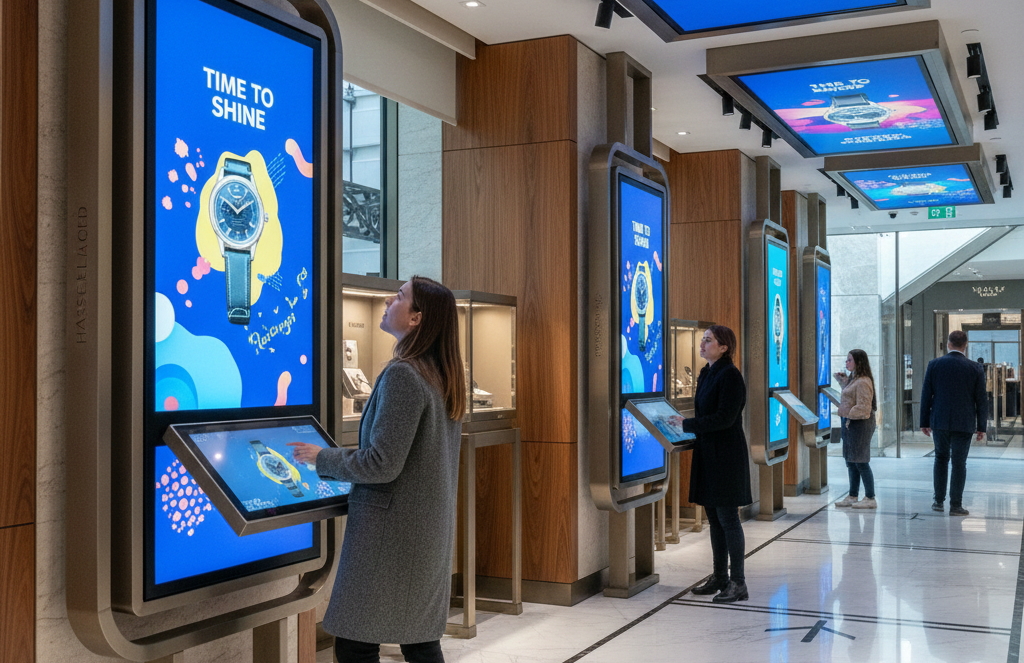
A recent report by Deloitte, revealed that retail brands using creative visual communication strategies, including humor, interactive content, and dynamic displays, experienced a 23% increase in customer engagement and a 15% boost in sales, supporting the integration of immersive shopping experience elements like video walls, interactive kiosks, eye-catching imagery, and vibrant graphic designs.
When designing promotional signs, use bold fonts, attractive imagery, and colors that match your brand, ensuring they align across interior signage, outdoor signage, floor graphics, and even QR codes. Play with shapes, textures, and sale sign formats, but always keep the main message clear and targeted to the customer.
Joyfully experimenting with signage helps retailers create compelling retail signage that strengthens brand building, encourages people to explore, and enhances retail sales. Whether you’re designing one sign or an entire store-wide campaign, let creativity, relevance, and consistency guide you.
Explore the best trade show signage ideas and examples to attract visitors, communicate your message clearly, and stand out on the show floor.
What Retail Signage Mistakes Should You Avoid?
The common mistakes to avoid for retail signage often stem from trying to say too much at once, which negatively impacts how the sign communicates with your store visitors. When retailers overcrowd text, the message gets lost, making it harder to sell effectively. A sign should deliver a clear, single-purpose message that supports the logo and reflects the crucial role of your brand voice in driving decisions.
Poor contrast is another mistake that reduces readability. If the background and text don’t pop visually, the sign won’t stand out or guide customers inside the store. Your retail sign should ideally feature high color contrast and clean fonts to support faster decision-making and increase the power to sell at a glance.
Inconsistent brand voice is also a major pitfall. Just like your merchandise, you don’t want to be generic. I can’t tell you how many times I’ve seen retailers bastardize the award-winning California Milk Advisory board, “Got Milk?” into “Got weeds? Got kids? Got bed bugs?” You get the idea. Be creative. Your signage should express personality while keeping the logo consistent and reinforcing the store identity, fulfilling its crucial role in shaping customer perception.
Outdated signs are another common issue. Retailers that neglect visual freshness compromise customer trust and reduce their ability to sell through updated messaging. Updating signs regularly ensures your store maintains relevance and supports ongoing promotions with strong visual cues.
Finally, neglecting accessibility leads to missed sales opportunities. Retail signage must consider readability from a distance, height placement, visual hierarchy, and font clarity. A sign that ignores accessibility limits its crucial role in engagement and prevents your store from reaching all potential buyers.
What Can Retail Signage Learn From Stadium Signage?
Large venues face the same core challenge as any shop: guiding crowds with instant, readable messaging under real time pressure. Studying how stadium signage handles wayfinding, live promotions, and high visibility displays gives retailers a proven blueprint. Both settings reward bold fonts, single messages, and screens that update the moment conditions change, so the lessons carry straight back to your store floor.
Retailers can also apply stadium-style zoning by matching each screen to a specific purpose, such as navigation, promotions, queue updates, or product discovery. This keeps content easier to scan, reduces confusion, and helps customers move through the store with the same clarity expected in large, high-traffic venues.
Frequently Asked Questions
What types of signs are most effective for retail stores?
The types of signs most effective for retail stores are ones that clearly guide customer decisions, use high-contrast visuals, and support your logo positioning. These signs play a crucial role in driving action and helping your store sell faster by highlighting key products and promotions.
How can I design eye-catching retail signage that reflects my brand?
To design eye-catching retail signage that reflects your brand, focus on sharp readability, consistent tone, and strong alignment with your logo. The sign should mirror your brand personality, playing a crucial role in capturing attention and influencing how customers connect with your store.
Why should retailers update signage regularly for fresh appeal?
Retailers should update signage regularly for fresh appeal to prevent visual fatigue and maintain relevance. The sign operates as a key store asset, and frequently refreshing it plays a crucial role in maximizing your ability to sell effectively for both new customers and returning buyers.
Can retail signage be customized for seasons, sales, and special events?
Yes, retail signage can be customized for seasons, sales, and special events, allowing your store to reflect market timing. This customization enhances the crucial role of promotional storytelling and supports your ability to sell by visually aligning with current buying moods.
Is window signage more effective than in-store signage for foot traffic?
Yes, window signage is often more effective than in-store signage for foot traffic because it serves as a sign that attracts customers before they step inside the store. With strategic logo placement and attention-focused design, it plays a crucial role in enticing those walking by and converting them into buyers.
Why Choose AIScreen for Retail Signage?
Digital signage can take your retail displays even further by enabling dynamic content that adapts according to store traffic, seasonal needs, or live promotions. With automated scheduling and real-time updates, each screen works as a responsive sign that maximizes the crucial role of visual impact and enhances how effectively the store can sell in the moment.
Digital displays allow more immersive visuals, including motion graphics and interactive elements that traditional signs simply cannot match. When aligned with your logo and retail identity, digital signage captures attention instantly, boosting promotional strength and enabling your store to sell with higher engagement rates.
Automated content scheduling allows retailers to plan ahead for events, seasonal transitions, and new arrivals, limiting manual updates. This supports marketing agility and reinforces the crucial role of visual communication in retail success.
Digital Signage vs Traditional Retail Signs
When comparing both solutions, digital signage outperforms traditional retail signs in terms of adaptability, interactivity, and long-term value. Digital displays allow content updates remotely, lowering printing costs while enabling flexible promotions that help the store sell in real time.
Midway through understanding the advantages, it’s essential to detail the difference between digital signage and traditional signage, which lies in motion-based visuals, customization speed, and automated scaling. Digital signage provides motion graphics and live data, while static print relies on a fixed layout with no instant update capability.
Additionally, traditional signs still hold a crucial role in fixed branding, particularly for high-traffic or external store positioning where your logo needs permanent visibility. However, for promotion-led updates, digital screens deliver better ROI and help sell faster due to creative motion and targeted messaging.
Digital Screens for Promotions and New Arrivals
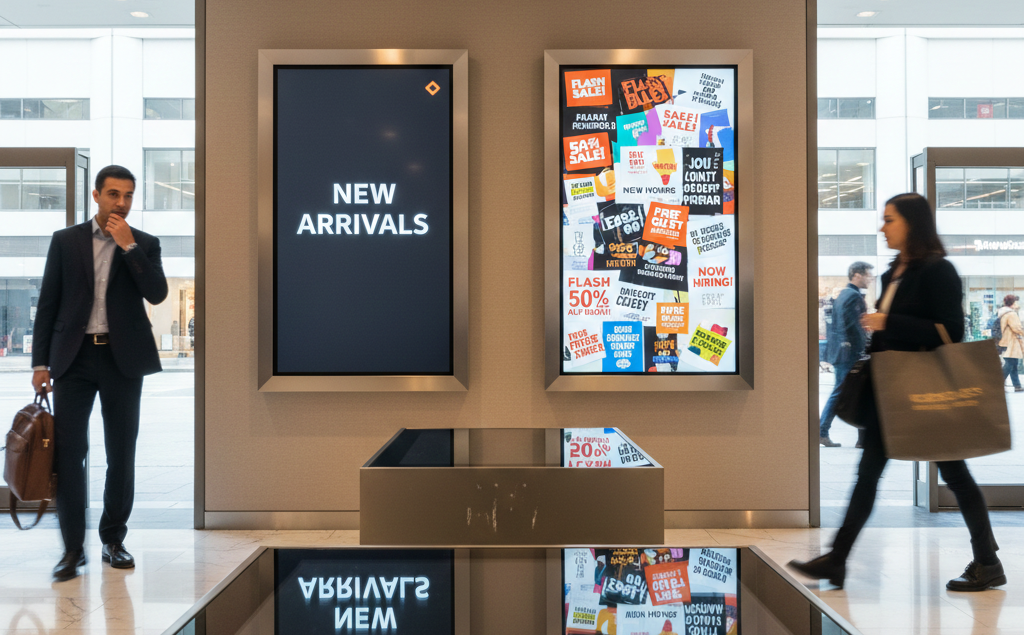
Yes, adding digital screens to highlight promotions and new arrivals is worth the investment due to increased visibility, improved engagement, and real-time updating ability. The sign instantly captures customer attention at the store front or product display area, playing a crucial role in directing interest and encouraging decisions to sell immediately.
Retailers can adjust promotions based on customer traffic patterns, inventory data, or seasonal shifts using digital signage. This ensures new items appear alongside the logo and brand elements at peak times, maximizing conversion potential while minimizing physical update delays. The result is stronger campaign performance that translates into immediate store-level results.
