
Whar Are The Best Types of Wayfinding Signage
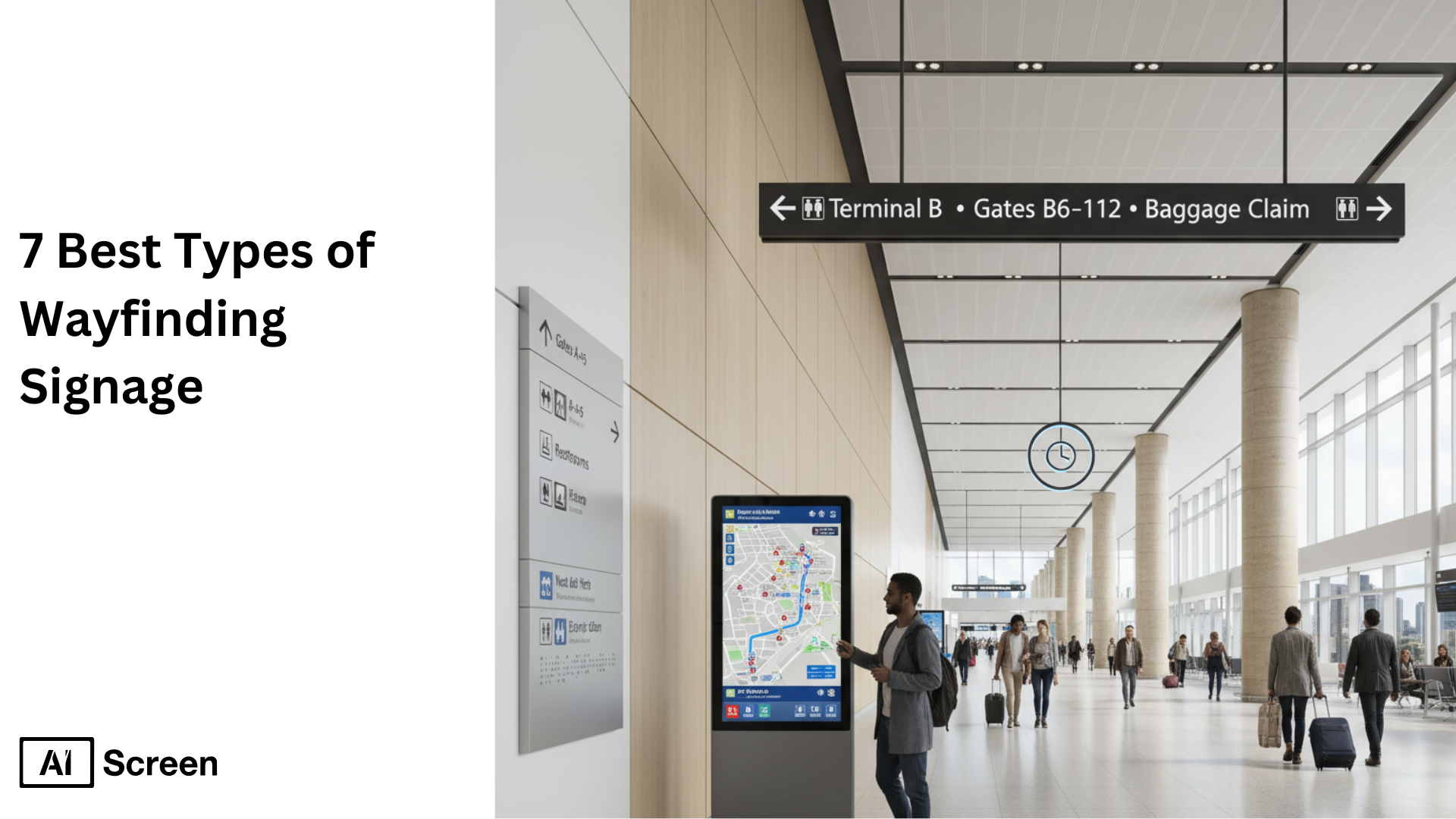
Wayfinding signage is a critical part of spatial design that helps people navigate unfamiliar environments smoothly, whether in education, healthcare, transportation, or corporate campuses. Effective wayfinding signs use visual cues and consistent messaging to guide visitors effortlessly, enhancing safety and user experience.
In this article, let’s explore the 7 different types of wayfinding signage that bring clarity, consistency, and engagement to navigation. From directional signs that point you in the right direction to informational signs that provide important details, each type plays a unique role in helping people find their way.
Modern facilities manage these displays with digital signage software so signage stays accurate and easy to update.
1. What Are Identification Wayfinding Signs?
What are identification wayfinding signs all about? These signs are your go-to labels for naming specific areas, such as buildings, rooms, or departments, that help people know they have arrived at the right spot.
Imagine walking into an office building and seeing clear room numbers or entrance markers; it’s that reassuring “You’re here!” moment.
Examples? Entrance markers at building doors, room plaques like “Conference Room A,” or facility nameplates hanging outside departments.
Specifications often include legible fonts sized for easy reading at eye level, as well as materials that suit the environment, such as weather-resistant metals for outdoor signs or acrylic plaques for indoor use.
These signs not only improve navigation but also reflect a company’s brand identity, and understanding what wayfinding signage is ensures visitors enjoy a seamless experience without confusion in complex spaces.
2. What Is Directional Wayfinding Signage?
What makes directional signage a rockstar in a wayfinding system? These signs act like friendly guides, pointing visitors toward their destinations with clear arrows and simple symbols.
Whether it’s arrows on hallway walls, overhead guides in airports, or digital wayfinding screens in malls, they keep traffic flowing and confusion at bay.
Best practices? Use bold, consistent colors and legible fonts that stand out, like high contrast for quick reading. Place signs at key decision points, like intersections or entrances, roughly every 20 to 40 feet, so people know they are headed the right way.
Digital signs can even update in real-time for things like temporary closures, so no one ends up lost. It’s all about creating effective wayfinding signs that blend visibility, usability, and your brand’s visual identity seamlessly.
3. What Are Informational Wayfinding Signs?
What are informational signs exactly? They are those handy signs that offer general or contextual info like opening hours, facility policies, or maps to help visitors get the bigger picture.
Instead of just telling you “where” to go, they tell you “what” to expect, enhancing your whole navigation experience.
Clear visual hierarchy is key here. Think of large headings, legible sans-serif fonts, and concise language to keep messaging clear and digestible.
For example, a well-designed informational board near a building entrance might include a floor plan with “You Are Here” markers, essential details about services, and safety instructions.
Placing these various types of wayfinding signs in key decision points ensures visitors don’t miss vital info, helping improve overall traffic flow and accessibility in complex environments.
4. What Is Regulatory Wayfinding Signage?
What’s regulatory signs all about? These regulatory signs are wayfinding signs that establish rules and safety instructions critical for keeping everyone safe and informed. Think “No Smoking,” “Authorized Personnel Only,” or “Emergency Exit” signs that clearly communicate what’s allowed or prohibited.
They comply with standards like OSHA and ADA, meaning clarity and high visibility are non-negotiable. Typically, these signs use bold colors: red for prohibitions, white for instructions, and straightforward messaging to guide behavior in offices, public spaces, or complex environments.
Perfect examples to be used in the emergency procedures include fire extinguisher locations, wet floor warning signs, and smoking signs or indicators, all crucial in creating a safe and accessible physical environment.
Interested in building a compliant and effective wayfinding system? A wayfinding consultant can steer your project toward success with expert design and placement strategies.
5. What Are Symbol Wayfinding Signs?
Ever wondered how some signs manage to communicate a message without a single word? That’s the power of symbol signs! These signs serve icons, pictograms, or graphics to make navigation super quick and intuitive, no text reading required.
You will spot these everywhere, from airports to hospitals and multicultural public spaces, because they cut through language barriers effortlessly.
Think of the classic restroom icon, the wheelchair accessibility symbol, or the airplane departure graphic, each one delivering meaning instantly.
Great symbol wayfinding signs combine bold colors, simple shapes, and universal visuals to boost visitor experience and improve traffic flow, especially in complex or unfamiliar spaces.
6. What Are Interactive Wayfinding Signs?
What makes interactive signage a game-changer in wayfinding systems? These touchscreen or motion-activated displays let users explore directories, maps, and facility layouts right on the spot. Interactive digital signage wayfinding makes navigation more intuitive by allowing visitors to select a destination and receive clear, personalized directions in real time.
Imagine finding your way through an office building with a digital kiosk: tap your destination, and the display highlights the best route, even updating directions if conditions change.
These wayfinding signs can also integrate with digital maps, QR codes for mobile handoff, and voice navigation tools for added convenience. In airports and hospitals, interactive digital signage wayfinding can help visitors scan a QR code, follow step-by-step guidance, and reach the correct department or gate with less confusion.
7. What Are Wayfinding Waymarker Signs?
Ever wondered how you keep your sense of progress on a long trail or across sprawling campuses? That’s exactly where waymarkers come in.
These small, consistent signage elements act like friendly checkpoints, confirming you are on the right path and making each step feel guided and intentional.
Examples include numbered trail posts in parks, directional arrows pointing spaced along pathways, or subtle footprints leading through university grounds.
They are especially effective in overall aesthetics in the outdoor environments where visitors might lose track, helping maintain flow and confidence. Think of waymarkers as the little visual elements that keep navigation smooth and reassuring in unfamiliar, expansive spaces.
Why Is Digital Wayfinding Signage the Future?
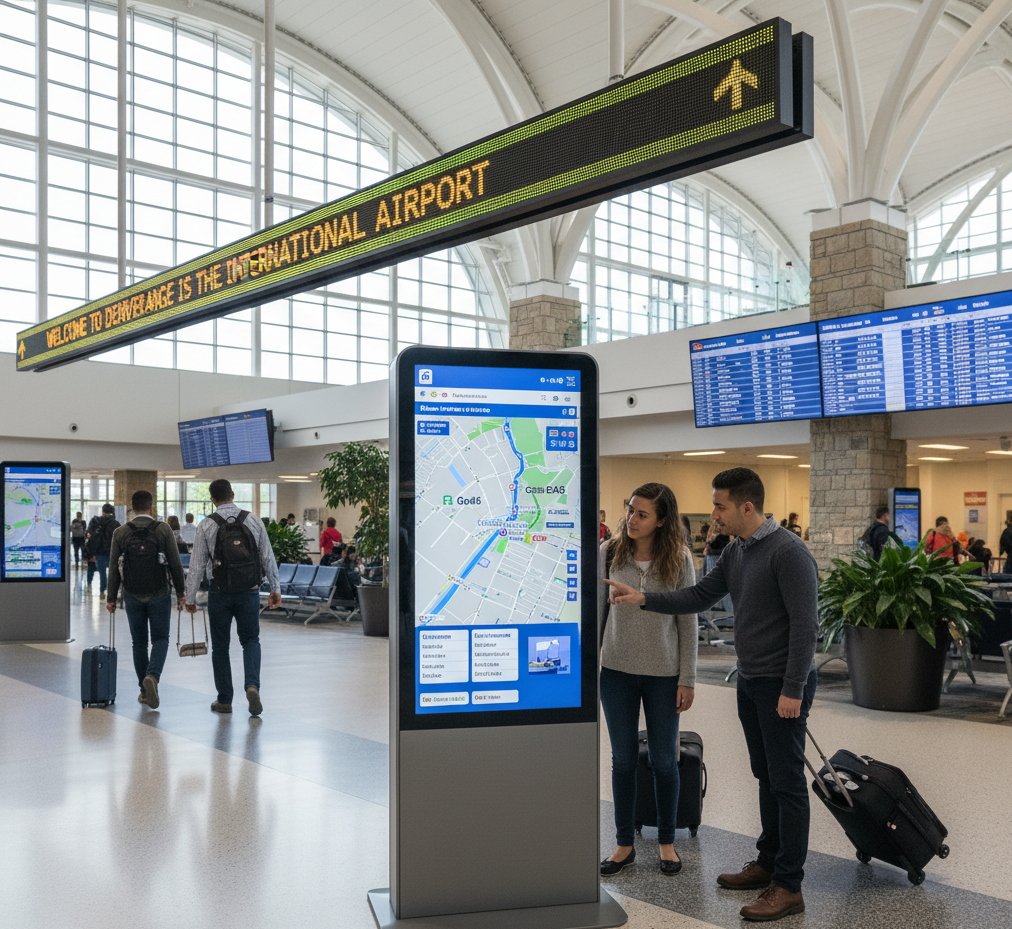
Why the big shift from traditional to digital wayfinding? It’s all about real-time navigation updates and adaptive info that keep visitors effortlessly on track.
Unlike static signs, digital wayfinding signage systems offer centralized content management, a game-changer for managing wayfinding across multiple locations without the hassle of physical updates.
Think about features like accessibility options for wheelchair users, live alerts about temporary closures, or optimized routing to ease traffic flow.
Plus, digital signage supports sustainability by cutting down on paper waste and staff time spent on manual changes. From airports to office buildings, businesses love the mix of brand identity, visual appeal, and smart technology that digital signage brings to effective wayfinding projects.
How Does Wayfinding Signage Simplify Navigation?
How does digital wayfinding signage truly enhance the wayfinding signage system? It personalizes the whole navigation journey by offering interactive, touchless options and cross-device connectivity.
Visitors can effortlessly search for destinations on a touchscreen, scan a QR code to continue navigation on their phones, or even use voice commands for a hands-free customer experience.
Visual engagement comes alive with dynamic maps, bold directional signs, and real-time updates that keep information fresh and relevant.
Digital signage reduces confusion at key decision points and adapts instantly to changes like temporary closures, ensuring safety and improving traffic flow.
For example, a university campus digital directory can highlight accessible routes for wheelchair users while reinforcing the institution’s brand identity, all while making the visitor experience smooth and memorable.
What Types of Wayfinding Signage Work Best for Wayfinding Hospital Signage?
The right types of wayfinding signage are essential for creating effective wayfinding hospital signage. Hospitals typically use directional signs, identification signs, floor maps, room numbers, department markers, regulatory signs, and digital displays to help patients, visitors, and staff navigate complex facilities. Each sign type serves a specific purpose and should be easy to read, clearly placed, and consistent throughout the building.
Well-designed wayfinding hospital signage can reduce confusion and help people reach important areas such as emergency departments, waiting rooms, clinics, elevators, and exits more efficiently. By combining different types of wayfinding signage with clear typography, recognizable icons, color coding, and digital updates, hospitals can create a more organized and user-friendly navigation experience.
Why Choose AIScreen for Wayfinding Signage?
AIScreen turns every type of wayfinding signage into a centrally managed digital experience, with dynamic maps, interactive kiosks, directional displays, and real-time updates you can push to every location in seconds. This makes it easier to keep navigation information accurate while helping visitors find entrances, rooms, departments, facilities, and important destinations with less confusion.
As a leading provider of digital signage solutions, AIScreen helps businesses and organizations build flexible wayfinding systems with cloud-based management, remote content updates, and customizable displays. Whether used in hospitals, offices, schools, airports, retail spaces, or large venues, AIScreen enables teams to maintain consistent navigation information and deliver a smoother visitor experience across multiple locations.
Start your free trial and guide visitors with confidence.


Frequently Asked Questions
What is wayfinding signage?
Wayfinding signage is a system of signs and visual cues designed to guide people efficiently through physical spaces, whether that’s a complex office building, a hospital, or a sprawling campus. It helps visitors and employees navigate confidently by providing clear directions, identification, and information.
What are the benefits of a wayfinding signage system?
The benefits of a well-designed wayfinding signage system include reducing confusion, enhancing safety by clearly marking exits and emergency routes, and boosting customer satisfaction by making navigation hassle-free. It also strengthens brand identity through consistent design while saving costs by reducing the need for staff to give directions.
How can businesses choose the right type of wayfinding signage for their space?
Businesses choose the right type of wayfinding signage for their space by analyzing their space and visitor needs. Consider traffic flow, key decision points, and accessibility requirements. Choose signage types, like directional, identification, or interactive, that best support navigation in your specific environment while reflecting your brand and ensuring optimal visibility.
Can interactive touchscreens be used as a type of modern wayfinding signage?
Yes! Interactive touchscreens can definitely offer users dynamic, personalized navigation options. They integrate digital maps, real-time updates, and QR codes to extend navigation to mobile devices, making navigation not only modern but highly user-friendly, especially in large or complex spaces.
Can the same wayfinding signage types be used for both indoor and outdoor navigation?
Yes, many signage types, such as directional signs, identification signs, and symbol signs, can be adapted for indoor and outdoor use. Materials and design elements differ for durability and visibility, but the core principles of effective wayfinding remain the same across environments.
Want to know more about adding QR codes to digital signs? Interactive wayfinding signage keeps essential information fresh, enhances accessibility, and gives every visitor a powerful tool for self-guided navigation. Now, getting around unfamiliar spaces feels easy and even a little fun!
