
What Are the Top 10 Types of Signs?
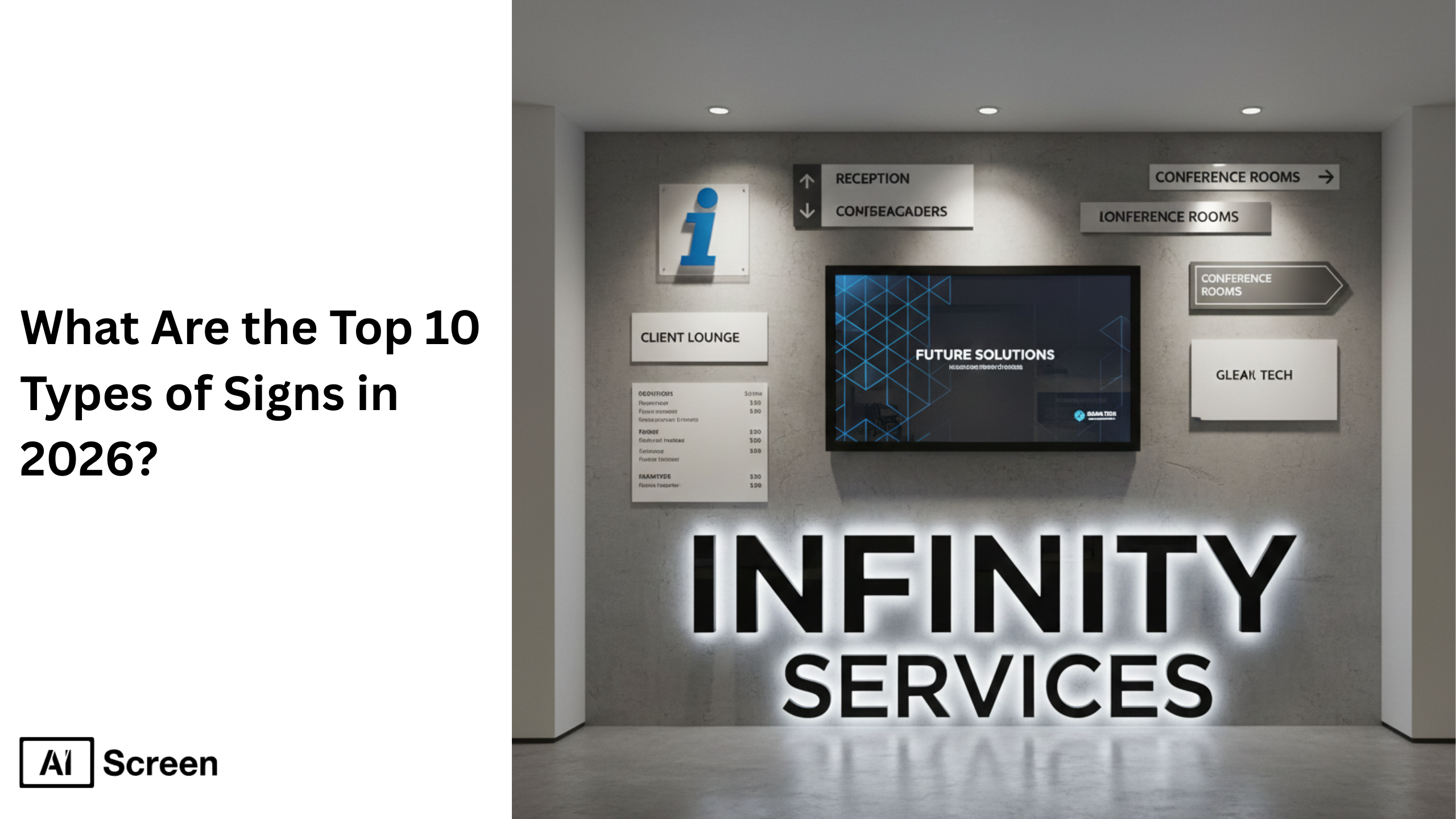
The top 10 types of signs for businesses help companies get noticed, communicate with customers, and make their locations easier to find. According to the International Sign Association, 54% of shoppers said they had driven past and failed to find a business because its sign was too small or unclear, showing how important clear and visible signage can be.
In this article, you’ll learn about 10 popular business sign types, how each one works, and where to use them for the best results. You’ll also see how digital signage software can make screen-based signs easier to update, schedule, and manage across one or multiple business locations.
What Are the Top 10 Types of Signs?
The top 10 types of signs for businesses include everything from eye-catching blade signs and illuminated displays to practical signage and promotional signs. Each type serves a different purpose, helping businesses attract attention, strengthen branding, guide customers, and share important information clearly, while digital signage software makes it easier to manage and update dynamic screen content in real time.
1.) Blade Signs
Blade signs project outward from a building, making them easy to spot from different directions in busy shopping streets, downtown areas, and other locations with heavy foot traffic. They are especially useful for businesses with narrow storefronts or limited front-facing sign space and can be customized with branded shapes, lighting, and hanging or wall-mounted designs.
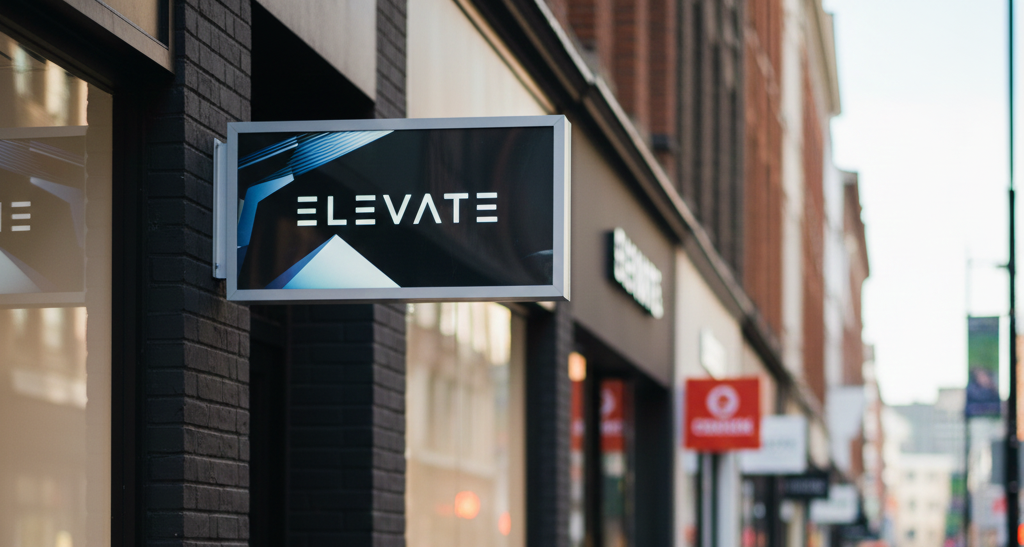
Blade signs can also help create a stronger first impression before customers enter. According to a FedEx Office survey, 68% of consumers said a store’s signage reflects the quality of its products or services, showing why clear, professional signage matters for attracting attention.
Blade Sign Examples
Blade sign examples can vary by business type, location, and visibility needs. Common examples include:
- Illuminated blade signs for restaurants and cafés
- Custom-shaped blade signs for salons and boutiques
- Projecting blade signs for retail stores
- Hanging blade signs for shopping centers
- Lightbox blade signs for better nighttime visibility
2.) Channel Letters
Channel letters are three-dimensional letters or logos mounted individually on a building, making them a strong choice for retail stores, restaurants, shopping centers, and other storefront businesses. They can use front-lit, halo-lit, or combination illumination to keep a brand visible and recognizable during both daytime and evening hours.
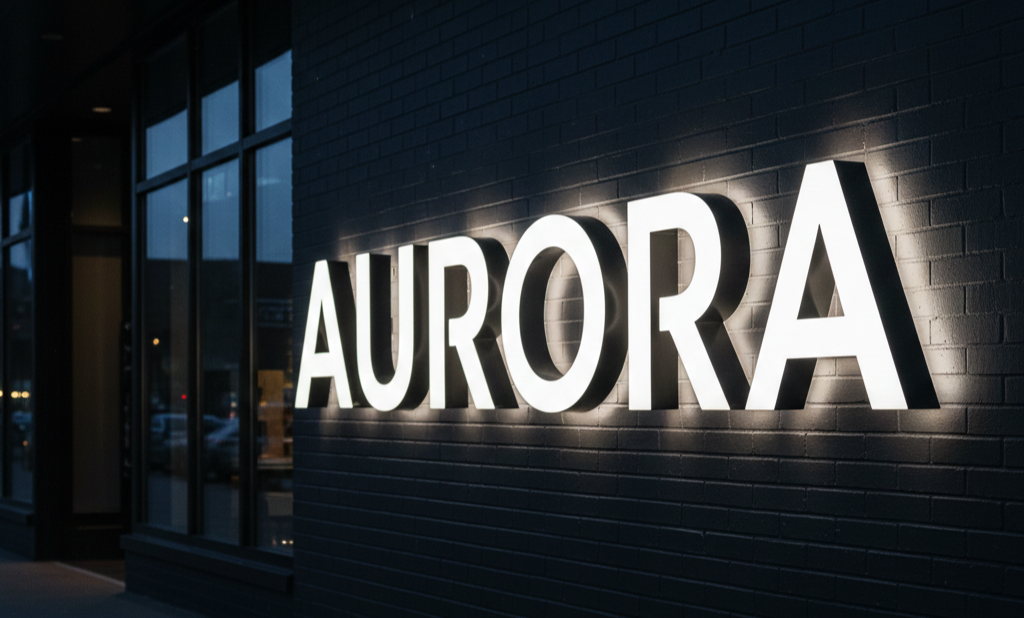
Channel letters are especially useful when a business wants signage that can attract passing customers. A FedEx Office survey found that 76% of consumers had entered a store they had never visited before based on its signage, highlighting how noticeable storefront signs can influence foot traffic.
Channel Letter Sign Examples
Channel letter sign examples can be adapted to different branding styles and visibility needs, including:
- Front-lit channel letters for retail stores and restaurants
- Halo-lit channel letters for hotels, offices, and upscale businesses
- Combination front-lit and halo-lit letters for stronger nighttime visibility
- Indoor channel letters for reception areas and branded feature walls
- Custom logo channel letters for shopping centers and commercial buildings
3.) Monument Signs
Monument signs are freestanding outdoor signs that help businesses, shopping centers, offices, apartments, and other properties build a strong roadside presence. They come in several styles, but ground-level monument signs, pylon signs, and post-and-panel signs are three common options for different viewing distances, locations, and budgets.
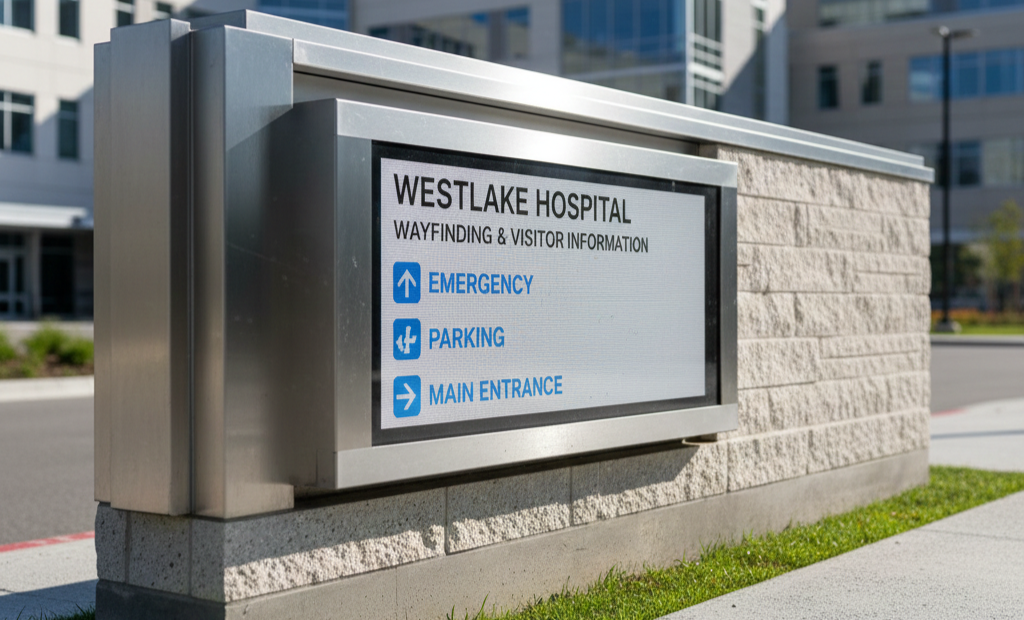
Professional appearance also matters: Statista reports that 85% of consumers are more likely to shop with a small business that uses professionally printed materials, including signs, banners, and other branded materials.
Explore the three most popular monument signs like ground-level, pylon, and post-and-panel, and their key differences.
Ground-Level Monument Signs
Ground-level monument signs sit relatively close to the ground and provide a polished, permanent appearance near property entrances or roads. They work particularly well for business parks, apartment communities, churches, banks, and shopping centers that need identification, directories, wayfinding, or even digital messaging.
Ground-Level Monument Sign Examples
Ground-level monument sign examples include:
- Shopping center directory signs listing multiple businesses
- Entrance signs for apartment complexes and residential communities
- Branded monument signs outside banks and corporate offices
- Church entrance and welcome signs
- Digital monument signs displaying changing messages or announcements
Pylon Signs
Pylon signs are tall freestanding signs designed to make a business visible to motorists from farther away. They are commonly used near highways and busy roads by gas stations, hotels, auto dealerships, restaurants, and shopping centers where long-distance visibility is important.
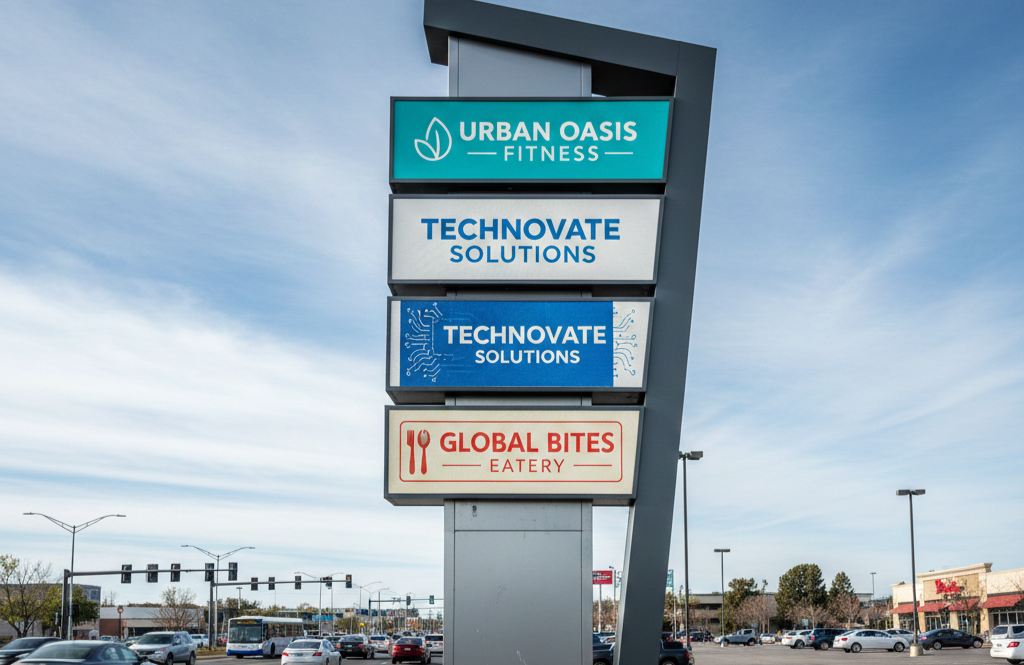
Pylon Sign Examples
Pylon sign examples include:
- Highway-facing signs for hotels and roadside businesses
- Multi-tenant signs for shopping centers
- Digital fuel-price signs at gas stations
- Tall dealership signs near major roads
- Pole-mounted signs displaying several business names
Post and Panel Signs
Post and panel signs use one or more vertical posts to support a branded information panel, offering a practical and flexible option for outdoor signage. Their panels can be replaced or updated relatively easily, making them useful for property identification, directional information, community entrances, and locations where messages may change over time.
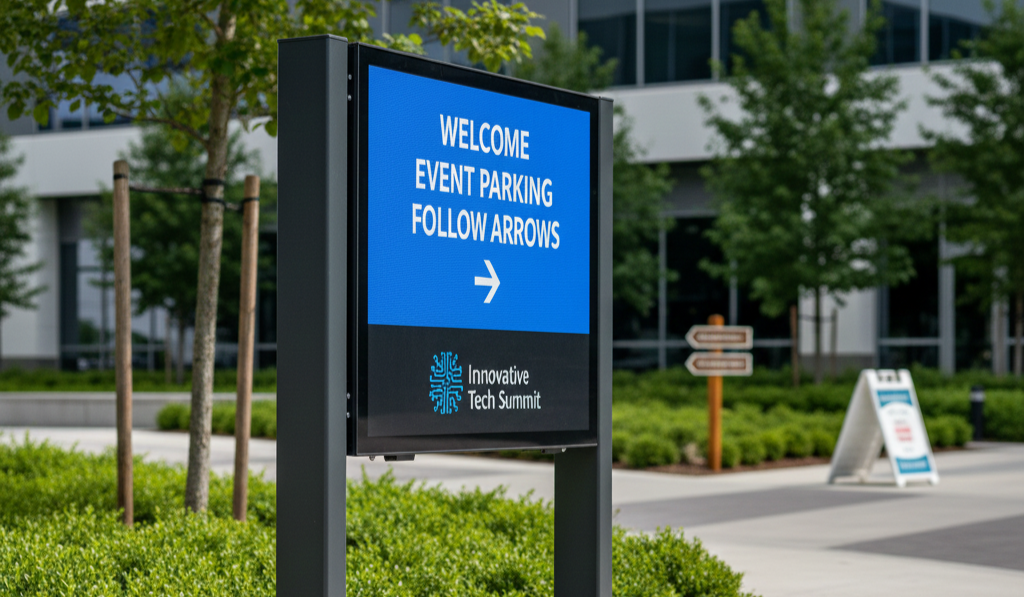
Post and Panel Sign Examples
Post and panel sign examples include:
- Wayfinding signs for apartment complexes
- Entrance signs for residential communities
- Roadside signs for salons and local businesses
- Property identification signs for offices and commercial sites
- Location and directional signs for fire departments and public facilities
4.) Dimensional Letter Signs or 3D Signs
Dimensional letter signs, also known as 3D signs, use raised letters, logos, or graphics made from materials such as acrylic, metal, or plastic to give a business a more distinctive and professional appearance. Suitable for both indoor and outdoor spaces, they can be illuminated or non-illuminated and customized in different sizes, depths, finishes, and mounting styles to match a brand’s identity.

Sign quality can also shape how customers perceive a business. According to the International Sign Association, 34% of North American shoppers associate the quality of a sign with the quality of the store and its products.
Dimensional Letter Sign Examples
Dimensional letter sign examples work across many commercial environments, including:
- 3D restaurant signs mounted on exterior walls
- Acrylic dimensional letters behind reception desks
- Metal letters for corporate offices and professional buildings
- Indoor 3D branding signs for retail stores
- Weather-resistant dimensional letters for waterfront and outdoor businesses
- Custom logo and letter combinations for building entrances


5.) Illuminated Signs
Illuminated signs use LED, neon, fluorescent, or external lighting to keep a business visible after daylight fades. Also known as lighted signs, they include illuminated channel letters, lightbox signs, neon signs, LED signs, digital signage, and externally lit signs, giving businesses plenty of flexibility for storefront branding, promotions, pricing, and changing messages.

Illuminated signs can be particularly valuable for businesses that operate in the evening or want their location to remain noticeable after closing. Lighted signs help maintain visibility in low-light conditions and can make storefronts easier to recognize from the street. A Sign Research Foundation study found that 81% of surveyed businesses kept their illuminated signs on after business hours, while the signs were illuminated for an average of 13.9 hours per day.
Illuminated Sign Examples
Illuminated sign examples can suit different locations, visibility needs, and brand styles, including:
- Front-lit channel letters for restaurants and retail storefronts
- Halo-lit letters for hotels, offices, and upscale businesses
- Lightbox signs for shopping centers and commercial buildings
- Neon signs for bars, cafés, restaurants, and entertainment venues
- Digital signs for displaying promotions, prices, events, videos, or changing announcements
- Externally lit dimensional signs illuminated with spotlights or barn lighting
6.) Property Management Signs
Property management signs help commercial and residential properties look organized, professional, and easier to navigate. From apartment communities and office buildings to shopping centers and business parks, a coordinated sign system can identify buildings, direct visitors, communicate property rules, support accessibility, and maintain consistent branding across the entire site.
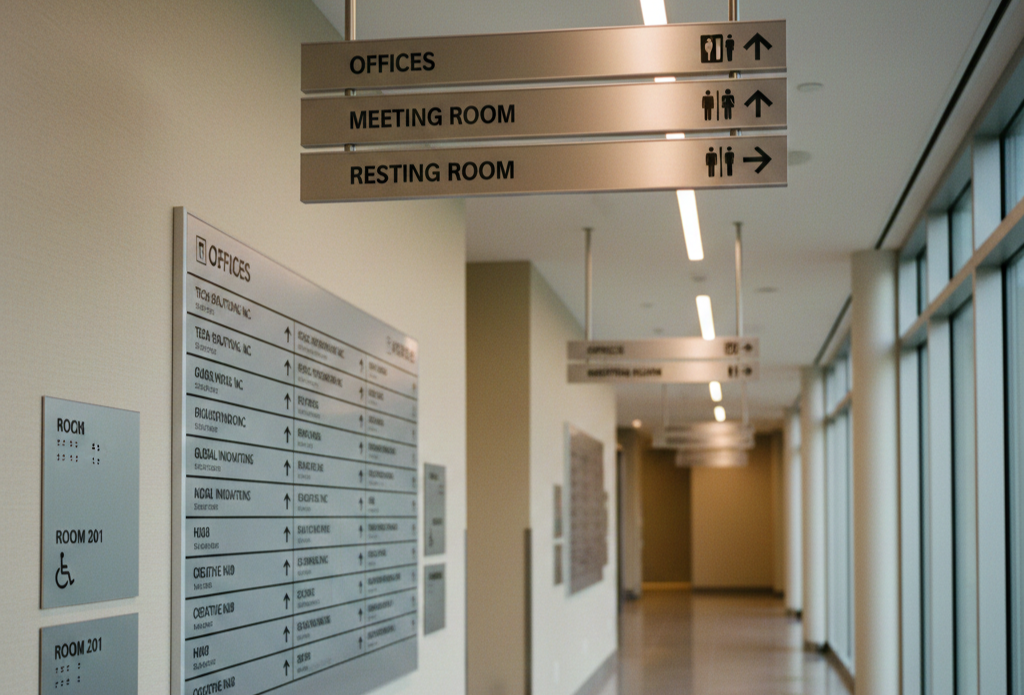
Types of Property Management Signs
Types of property management signs serve different communication and navigation needs throughout a property:
- Directional signs guide visitors toward entrances, exits, parking areas, offices, and amenities.
- Informational signs communicate building numbers, office hours, community rules, and important notices.
- Safety and regulatory signs identify fire exits, parking restrictions, speed limits, no-smoking areas, and other requirements.
- Identification signs display building names, tenant names, unit numbers, or facility information.
- Promotional signs highlight property events, available spaces, new amenities, offers, or announcements.
- Directory signs organize tenant or department listings in office buildings, shopping centers, and multi-building developments.
- ADA signs support accessible identification and navigation within public and commercial spaces.
Examples of Property Management Signs
Examples of property management signs can be used throughout a property to create a consistent and easy-to-follow sign system, including:
- Monument signs at entrances to business parks and residential communities
- Channel letter signs identifying businesses within commercial properties
- Wayfinding signage directing visitors around apartment or office complexes
- Building and floor directories for multi-tenant properties
- Custom parking and private-property signs
- Post-and-panel signs for entrances and directional information
- Regulatory and safety signs throughout shared spaces
- ADA identification signs for rooms and facilities
- Dimensional letter signs for branded entrances and common areas
7.) Interior Signs and Office Signs
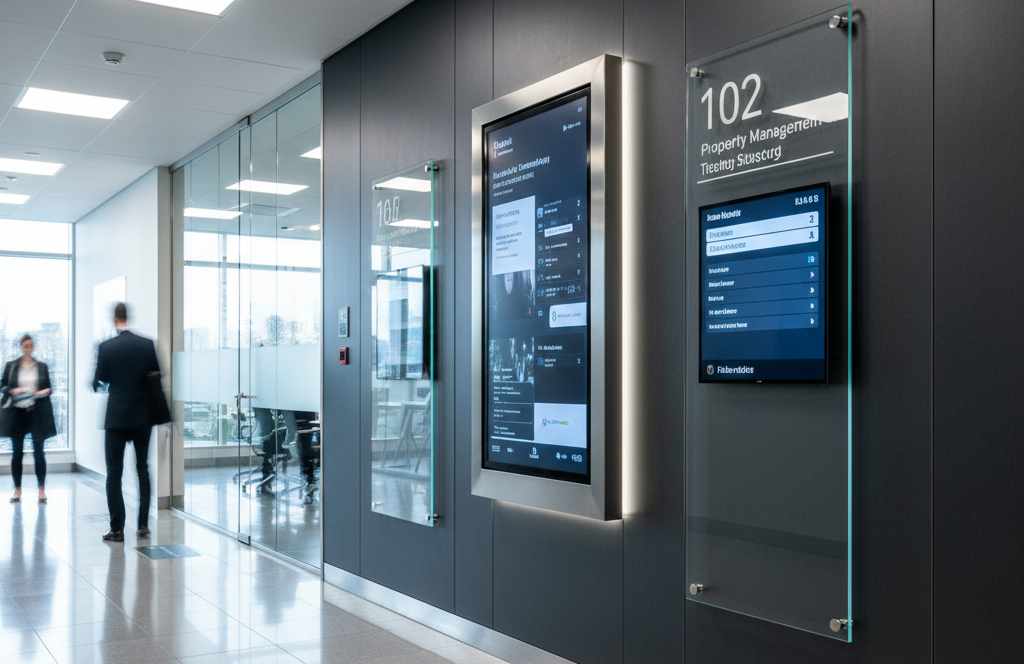
Interior signs and office signs help create a professional, organized, and welcoming environment while making it easier for employees, customers, and visitors to move through the space. Businesses can use them for branding, wayfinding, room identification, privacy, and important information, turning ordinary offices, stores, and reception areas into more functional and recognizable branded spaces.
Interior Signs and Office Sign Examples
Interior signs and office sign examples can be customized for different workplace and customer-facing environments, including:
- Dimensional letter signs for office walls and reception areas
- Illuminated lobby signs that keep branding visible in waiting areas
- Halo-lit channel letters for modern office interiors
- Frosted acrylic signs for office suites and meeting rooms
- Privacy vinyl graphics for conference room glass
- 3D logo signs behind reception desks
- Branded kiosk signs for banks, offices, and service locations
- Indoor neon signs for retail stores, studios, and hospitality spaces
- Directional signs that guide visitors to rooms, departments, and facilities
8.) Custom Graphic Signs
Custom graphic signs use printed graphics, vinyl lettering, hand-painted artwork, wall graphics, floor graphics, and vehicle wraps to turn everyday surfaces into branded visual displays. They work well for storefronts, offices, restaurants, events, and mobile advertising because businesses can customize the design, size, colors, and placement to match different promotional or branding goals.
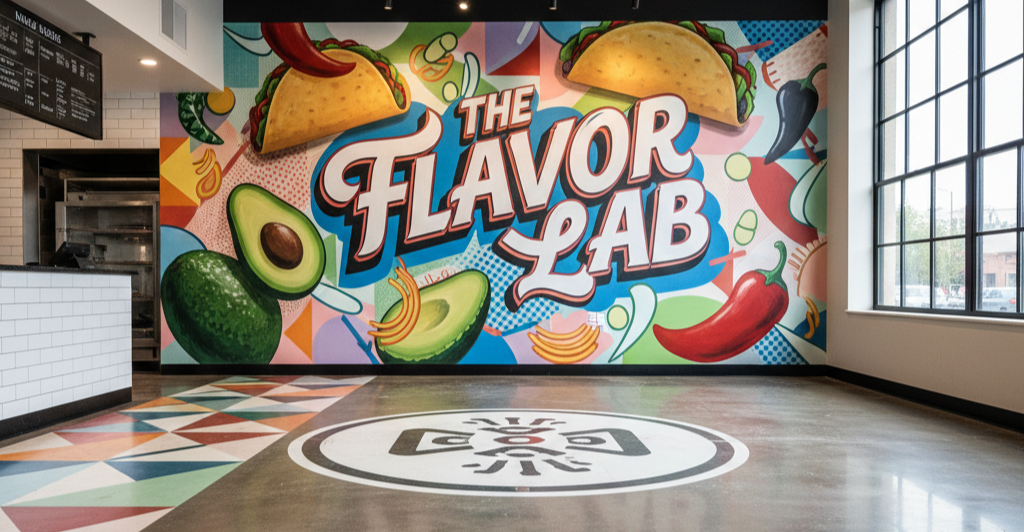
Custom Graphic Sign Examples
Custom graphic sign examples can be adapted to indoor, outdoor, and mobile advertising applications, including:
- Hand-painted signs and murals for restaurants and retail spaces
- Printed wall graphics for offices and commercial interiors
- Vinyl lettering for storefront windows and glass doors
- Floor graphics for promotions, directions, and branded environments
- Printed metal graphic signs for markets and shopping areas
- Ceiling graphics for immersive branded interiors
- Vehicle graphics and wraps for mobile business advertising
- Custom banners for events, promotions, and temporary campaigns
9.) Window Graphic Signs
Window graphic signs turn unused glass surfaces into practical spaces for branding, promotions, privacy, and customer information. They are a versatile option for businesses exploring creative office signage ideas, as they can be applied to storefront windows, glass doors, office partitions, and other glass surfaces. Businesses can use them to display logos, opening hours, seasonal offers, or decorative graphics without taking up additional floor space.
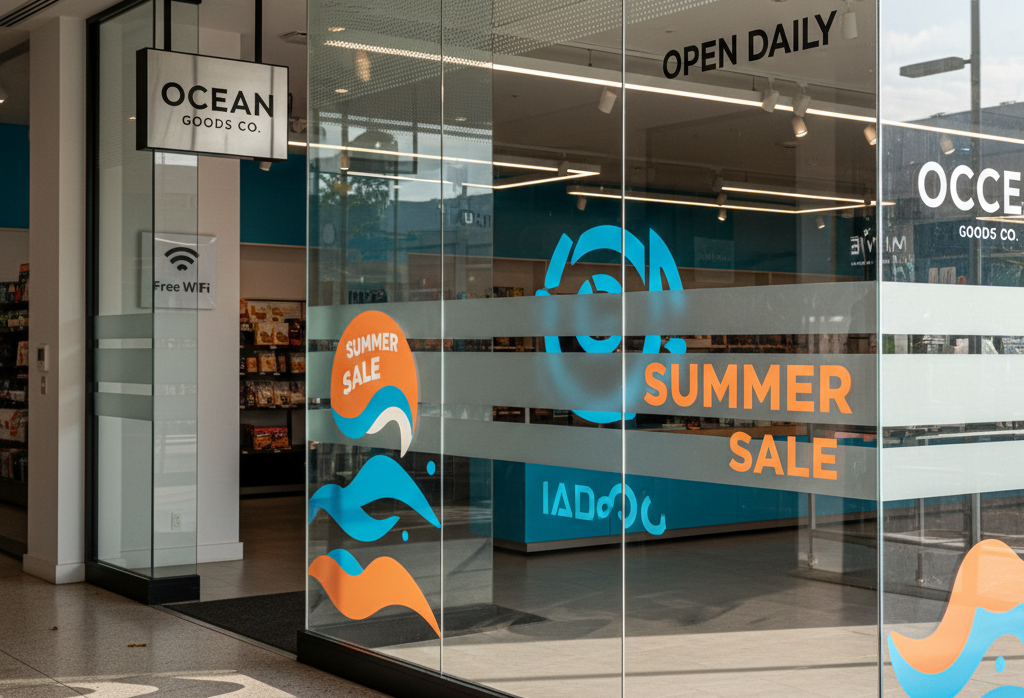
Types of Window Graphic Signs
Types of window graphic signs offer different levels of visibility, flexibility, and privacy depending on how the glass surface is used:
- Vinyl window decal signs use adhesive graphics for logos, business hours, branding, and promotional messages.
- Perforated vinyl window signs provide one-way visibility, allowing people inside to see out while displaying graphics to people outside.
- Static cling window signs can be applied and removed easily, making them useful for temporary promotions and seasonal campaigns.
- Hand-painted window signs create a more artistic and personalized appearance for restaurants, boutiques, cafés, and specialty stores.
Window Graphic Signs Examples
Window graphic signs examples can be adapted to many storefront and commercial applications, including:
- Vinyl lettering signs for business names and operating hours
- Promotional window signs for sales, launches, and seasonal offers
- Perforated window signs for privacy and exterior advertising
- Glass door signs for apartment communities, offices, and retail stores
- Hand-painted window signs for restaurants and cafés
- Full-window graphic signs for temporary storefront branding or renovation displays
10.) Neon Signs
Neon signs use glowing tubes or LED technology to create bright, colorful displays that help businesses stand out during the day and especially at night. Popular with restaurants, bars, retail stores, entertainment venues, offices, and hospitality businesses, they can be customized with brand names, logos, symbols, and decorative designs.

Traditional Neon Signs
Traditional neon signs use shaped glass tubes filled with gas that produce a distinctive glow when electricity passes through them. Their warm colors and classic appearance make them a strong choice for businesses that want a nostalgic, artistic, or vintage visual style.
LED Neon Signs
LED neon signs use flexible LED lighting to recreate the appearance of traditional neon while offering greater durability, lower energy use, and more design flexibility. They work well for modern storefronts, interior branding, event spaces, restaurants, and businesses that want a bright neon-style effect with simpler maintenance.
Neon Sign Examples
Neon sign examples can be customized for many business environments, including:
- Neon logo signs for corporate offices and reception areas
- Exterior neon signs for restaurants, diners, and bars
- Custom neon lettering for apartment buildings and hotels
- Decorative neon signs for retail stores and entertainment venues
- Restored vintage neon signs for historic businesses
- Neon signs combined with decorative lighting for restaurants
- LED neon signs for storefronts and modern commercial interiors
Which Types of Signs Work as Lighted Signs?
Among the different types of signs a business can use, lighted signs are especially useful when visibility matters beyond normal daylight conditions. Illuminated channel letters, LED signs, lightboxes, and backlit signs can make a storefront, logo, promotion, or directional message easier to notice from a distance while helping the business remain visible after dark.
Choosing between these types of signs depends on where the sign will be placed, how far away people need to read it, and how much illumination the location already has. For businesses comparing permanent and illuminated options, understanding lighted signs can help determine where lighting adds the most practical value to a storefront or exterior signage system.
Why Choose AIScreen for Types of Signs?
Different types of signs help businesses attract attention, guide customers, strengthen branding, and share important information. The right choice depends on your location, audience, visibility needs, and whether you need a permanent, illuminated, printed, or digital solution.
AIScreen is a leading digital signage provider that helps businesses manage dynamic content across one or many screens from a single platform. With AIScreen, businesses can update promotions, announcements, menus, and other visual content quickly while keeping displays consistent and engaging. Contact us.
Frequently Asked Questions
How do I choose the right business sign for my location?
Choosing the right business sign for your location depends on viewing distance, traffic flow, available space, local lighting, and how customers approach the property. Roadside businesses may need larger signs, while stores in walkable areas can benefit from projecting or window signage.
What materials are commonly used for outdoor business signs?
Materials commonly used for outdoor business signs include aluminum, acrylic, PVC, vinyl, high-density urethane, and weather-resistant plastics. The best material depends on your climate, desired appearance, installation location, and how long you expect the sign to last.
Can businesses combine traditional signs with digital signage?
Businesses can combine traditional signs with digital signage to create a more flexible communication system. Permanent signs can identify the business, while digital screens can display changing promotions, menus, announcements, schedules, pricing, and other time-sensitive information.
How often should a business update its signage?
A business should update its signage whenever branding, operating hours, services, pricing, directions, or promotional messages change. Signs should also be inspected regularly so faded graphics, damaged materials, poor lighting, or outdated information do not affect the customer experience.
What should businesses consider before installing an exterior sign?
Businesses considering an exterior sign should review visibility, viewing distance, mounting location, weather exposure, electrical requirements, accessibility, and local sign regulations. Planning these factors early can help prevent installation problems and ensure the sign remains practical for its intended location.
