
6 Best Digital Signage Software Companies for Library Displays in 2026
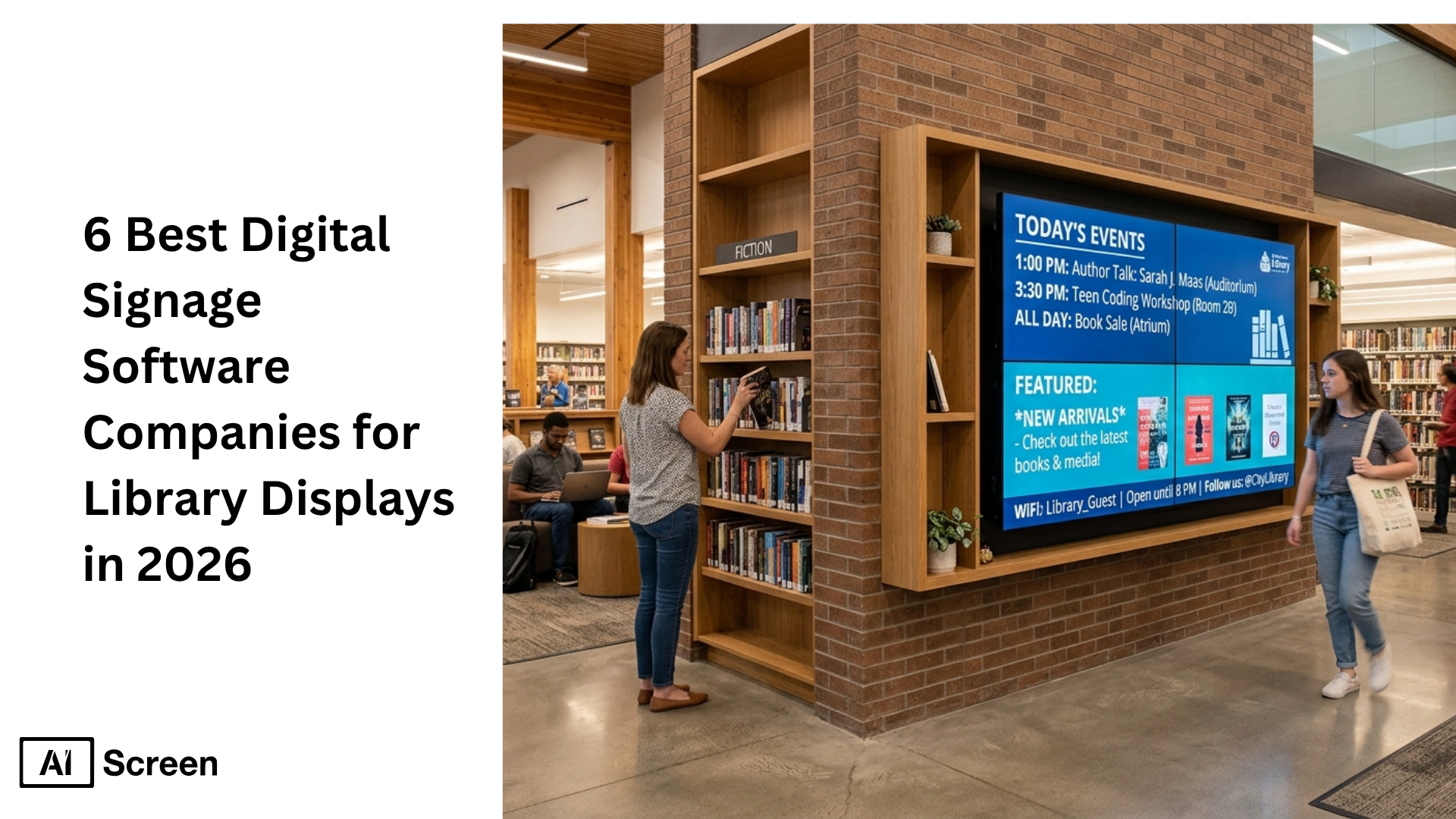
Best digital signage software companies for library displays in 2026 is a useful topic because libraries now need digital signage software that is easy to manage, scalable across multiple screens, and flexible enough for announcements, wayfinding, events, and interactive displays. The market is growing fast too: Allied Market Research says the global digital signage market was valued at $23.6 billion in 2022 and is projected to reach $50.6 billion by 2032, which shows how strongly organizations are investing in digital signage systems and content management tools.
In this article, you will learn which software provider options stand out for public libraries, what core features matter most, and how to choose the right digital signage solution for your library’s space, budget, and communication goals. You will also see how platforms differ in areas like remote management, customizable templates, apps, digital signage players, and support for multiple locations. Explore AIScreen’s library digital signage solution.
Why Do You Need Digital Signage in a Library?
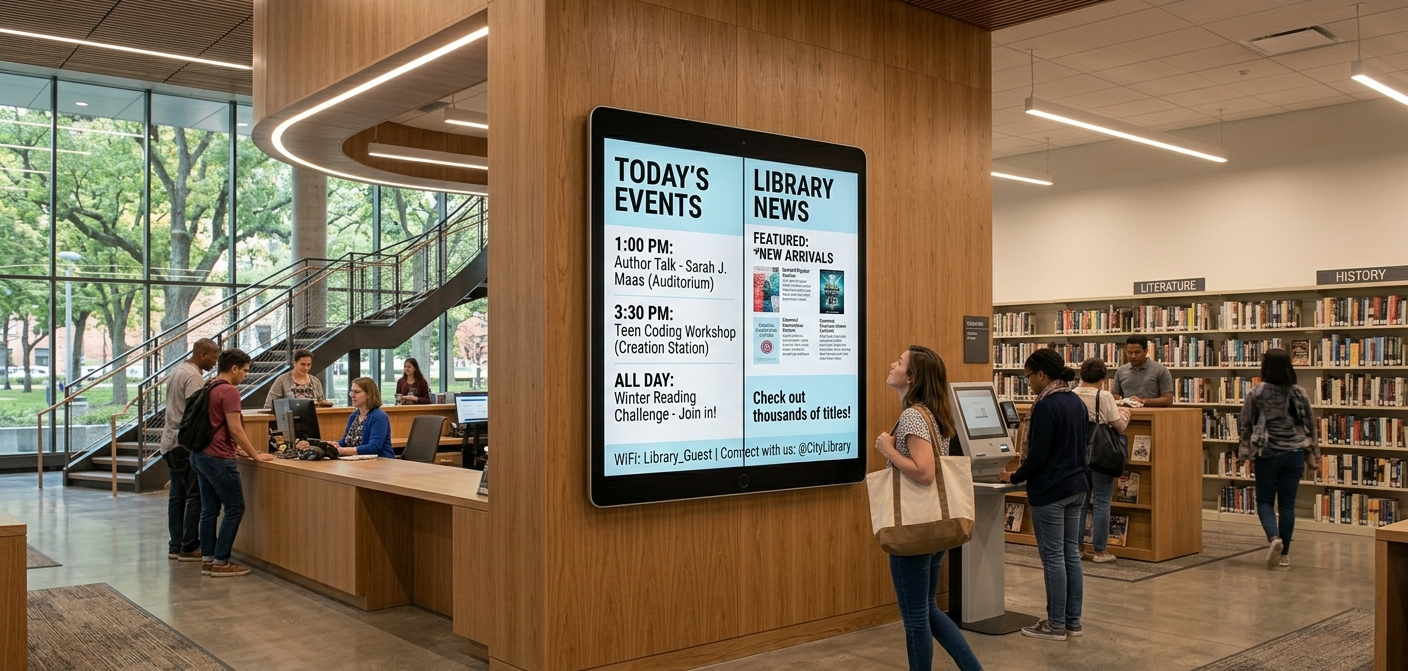
You need digital signage in a library because today’s public libraries do far more than lend books. A digital signage software helps library users find services faster, view essential updates on digital displays, and engage with timely digital signage content across multiple screens, while staff can manage content and schedule content in just a few clicks.
Public libraries also handle major daily traffic, and the Institute of Museum and Library Services reported more than 1.5 billion annual visits in earlier national findings, showing why clear digital signs and a reliable digital signage system matter in busy spaces.
Essential Library Information
Essential library information works best when it is always visible, easy to update, and placed on digital screens where library users naturally look first. With signage software and a user friendly interface, staff can display opening hours, membership rules, computer access, Wi-Fi details, and internal communications without reprinting static materials.
A reliable digital signage solution also helps manage content across multiple locations and multiple displays from one content management system. That gives public libraries centralized control over routine digital content while keeping digital signage displays accurate, consistent, and easy to refresh.
Digital Announcement Boards
Digital announcement boards help public libraries share events, reading programs, workshops, policy updates, and community notices in a more engaging content format. Instead of relying on paper posters, a cloud based platform can schedule content, rotate media formats, and keep digital signage content current throughout the day.
This kind of professional digital signage is especially useful when teams need remote management and multiple users must update display content. Intel has reported that digital signage can capture more than 400% more views than static signs, which makes digital announcement boards a strong fit for library communication.
Library Wayfinding Displays
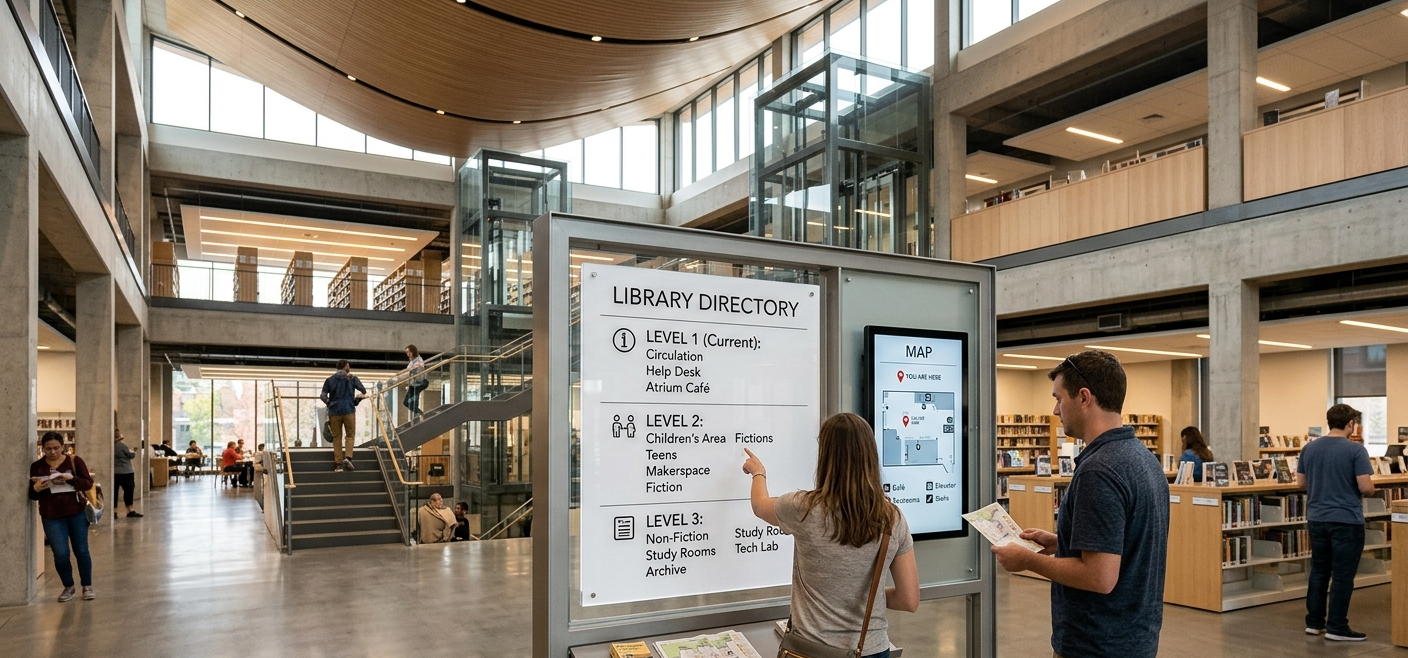
Library wayfinding displays make large buildings easier to navigate by guiding visitors to study rooms, children’s areas, circulation desks, archives, event spaces, and interactive kiosks. A right digital signage solution can turn digital screens into simple navigation points that reduce confusion and improve customer satisfaction.
For larger branches, a digital signage network can connect multiple screens, interactive displays, and digital signage players across the building. That means staff can update directions, room availability, or temporary changes from one software provider instead of adjusting every sign manually.
Promotional Library Content
Promotional library content helps libraries highlight book clubs, author talks, learning sessions, seasonal campaigns, and digital signage applications that many visitors might otherwise miss. With customizable templates, upload images tools, google slides support, and flexible content creation options, staff can build stunning displays without needing a designer.
This also supports a broader digital signage landscape where libraries are expected to communicate visually, not just with printed notices. Grand View Research says the global digital signage market was estimated at $31.09 billion in 2025, which reflects how fast organizations are adopting signage software to deliver dynamic content and improve audience engagement.
Local Advertising Opportunities
Local advertising opportunities can turn library digital signs into useful community media by promoting nearby events, classes, nonprofits, and small businesses. When managed carefully, digital signage software can help enabling businesses reach local audiences while also creating added value for public libraries with limited budgets.
A content management system makes it easier to manage dynamic content, social media feeds, web pages, and sponsored display content across digital signage displays. This approach works especially well when libraries want a reliable digital signage solution that supports customer engagement without taking attention away from core services.
Library Video Wall Displays
Library video wall displays create a stronger visual focal point for entrances, event zones, and featured learning spaces. A digital signage system with support for video walls, digital menu boards, media players, own hardware, and seamless integration can transform ordinary walls into professional digital signage experiences.
These large digital displays are useful for showcasing engaging content, digital signage applications, corporate communications, community campaigns, and even digital signage app experiences across multiple locations.
With enterprise grade security, screen control, mobile devices access, and key features built for multiple users, the best digital signage software companies for library environments can help libraries manage content at scale while keeping the platform supports flexible for future digital signage needs.


Which Are the Best Digital Signage Software Companies for Library Displays?
The best digital signage software companies for library displays are the ones that make digital signage content easy to manage across multiple screens, support wayfinding, announcements, and internal communications, and offer a reliable digital signage solution for public libraries.
Strong options include AIScreen, Carousel, Cayin Technology, Bizplay, BrightSign, and Coates Group, and several of these platforms also appear among the best digital signage software companies for campus communication needs.
AIScreen
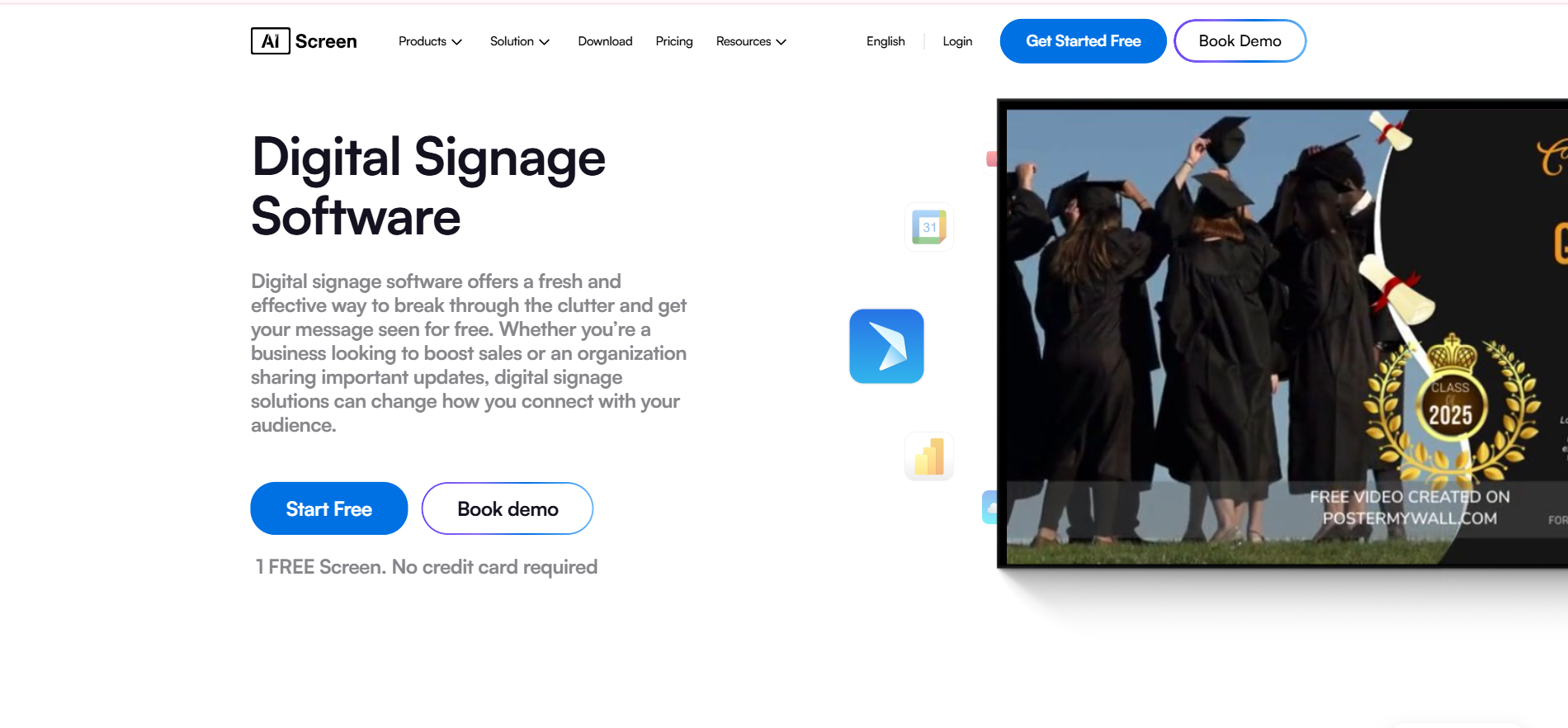
AIScreen is the best cloud based digital signage platform built for businesses and organizations that need a user friendly digital signage system for multiple locations, multiple displays, and centralized control. It supports digital signage displays, helps teams manage content in just a few clicks, and is designed for everything from internal communications to customer engagement and interactive displays.
For libraries, AIScreen cloud digital signage software fits well because it combines content management, remote management, customizable templates, and a digital signage app ecosystem in one platform.
It also supports digital signage players, own hardware in many cases, Google Slides, social media feeds, web pages, and a broad range of digital signage applications that help library users see the right display content on digital screens at the right time.
Features
- cloud based platform with centralized control for multiple screens and multiple locations
- user friendly interface for content creation, screen control, and schedule content workflows
- supports digital signage network management, remote updates, and digital signage needs across different industries
- includes security features and enterprise grade security options for organizations that need professional digital signage at scale
Templates
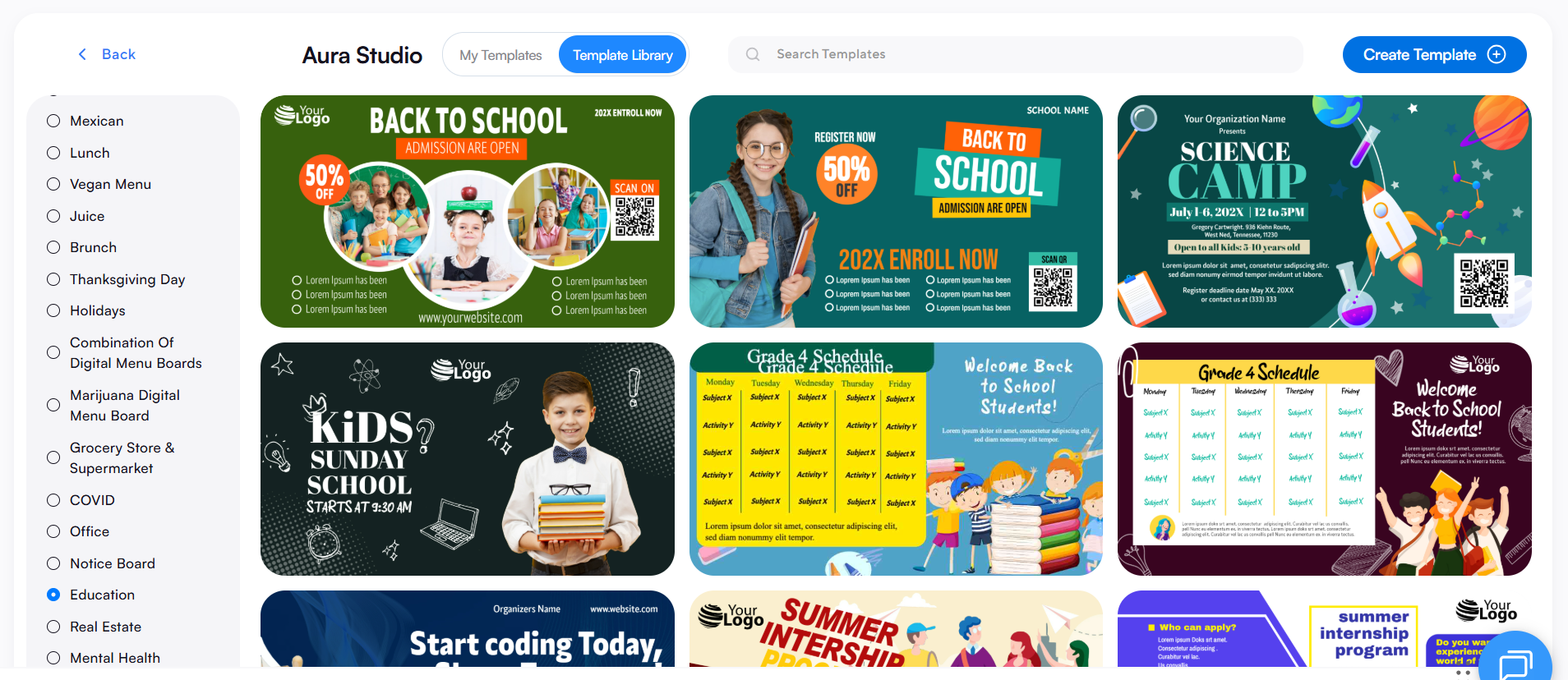
- large library of 1500+ customizable templates for announcements, education, events, schedules, and public signage
- helps teams upload images, build stunning displays, and manage dynamic content faster with the template designer.
Apps
- 100+ apps and integrations for Google Slides, live feeds, social media feeds, corporate communications, and digital content sources
- useful for libraries that want seamless integration with web pages, announcements, and engaging content across digital signs
Carousel
Carousel is a user friendly signage software platform focused on helping organizations inform, engage, and protect their audiences across wall displays, tablets, desktops, and mobile devices. For libraries, that makes it a practical choice for announcements, approval-based workflows, and emergency messaging across multiple users and departments.
- supports multiple users and approval workflows
- integrates with Canva, Power BI, Google Slides, and PowerPoint
- strong fit for education, government, healthcare, and communication-heavy environments
Cayin Technology
Cayin Technology is built around industrial-grade stability, large-scale deployment, and tailored system customization. It is a strong option for library networks that need 24/7 reliability, centralized control, multi-screen playback, and integration with existing databases or devices.
- supports SMP players for multi-screen and video wall playback
- CMS-SE can manage up to 4,000 players
- offers tailored integrations for ERP, POS, HIS, and custom project needs
Bizplay
Bizplay is positioned as simple, cloud-based digital signage software that is easy to use but still scalable enough for a large digital signage network. For libraries, it works well when teams want to create playlists, schedule content, and manage content from a web browser without a steep learning curve.
- cloud based platform for browser-based content management
- supports apps for news, weather, social media feeds, and streaming video
- allows centralized control with unlimited dashboards and users
BrightSign
BrightSign stands out for its software-plus-player ecosystem and its BrightSignOS environment, which is purpose-built for professional AV and digital signage reliability. It is a good fit for libraries that want protected operating system security, remote diagnostics, and long uptime across digital signage players.
- includes brightAuthor connected for presentation design and setup
- includes bsn.Control for remote device management and diagnostics
- designed for secure playback, self-healing, and long-term reliability
Coates Group
Coates Group is more specialized than the others because its Switchboard CMS is primarily built for quick service restaurants and connected restaurant ecosystems. It offers strong campaign management, dayparting, and location-based deployment, but for most public libraries it may be less directly aligned than a broader digital signage solution.
- strong centralized content repository and playlist deployment
- built for dynamic, data-driven content across locations
- best suited to restaurant and high-volume customer touchpoint environments
What Are the Best Ways to Create Engaging Library Digital Signage Ideas?
The best ways to create engaging library digital signage ideas are to organize information clearly, mix in visual and live digital content, and use interactive screen content where it improves the visitor experience. A strong digital signage solution makes it easier to manage content across digital screens, keep display content relevant, and turn everyday updates into more engaging content for library users.
Clear Information Categories
Clear information categories help public libraries present announcements, events, services, study room details, and digital menu boards in a way that feels easy to scan. When a digital signage CMS is used well, staff can group digital signage content by purpose, audience, or location, which makes digital signage displays feel more helpful instead of cluttered.
This also improves content management across multiple displays and multiple locations because teams can schedule content based on what library users actually need to see. As digital signage adoption keeps growing globally, the need for well-structured digital content becomes even more important; Grand View Research estimated the digital signage market at $31.09 billion in 2025.
Multimedia Content Integration
Multimedia content integration makes digital signs more lively by combining images, short videos, presentations, web pages, social media feeds, and other media formats in one digital signage system. A user friendly digital signage app or signage software platform also helps staff upload images, reuse Google Slides, and create stunning displays in just a few clicks.
This matters because visual communication usually gets more attention than static text alone. Digital Signage Today notes that digital signage can achieve an 83% recall rate, which helps explain why multimedia-rich display content often performs better for audience engagement and customer engagement.
Interactive Screen Content
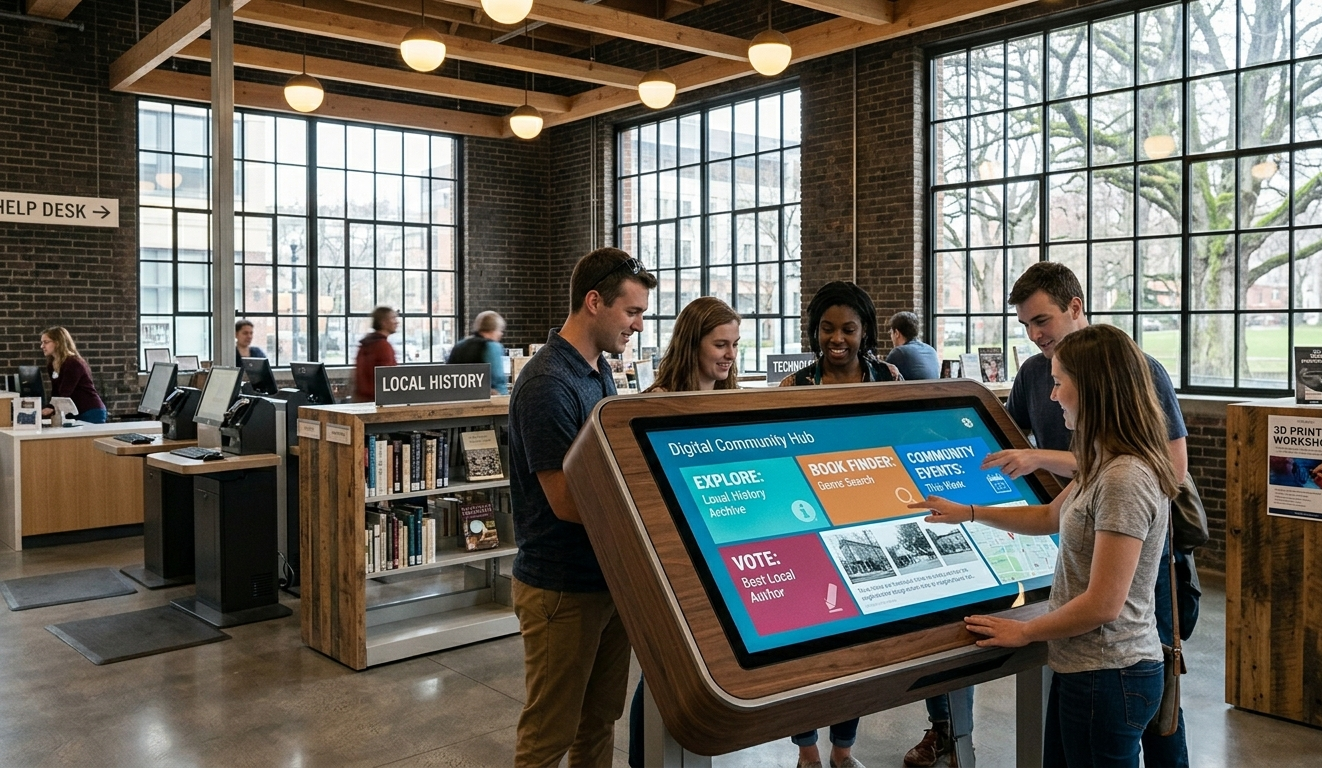
Interactive screen content works especially well when libraries want to offer self-service, searchable information, room booking support, or wayfinding through interactive displays and interactive kiosks. The right digital signage solution can also support digital signage applications that let visitors explore services directly on digital screens instead of waiting for staff help.
Interactive experiences are becoming a bigger part of the digital signage landscape overall. Grand View Research estimated the interactive display market at $41.45 billion in 2022 and projected it to reach $75.06 billion by 2030, which shows how strongly organizations are investing in more responsive, user friendly screen experiences.
Why Choose AIScreen for Library Digital Signage?
Choose AIScreen for library digital signage if you want a simple, flexible, and reliable digital signage solution for modern library spaces. As a leading provider, AIScreen helps public libraries manage content across digital screens, create engaging content with customizable templates, and keep information updated across multiple locations with ease.
It gives libraries the tools they need to share announcements, wayfinding, events, and promotional content from one user friendly platform. With strong core features, remote management, seamless integration, and support for professional digital signage, AIScreen is a smart choice for libraries that want better communication and a better experience for library users. Contact us.
FAQs
How much does library digital signage software usually cost?
Library digital signage software usually costs anywhere from a low monthly fee per screen to custom pricing for larger digital signage networks. The total cost depends on the number of digital screens, media players, core features, remote management needs, and whether the library uses its own hardware or a full digital signage solution.
Can library digital signage work on existing TVs and screens?
Yes, library digital signage can work on existing TVs and screens in many cases, especially when the platform supports common operating system options, digital signage players, and web-based setup. Many public libraries use existing digital displays to reduce upfront costs while still getting a reliable digital signage solution.
What content works best on library digital displays?
Library digital displays work best with clear and useful content such as event promotions, opening hours, room schedules, wayfinding, internal communications, digital menu boards, and community updates. The most effective digital signage content is easy to scan, visually clean, and scheduled based on what library users need at different times of day.
Do libraries need interactive screens or are regular displays enough?
Libraries need interactive screens only when self-service, wayfinding, or personalized help would improve the visitor experience. Regular digital signs are often enough for announcements, promotional library content, and display content, while interactive displays and interactive kiosks are better for search, navigation, and advanced digital signage applications.
How do libraries manage digital signage across branches?
Libraries manage digital signage across branches by using a cloud based platform with centralized control, content management, and remote management tools. This makes it easier for multiple users to manage content, schedule content, and keep digital signage displays consistent across multiple locations and multiple displays.
