
University Digital Signage
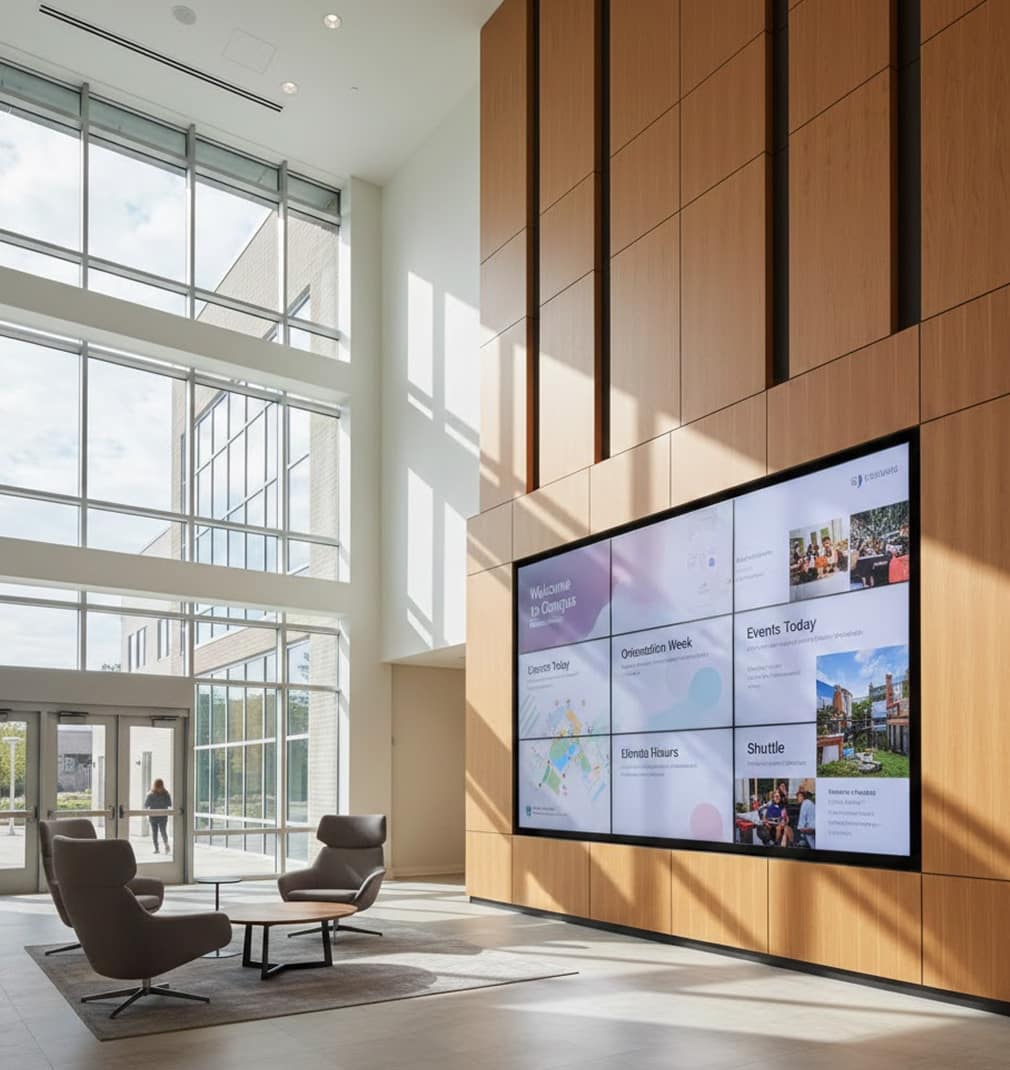
University digital signage delivers live updates, interactive tools, and automated alerts on notice boards that keep students, faculty, and visitors informed across every campus screen. Across faculties and residences, campus messaging stays unified on networked digital signage screens. See how Davenport University and Eastern Mennonite University did it. Content is created and scheduled from one AIScreen digital signage platform. For a research university the same network carries lecture hall agendas, faculty announcements, published research highlights, admissions open day details, and the academic calendar, so every college keeps its own voice while the institution speaks with one when it matters most. Explore more education digital signage solutions.

Why University Digital Signage
Improves Campus Communication
University digital signage keeps campuses connected with live updates, interactive tools, and automated alerts that inform students, faculty, and visitors in real time. From campus media and student services to events across departments and partner organizations, it keeps every screen current. It is one application of AIScreen’s campus digital signage. Get started using this simple framework. Universities run signage for campus events, class and exam schedules, dining menus, and emergency alerts across departments. AIScreen lets each college schedule its own content, pushes campus-wide safety alerts instantly, and highlights research and student life, unifying communication across a distributed campus. For university communications teams, the challenge is reaching a decentralized campus with one voice: AIScreen targets messaging by building, department, or the whole institution (event calendars, safety alerts, dining hours), so each college controls its own screens while central teams can still take over every display in an emergency. For a university communications director, the real problem is one voice across many colleges: AIScreen lets each department schedule its own screens while central comms can override every display with a campus-wide safety alert in seconds, so daily flexibility never costs you emergency reach. Higher education runs on an academic calendar that never sits still: term dates, exam timetables, reading weeks, and graduation ceremonies shift constantly, and printed boards fall behind within hours. University digital signage keeps that calendar current on lecture hall doors, auditorium foyers, and department corridors, so students always read the schedule that applies today. Faculty and department news gains a dedicated stage: seminar changes, guest lectures, and office hour updates reach the right building without another all student email. Research is one of the strongest stories a university can tell, and signage turns quiet lab work into visible achievement by showcasing published papers, grant wins, and lab result highlights in the science and engineering buildings where prospective students and donors walk through. Admissions and enrollment teams use the same screens to run open days, present course pathways, and guide applicants from the entrance to the right faculty desk. During exam periods, timetable boards and room allocation displays cut the queues at the registrar and ease the worry of a misread seat number. Student services put career fair schedules, wellbeing hours, and society sign ups where students already gather, while alumni and donor relations teams recognize benefactors and celebrate graduate outcomes across the great hall and event spaces. See the full picture in this guide to digital signage for universities and colleges, and read why institutions invest in it in this overview of the benefits of digital signage in education. Scale is where universities differ most from a single school: a large institution can run tens of thousands of screens across faculties, residences, libraries, sports centers, and satellite research sites, each with its own audience and its own approvals. AIScreen handles that with layered access, so a department publishes to its own corridor, a college manages its buildings, and central communications sets the template, the brand, and the emergency override for the entire institution. New buildings and new colleges join the network without a fresh procurement round, and the same content that runs on a lecture hall wall can appear on a residence lobby screen or a student union video wall the moment it is approved. Orientation and welcome week set the tone for a new cohort, and signage guides first year and international students from registration desks to their faculty buildings, library inductions, and society fairs without a printed map. Through the year the same screens carry wellbeing hours, counselling drop ins, and financial aid deadlines where students actually pause, so student services reach the people who rarely open a newsletter. Personalization by building means a science block shows lab safety and seminar times while an arts faculty shows studio bookings and exhibition dates, all from the same central platform. Hastings College proves this works in higher education: read the Hastings College case study to see how the team unified campus communication on every screen.
-
1
Deliver always-current information with live data -
2
Simplify space usage with interactive room booking -
3
Protect campus safety with automated alerts -
4
Connect physical screens to student devices
1. Deliver Always-Current Information With Real-Time Data Integration
Outdated information causes confusion. Digital screens
should reflect what’s happening right now, without manual
updates. For a university the stakes are higher: a moved lecture, a reallocated exam room, or a shifted submission deadline reaches every affected screen the moment it changes in the timetable system. The academic calendar, department feeds, and library hours stay accurate on their own, so students trust the board instead of double checking their inbox. Term dates, reading weeks, and graduation ceremonies update from the source, and every faculty corridor shows the version that applies to its own students today. A single feed change updates the physics timetable and the shared lecture theatres at once, so a rescheduled seminar never leaves a class standing outside a locked door.
-
Stream live updates from internal systems and third-party sources using live data, ensuring schedules, news, and announcements stay accurate. Pull timetables from the student records system and event feeds from each faculty, so lecture halls and department boards always show today’s academic calendar and the next session in that room.
-
Reduce reliance on emails and printed notices with screens that update automatically using content automation. Free the communications office from reprinting exam schedules and reading week notices at the start of every term.


