
What Is Digital Signage? A Complete Guide
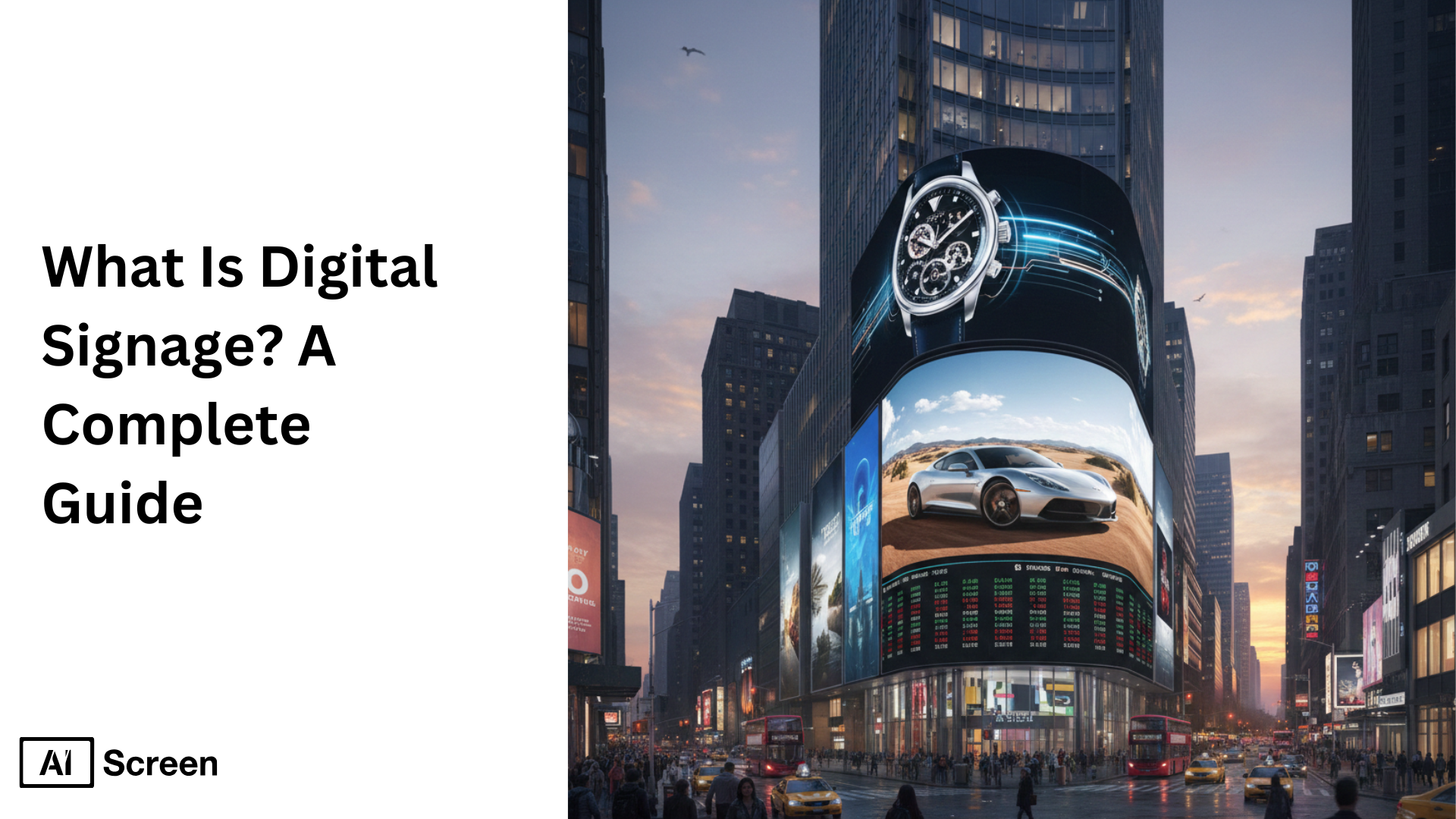
Ever stopped to notice how screens have quietly replaced posters, notice boards, and printed signs all around you? At its core, a digital signage system uses digital screens, driven by digital signage technology, to display dynamic content such as announcements, promotions, directions, menus, or videos in physical locations. Unlike static signs, these systems are connected to software that allows content to be updated instantly. According to MarketsandMarkets, the global digital signage market is expected to grow from $26.3 billion to $45.9 billion by 2030, highlighting how rapidly businesses are shifting toward digital communication.
In this blog post, you’ll get a clear and practical understanding of what digital signage means and why it’s transforming modern communication. We’ll walk through the different types of digital signage, explain how digital signage works, explore real-world examples and use cases, share a step-by-step digital signage tutorial, and show how AIScreen simplifies digital signage system management for businesses of all sizes. By the end, you’ll know exactly how digital signage fits into today’s communication landscape, and how to use it effectively.
What Is Digital Signage?
Ever noticed how screens seem to be everywhere now, quietly guiding, informing, and persuading us as we move through our day?
At its core, the digital signage definition refers to using digital screens, like TVs, kiosks, video walls, or LED panels, powered by digital signage software to display content such as information, promotions, directions, or announcements in physical spaces.
In simple terms, when people ask what does digital signage mean, it’s about replacing static posters or printed boards with dynamic, easily updated digital displays managed through software.
You see digital signage in action more often than you realize. Retail stores use it to highlight offers or new arrivals, hotels rely on it for welcome messages and wayfinding, airports use it to show flight updates, and restaurants display live menus that change by time of day.
Behind the scenes, digital signage software allows teams to schedule, update, and control this content remotely, without touching the screen itself.
This shift isn’t just about aesthetics, it’s about efficiency and measurable impact. According to Statista, over 60% of businesses using digital signage report improved customer engagement compared to traditional static signage, which explains why screen-based communication continues to replace printed signs across industries.
In short, digital signage software turns ordinary screens into smart communication tools, making information clearer, faster to update, and far more engaging than traditional signage ever could.
What is Digital Signage Used For?
Think of it as a silent team member that works all day, informing, selling, guiding, and engaging without ever taking a break.
To understand what does digital signage mean in real life, it helps to look at how digital signage is actually used day to day. Digital signage serves both communication and operational needs, making it useful far beyond simple advertising.
Businesses use digital signage to advertise new products, spotlighting launches or limited-time items with eye-catching visuals that instantly draw attention. It also plays a key role in offering navigational information to customers, such as directions in malls, hospitals, offices, and airports, reducing confusion and improving the overall experience.
On the sales side, screens are often used for pushing sales and discounts, allowing teams to switch promotions in real time without printing new posters. Restaurants and cafés rely on it for displaying dynamic menus, adjusting prices, items, or dayparts instantly.
Many brands go further by creating interactive displays that let users browse options, explore products, or engage with touch-based content. And of course, digital signage is widely used for hosting video content, from brand stories and tutorials to announcements and live updates.
What makes all these use cases powerful is flexibility. Content can be updated in seconds, visuals are far more engaging than print, and businesses stay responsive without the cost or delay of reprinting materials.
What Are The Impact Examples of Digital Signage?
Numbers tell stories, but real brands prove them. When you look at how global brands use digital signage technology, the impact becomes hard to ignore. Impact examples of digital signage inlcudes companies like McDonald’s and Coca-Cola were early adopters, and their results show exactly why this technology took off.
McDonald’s rolled out digital menu boards across thousands of locations, allowing menus to change instantly based on time of day, weather, or active promotions. That flexibility paid off. According to Forbes (2018), McDonald’s reported sales increases of up to 3.5% in some locations directly linked to digital signage-driven menu optimization.
Coca-Cola followed a different path, using digital signage technology to power highly visual, interactive campaigns. By blending motion graphics, real-time messaging, and location-based content, the brand boosted customer engagement at the point of sale, turning passive viewers into active participants and, ultimately, buyers.
Market-wide data reinforces these individual success stories. Grand View Research reports that the global digital signage market was valued at $24.86 billion in 2022 and is projected to grow at a CAGR of 8% from 2023 to 2030, reflecting rapid adoption across retail, hospitality, and public spaces.
On the attention front, studies show digital displays attract up to 400% more views than static signage, highlighting the clear shift away from print.
The pandemic accelerated this trend even further. A 2021 industry report found that 88% of U.S. restaurants were considering switching to interactive digital menus, driven by demand for contactless ordering and real-time updates.
Taken together, these examples make one thing clear: when brands adopt digital signage technology strategically, they don’t just modernize displays, they unlock measurable revenue growth, stronger engagement, and higher customer satisfaction.
What Are The Types of Digital Signage?
It’s easy to think of digital signage as “just screens,” but once you look closer, you’ll realize it comes in many formats, each designed for a specific purpose.
When people talk about the types of digital signage, they’re usually referring to how screens are classified based on where they’re used, how people interact with them, and what communication goal they serve.
From simple visual loops to immersive, interactive experiences, each type plays a different role in modern communication.
Digital Posters
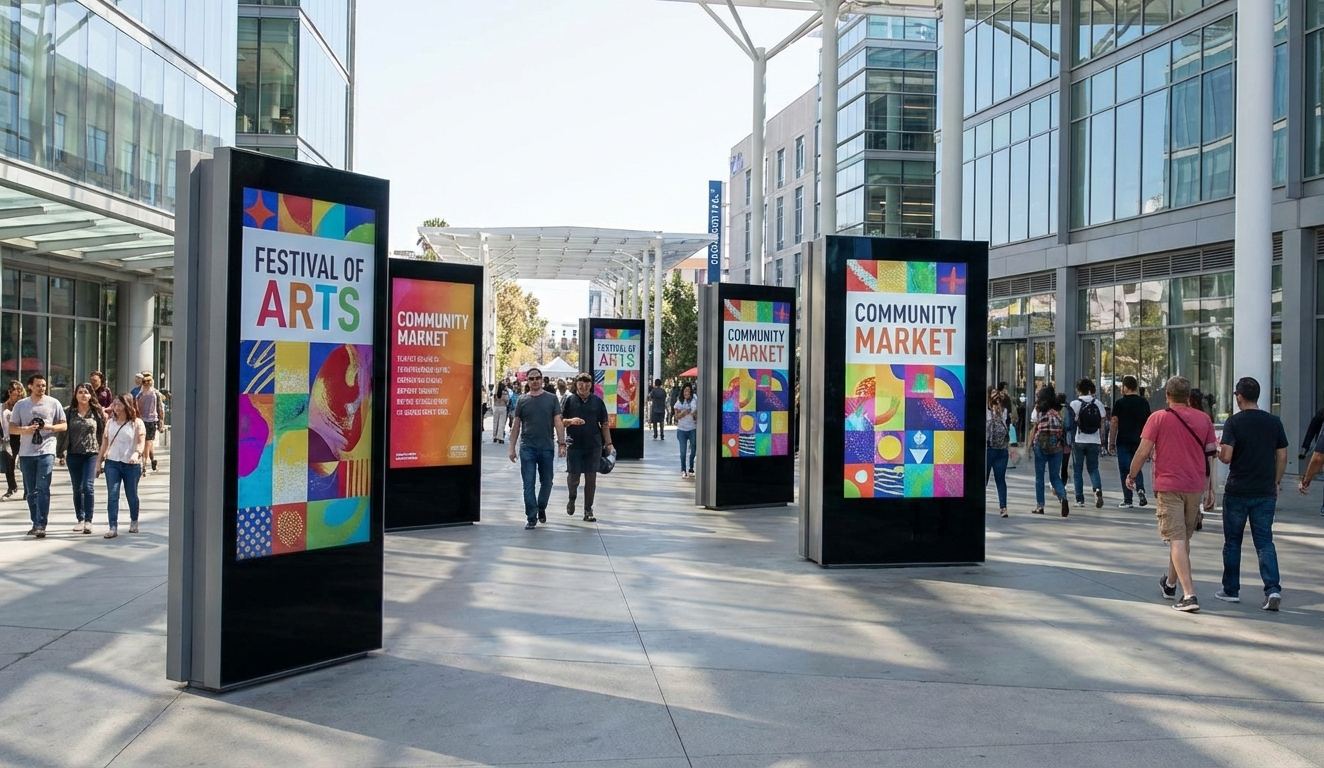
Sometimes, less really is more. Digital posters are one of the simplest types of digital signage, designed to loop visual content like images, short videos, or announcements.
They’re non-interactive and focus on clear, quick message delivery, perfect for hallways, elevators, store entrances, and waiting areas where viewers only glance for a few seconds.
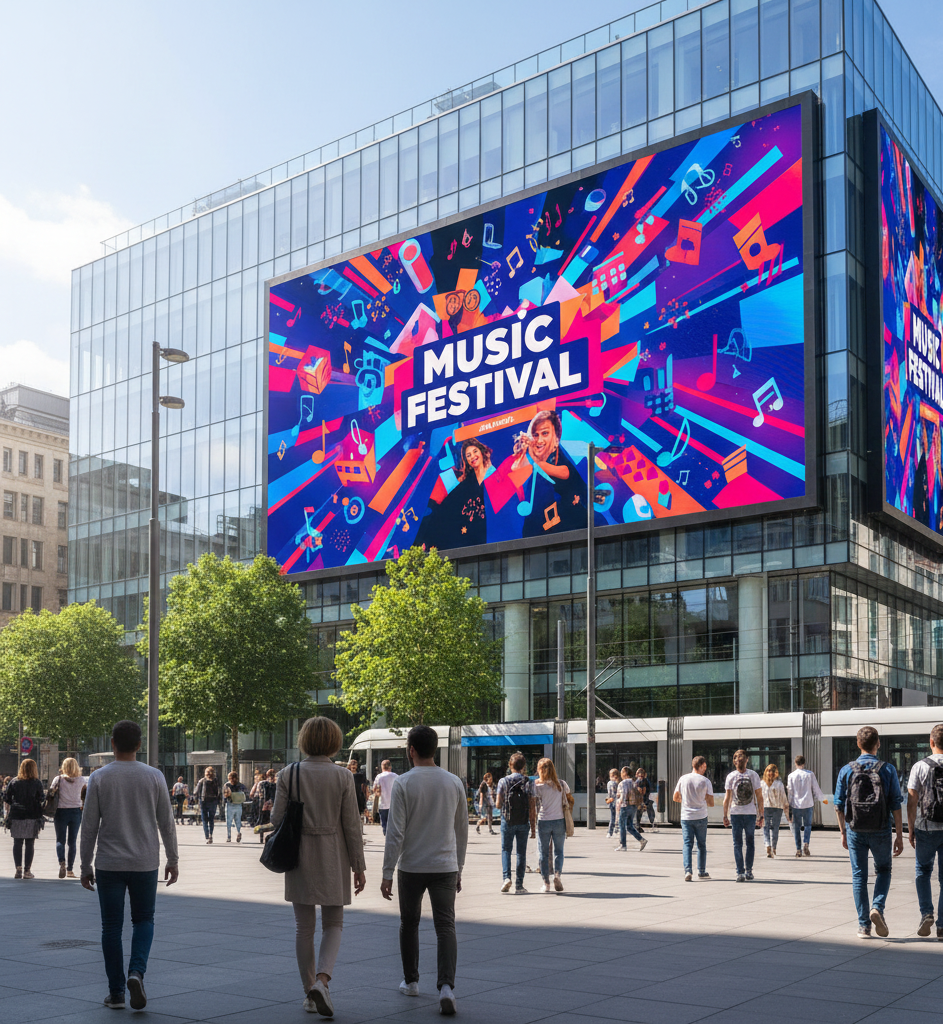
Digital Billboards
When the goal is maximum visibility, scale takes center stage. Digital billboards are large-format displays used in high-traffic environments such as highways, city centers, malls, and stadiums.
Their strength lies in size and brightness, allowing brands to deliver bold promotional messages that are visible from long distances and adaptable to different times of day.

Interactive Digital Signage
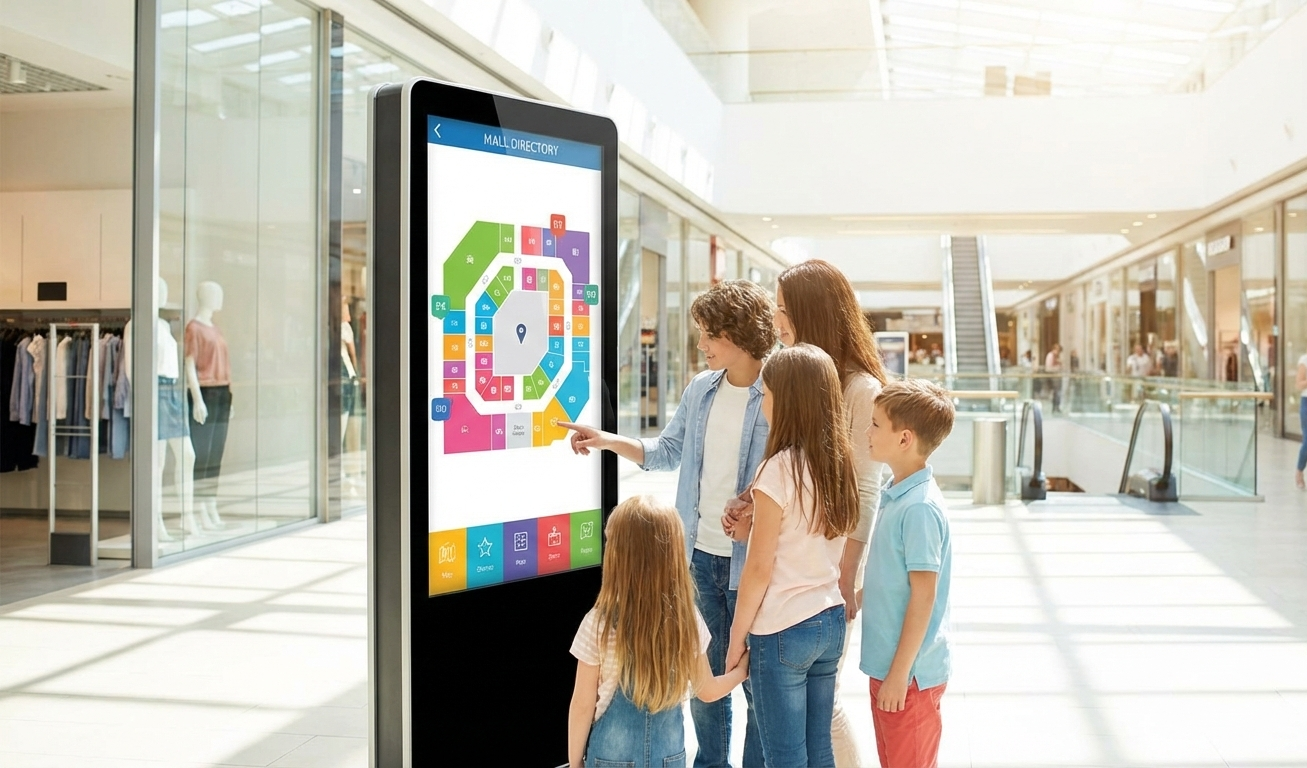
This is where screens stop talking at people and start talking with them. Interactive digital signage allows users to engage through touch, motion, or other inputs, creating a responsive experience.
At this level, what is digital signage software becomes critical, it’s the software that manages interactions, triggers content, and ensures the display responds smoothly to user actions in kiosks, directories, or self-service stations.
Digital Menu Boards
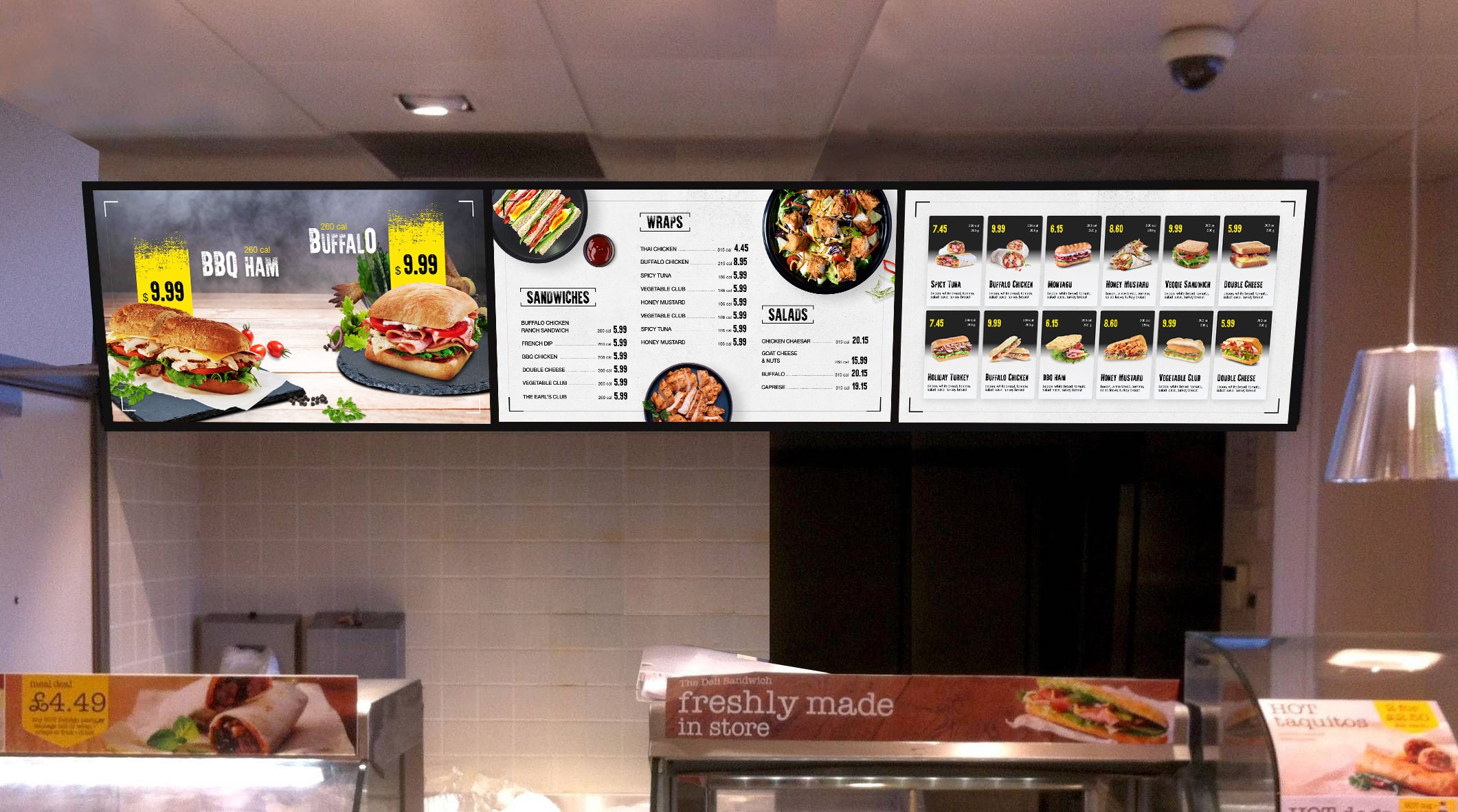
Menus are no longer static, and that’s a big advantage. Digital menu boards are industry-specific signage commonly used in restaurants, cafés, and quick-service locations.
They allow instant updates to prices, items, and promotions while maintaining consistent branding across multiple locations, all without reprinting physical menus.
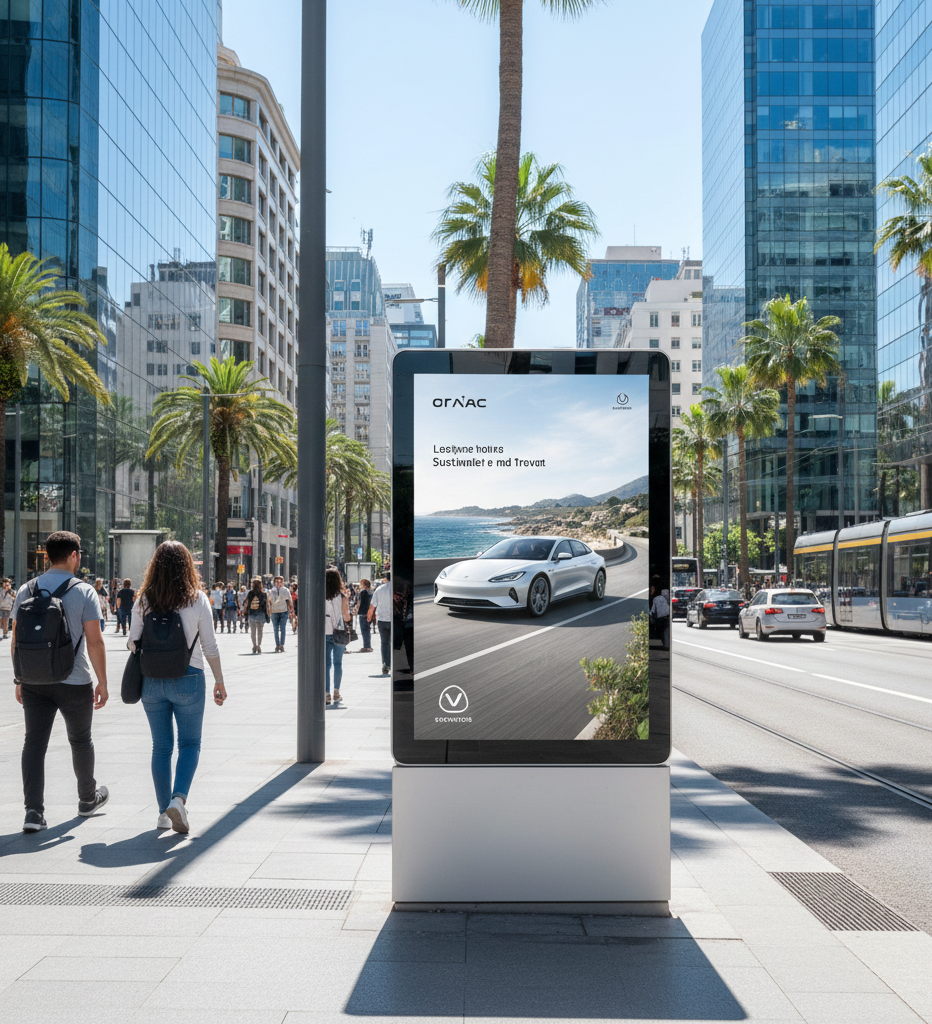
Outdoor Digital Signage
Outdoor screens have to work harder, and smarter. Outdoor digital signage is built for open environments where sunlight, weather, and distance affect visibility.
These displays focus on high brightness, durability, and real-time information delivery, often paired with guidance similar to a digital signage tutorial to ensure proper setup and content scheduling.
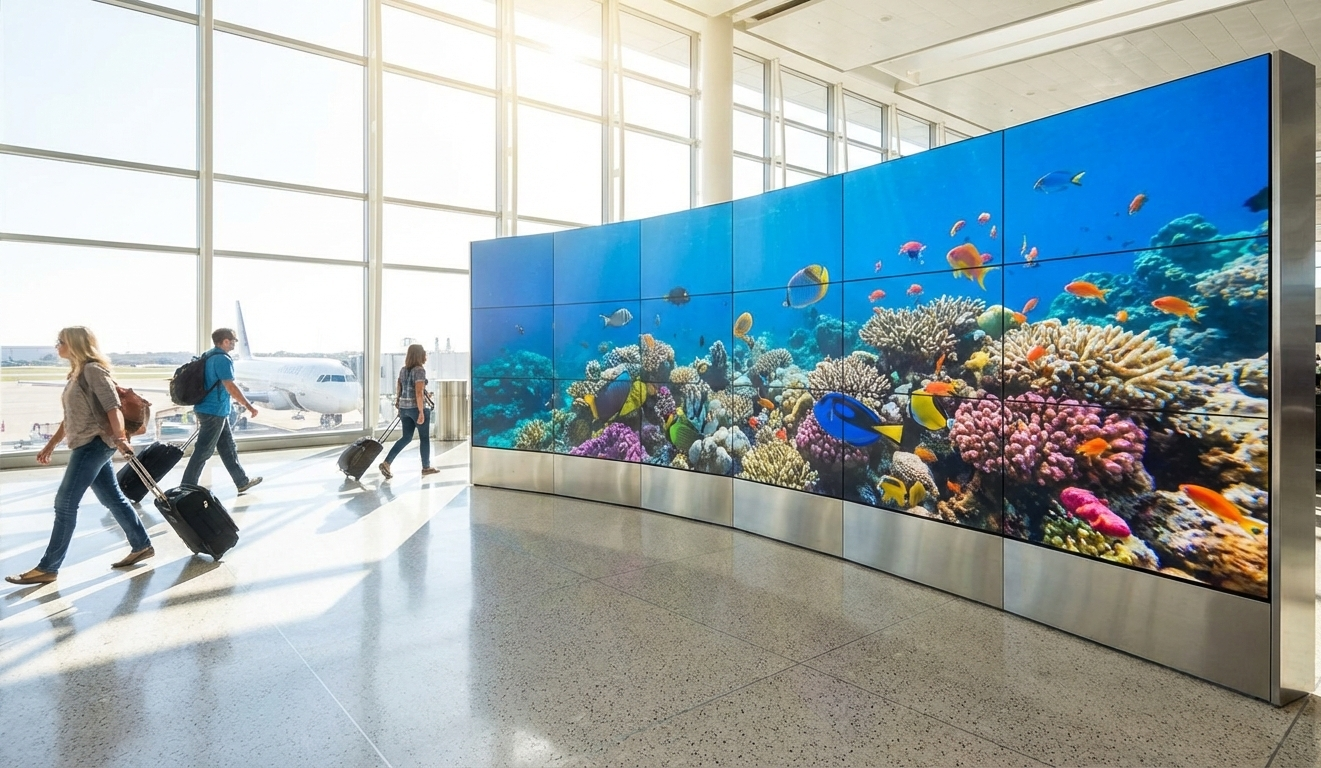
Video Walls
If the goal is immersion, nothing compares to this format. Video walls combine multiple screens into one large visual canvas, creating a high-impact display used in lobbies, control rooms, retail flagships, and event spaces.
Instead of focusing on construction details, their real value lies in branding power and the ability to capture attention instantly with cinematic visuals.
Together, these formats show that digital signage isn’t one-size-fits-all, it’s a flexible communication system designed to adapt to space, audience, and intent.
What are the Benefits of Digital Signage?
Once businesses experience how fast information needs to move today, printed signs start to feel… slow.
The real reason companies shift from posters to screens isn’t trendiness, it’s results. Digital signage turns communication into something flexible, visual, and measurable.
Instead of managing static materials, businesses gain a system that adapts in real time and delivers stronger outcomes across marketing, operations, and customer experience.
Key benefits of digital signage at a glance:
- Customization: Digital signage allows content to be tailored by location, audience, time of day, or campaign. Brands can personalize messaging across different stores or departments while keeping visual consistency, something static signage simply can’t offer.
- Eye-Catching Visuals: Motion, color, video, and animation naturally attract attention. Digital screens stand out in busy environments, helping messages get noticed faster and remembered longer compared to printed signs.
- Diverse Digital Signage Options: From posters and menu boards to interactive kiosks and video walls, digital signage supports a wide range of formats. This diversity allows businesses to choose the right display type for each use case, whether it’s promotion, navigation, or engagement.
- Real-Time and Reactive Content: One of the strongest advantages is speed. Content can be updated instantly to reflect price changes, promotions, announcements, or real-world conditions, without printing or manual replacement.
- Energy Efficient: Modern digital displays are designed to consume less power than traditional illuminated signage. Scheduled screen usage, brightness controls, and automated shutdowns help reduce unnecessary energy use while keeping communication active.
Why These Benefits Matter
Together, these advantages explain why digital signage outperforms static alternatives. It doesn’t just display information, it adapts, reacts, and evolves with the business, making communication smarter, faster, and far more effective.
What Screens Can Be Used for Digital Signage?
Choosing the right screen is where digital signage really comes to life, because the display you pick shapes how people see, understand, and interact with your message.
Digital signage isn’t limited to one type of display. Screens that can be used for digital signage based on environment, visibility needs, interaction level, and content goals. From everyday indoor displays to emerging visual technologies, each screen type serves a specific purpose.
LCD Screens
If you’ve seen digital signage indoors, chances are it was an LCD. LCD screens are the most common digital signage displays used in offices, retail stores, schools, and restaurants.
They’re accessible, cost-effective, and offer sharp clarity for menus, announcements, dashboards, and promotional content in controlled indoor environments.

LED Screens
When visibility matters from a distance, brightness takes priority. LED screens are built for high-visibility environments such as storefronts, large venues, and semi-outdoor spaces.
Their brightness and scale make them ideal for promotional messaging where content needs to stand out even in well-lit or crowded areas.
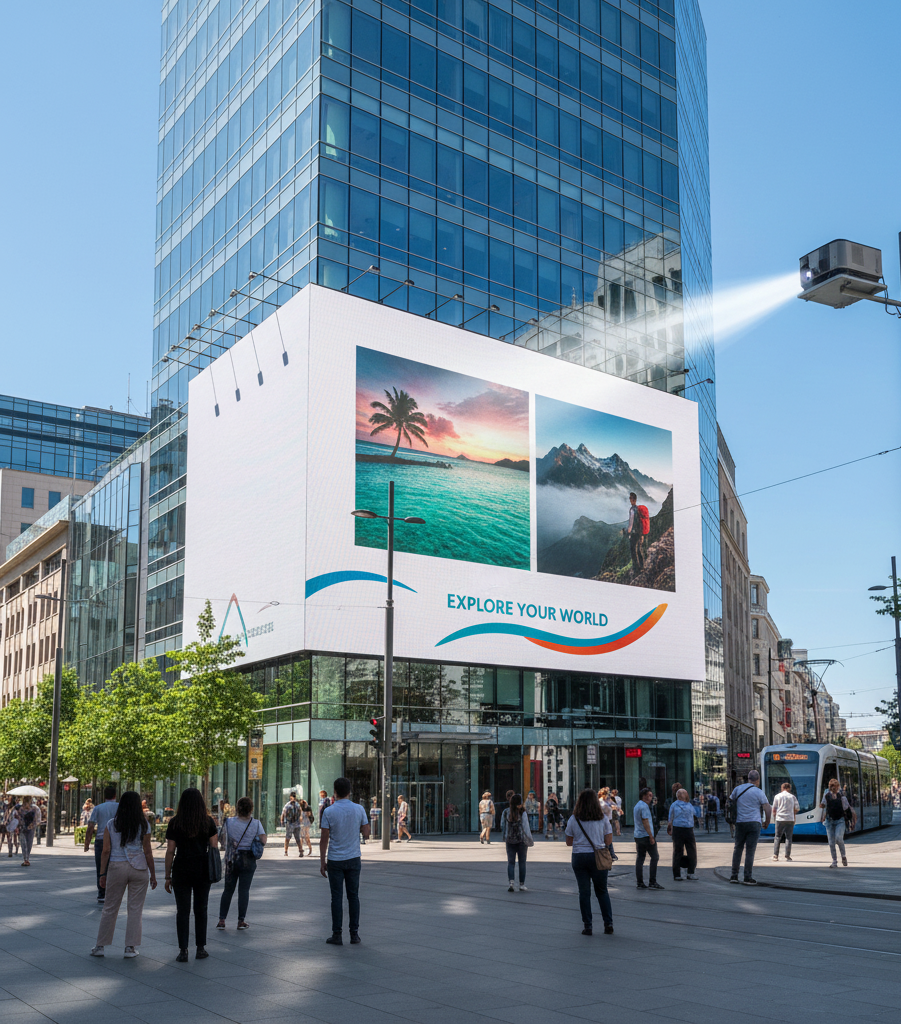
Projection Screens
Sometimes the biggest screen doesn’t come from a panel at all. Projection screens offer a space-efficient way to create large-scale displays without mounting oversized hardware.
They’re often used in event spaces, auditoriums, exhibitions, or temporary installations where scale and visual presence matter more than fine detail.
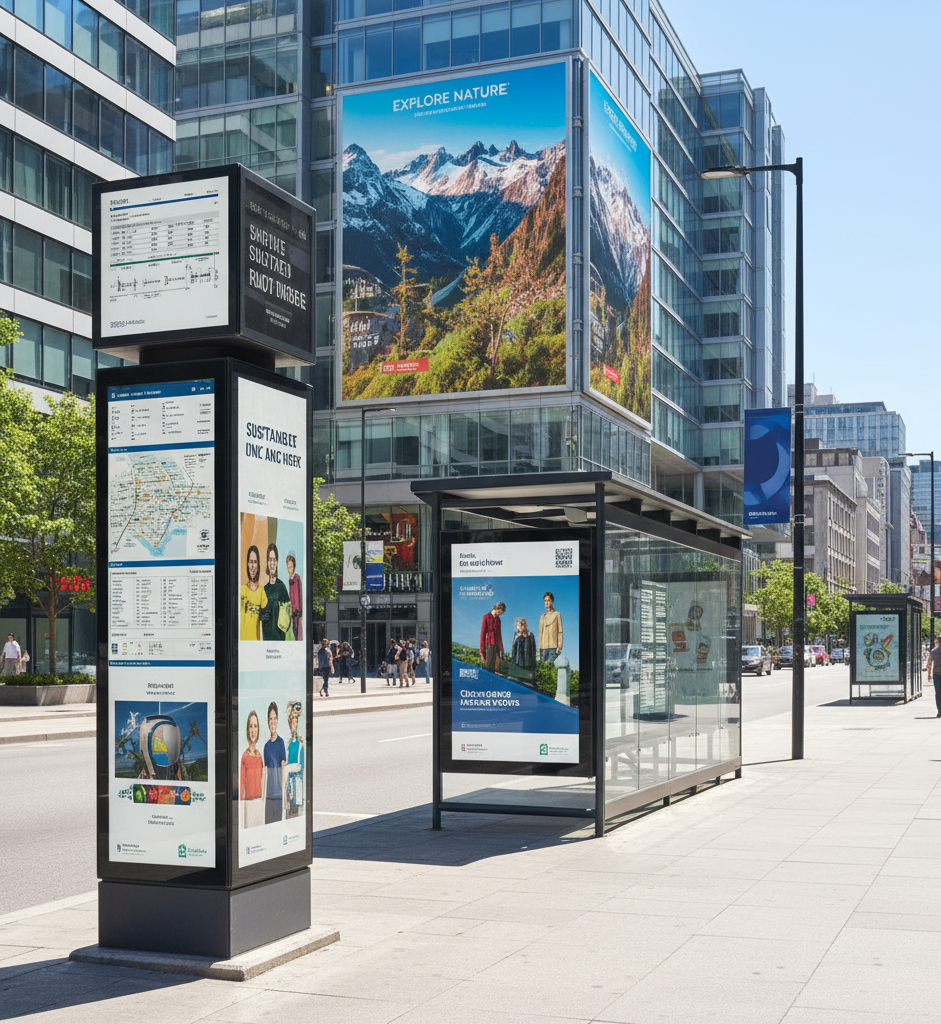
Electronic Ink
Not every message needs motion to be effective. Electronic ink (e-ink) displays are designed for low-energy, information-focused signage. Commonly used for schedules, room availability, pricing, or notices, they consume minimal power and remain readable even without constant refresh.
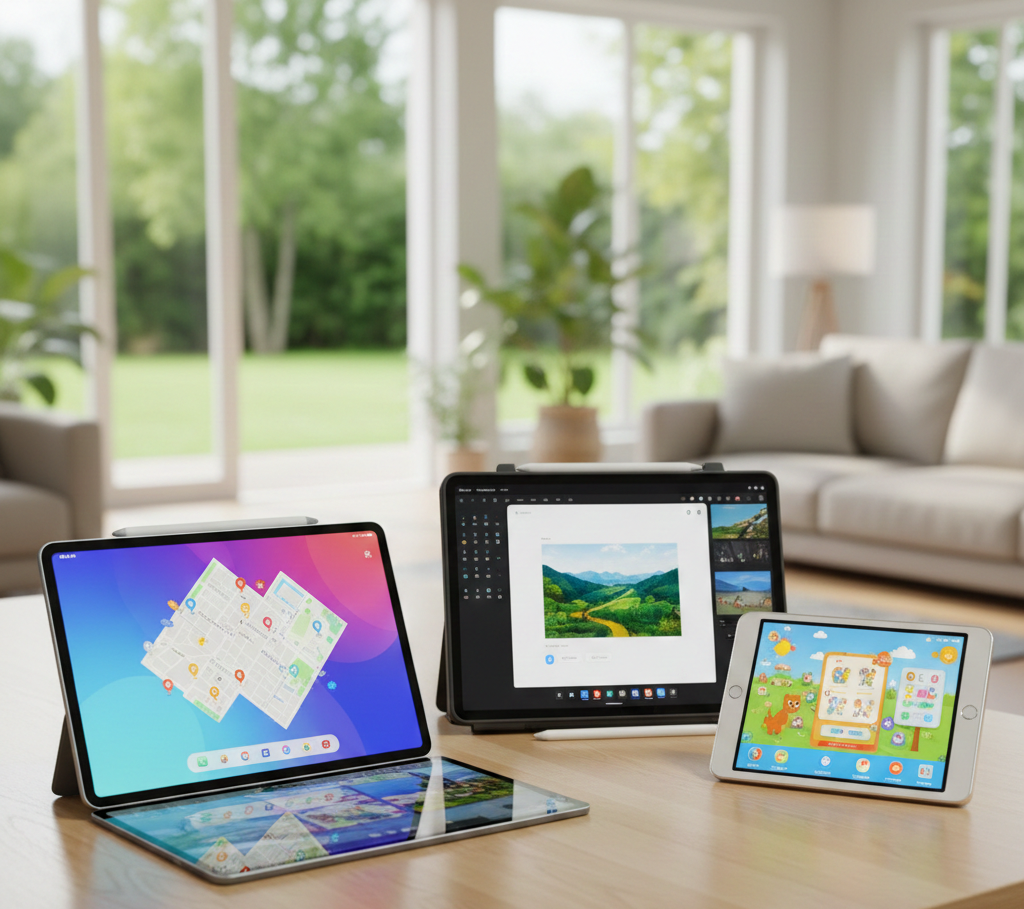
Tablets and Mobile Devices
Flexibility is the biggest advantage here. Tablets and mobile devices are often used for portable, temporary, or interactive signage. They’re easy to deploy, relocate, and update, making them suitable for pop-up stores, check-in points, events, or short-term campaigns.
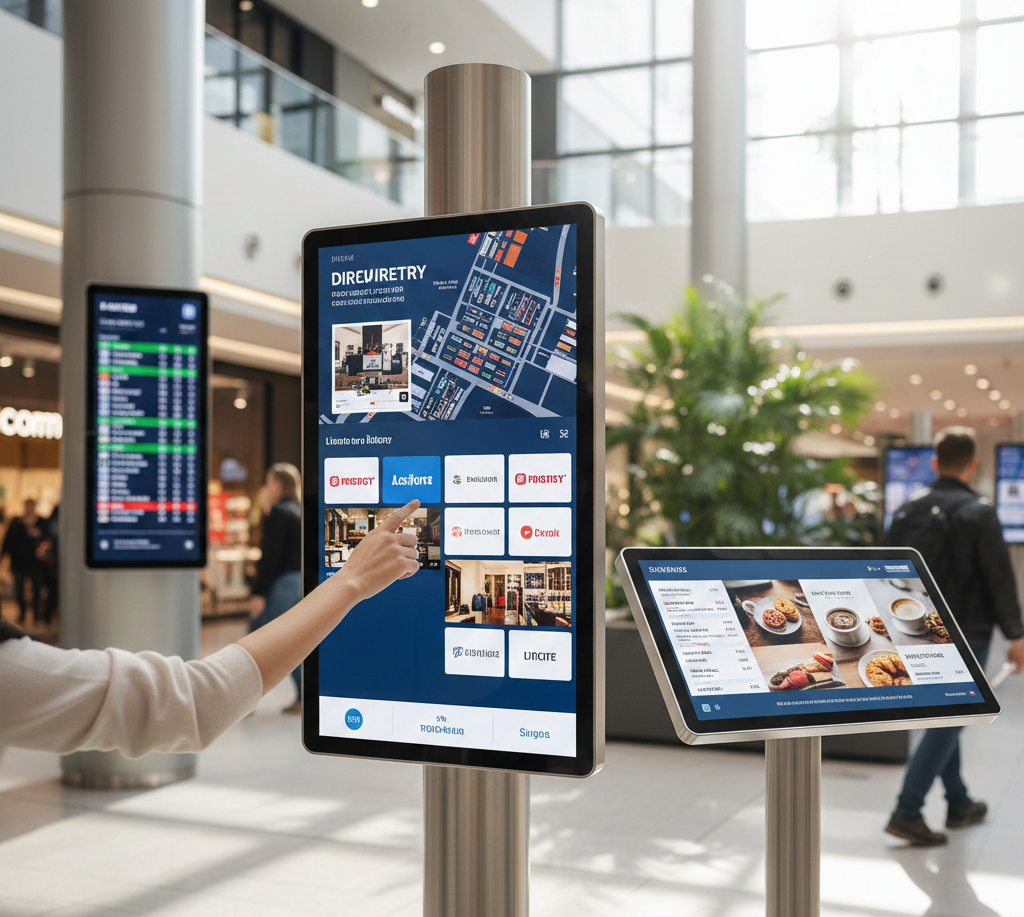
Touchscreens
When engagement is the goal, interaction changes everything. Touchscreens enable users to explore content themselves, whether browsing directories, navigating maps, ordering food, or accessing information. These displays focus on usability and engagement, turning passive viewers into active participants.
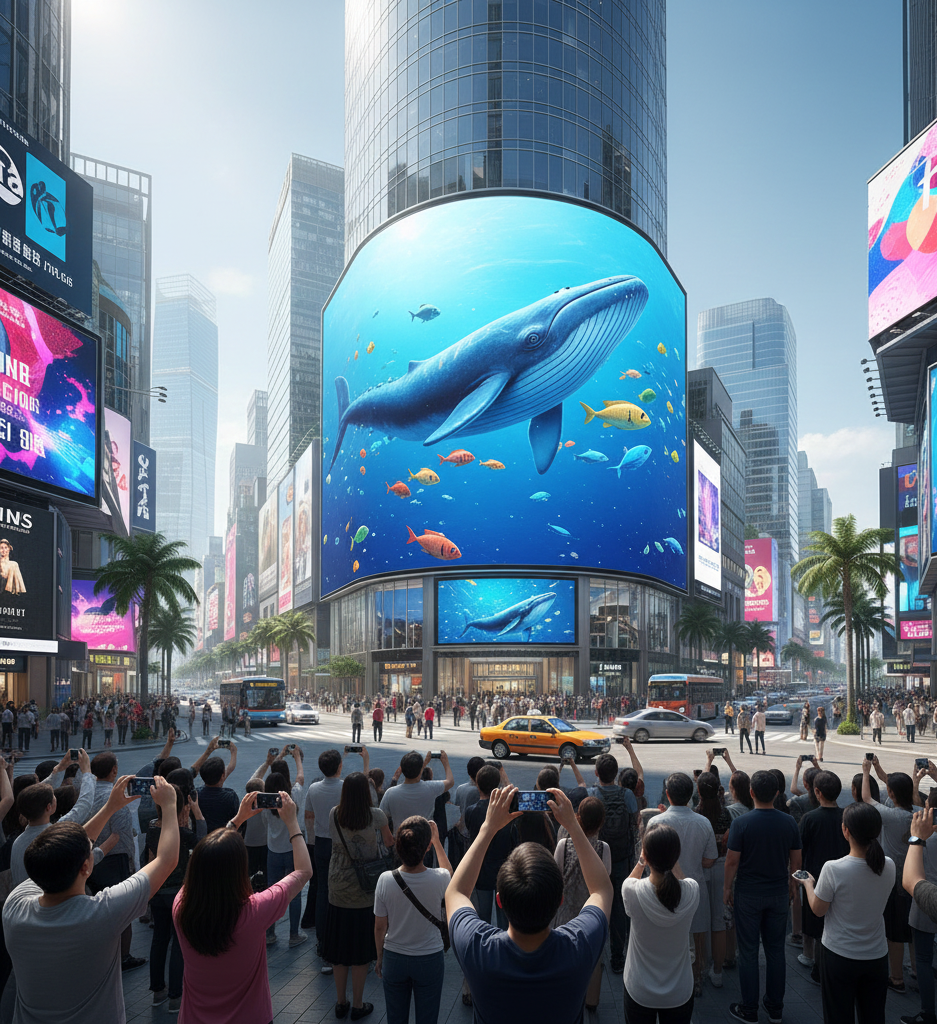
3D LED Screens
This is where digital signage starts to feel futuristic. 3D LED screens are an emerging display format designed to create depth and visual illusion without glasses. While still evolving, they’re gaining attention in flagship locations and outdoor advertising for their ability to stop people in their tracks.
How to Set Up Digital Signage with AIScreen
Set up digital signage with AIScreen to deliver dynamic content across multiple screens. For setup, use displays such as LCD or LED screens to showcase videos, images, and text.
Content is managed through content management software, which allows businesses to schedule, edit, and push updates remotely. With the ability to perform remote screen updates, companies can tailor messages instantly for different audiences, ensuring communication stays timely and impactful.
Step 1: Choose the Right Digital Signage Display
Choose the right digital signage display based on your location, audience, and content needs. Displays vary from LCD, LED, to OLED, each offering different levels of brightness, resolution, and viewing angles. For example:
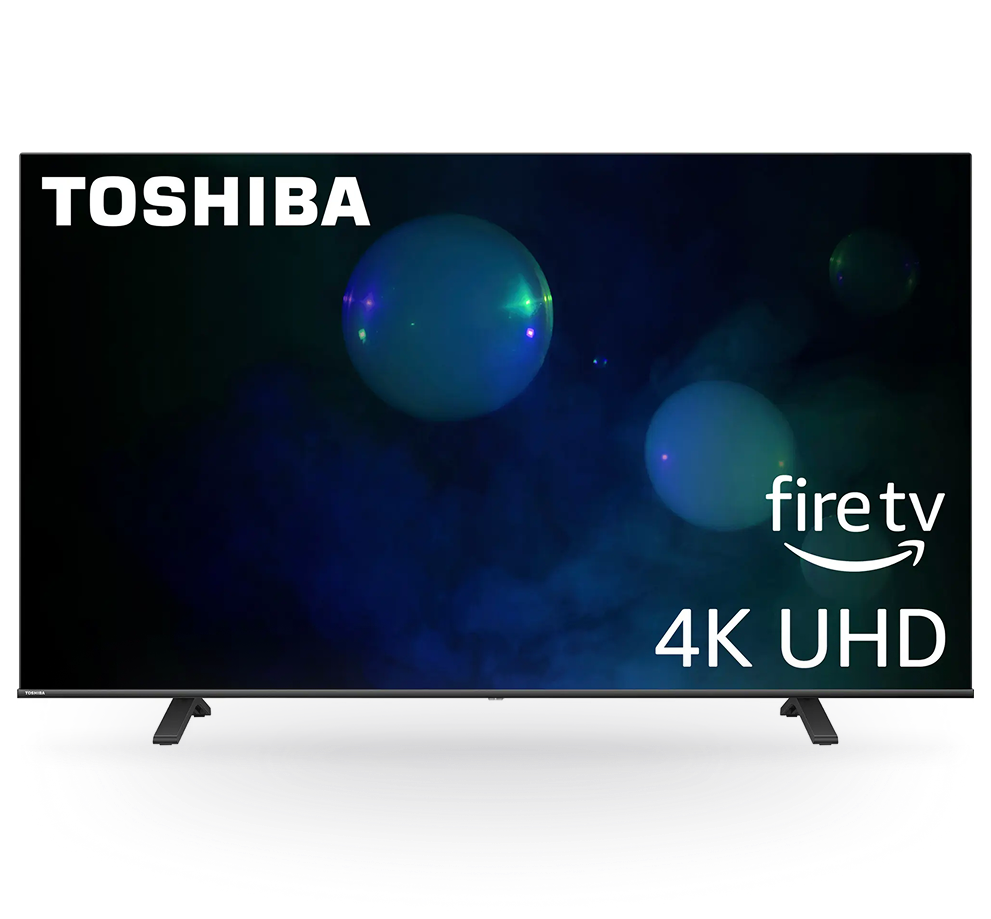
Toshiba – Class C350 Series LED 4K UHD Smart Fire TV (43″-75″)
The Toshiba – Class C350 Series LED 4K UHD Smart Fire TV offers 4K resolution, vibrant colors, and a modern design that works well in various business spaces. Price range is $210 – $649.99.
TCL – Class S5-Series 4K UHD HDR LED Smart Google TV (43″-85″)
The TCL – Class S5-Series 4K UHD HDR LED Smart Google TV, equipped with Dolby Audio and dynamic color enhancement, provides an immersive viewing experience. Price range is $179.99 – $749.99.

By evaluating room size, lighting conditions, and customer traffic, businesses can select the most suitable digital signage screens for their setup.


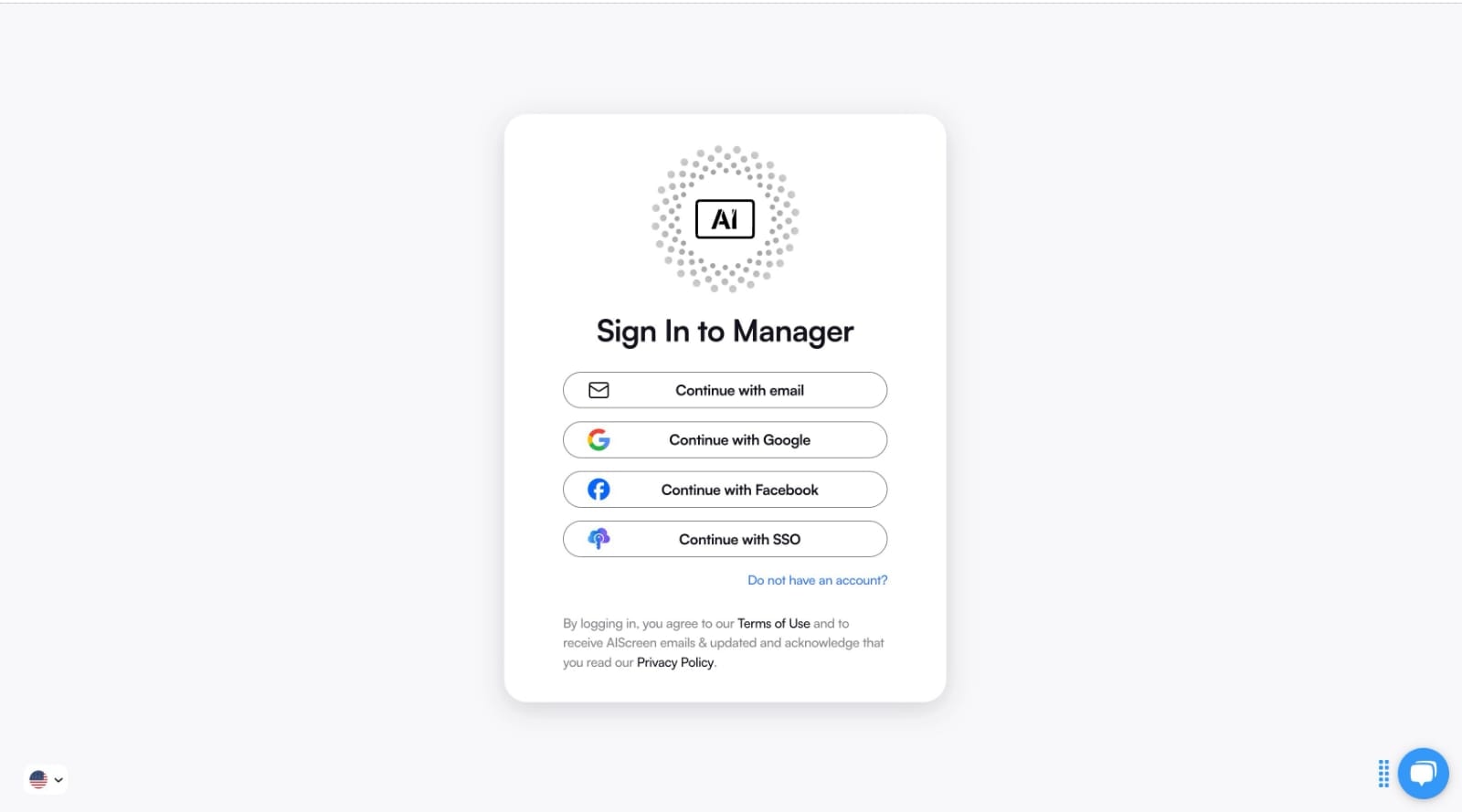
Step 2: Login And Create an Account in Your Digital Signage Management App
Login and create an account in your digital signage management app to unlock full platform functionality.
Start by installing the app on your connected media players or smart TVs. The software allows you to upload media, schedule updates, and control multiple screens from a single dashboard.
Ensure a strong internet connection for uninterrupted performance. Once installed, log in via the dashboard to upload content and manage playlists.
After signing up, you’ll be able to upload, organize, and schedule your content across screens.
For example, registering through the web platform like AIScreen allows businesses to manage multiple displays from one interface, ensuring real-time communication and consistent branding. With this account, you can schedule playlists, manage queues, and track analytics efficiently.
Step 3: Pair Your Devices with the Digital Signage Software
Pair your devices with the digital signage software to synchronize content across all screens. In your dashboard, go to the “Screens” section and select “Add Screen.” A unique pairing code will appear on your display.
Enter this code into your management dashboard to complete the connection. This process helps you pair displays with signage platform features, ensuring content is updated in real-time and customized to each location’s needs.

Step 4: Upload or Customize Your Digital Signage Templates
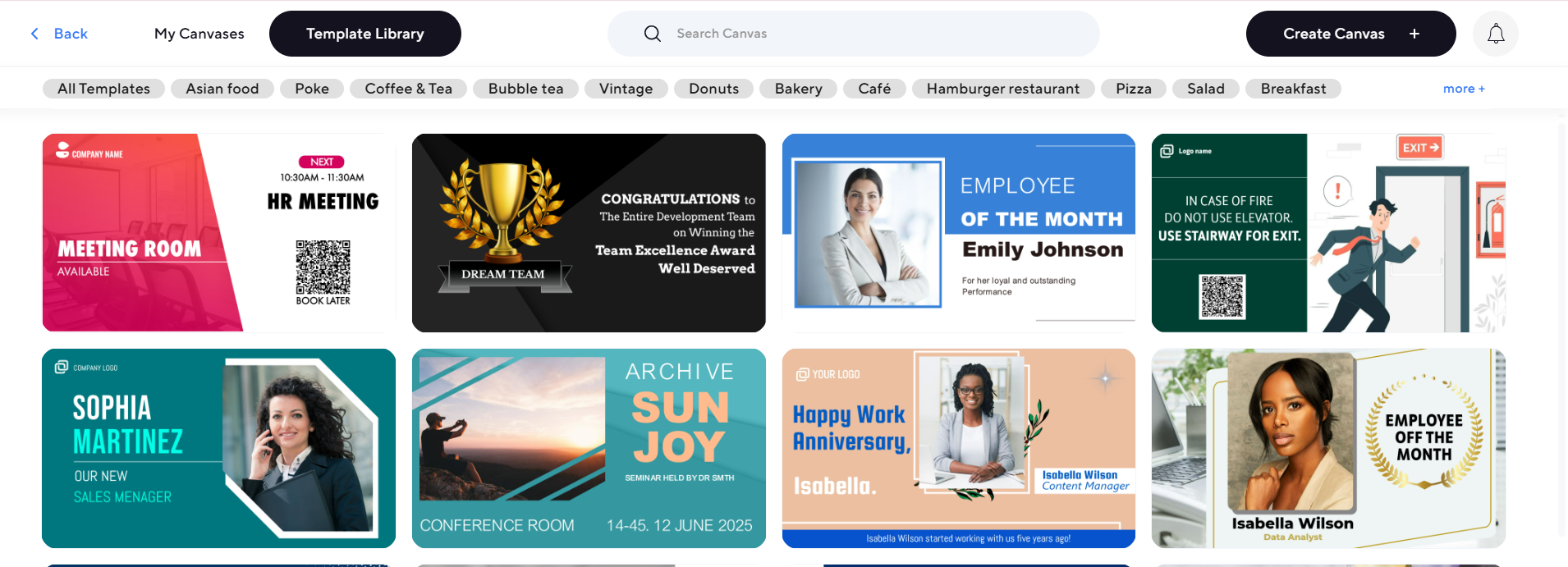
Upload or customize your digital signage templates to match your brand identity with AIScreen. Using a drag-and-drop editor, you can include logos, colors, and branded fonts, alongside media like videos, product images, and promotional graphics.
With over 1500 industry-ready templates available, you can quickly launch engaging campaigns. Whether you start fresh or customize your digital signage template, tailored digital signage templates ensure your content remains visually appealing and audience-focused.
Step 5: Set Up a Display Schedule and Launch Content
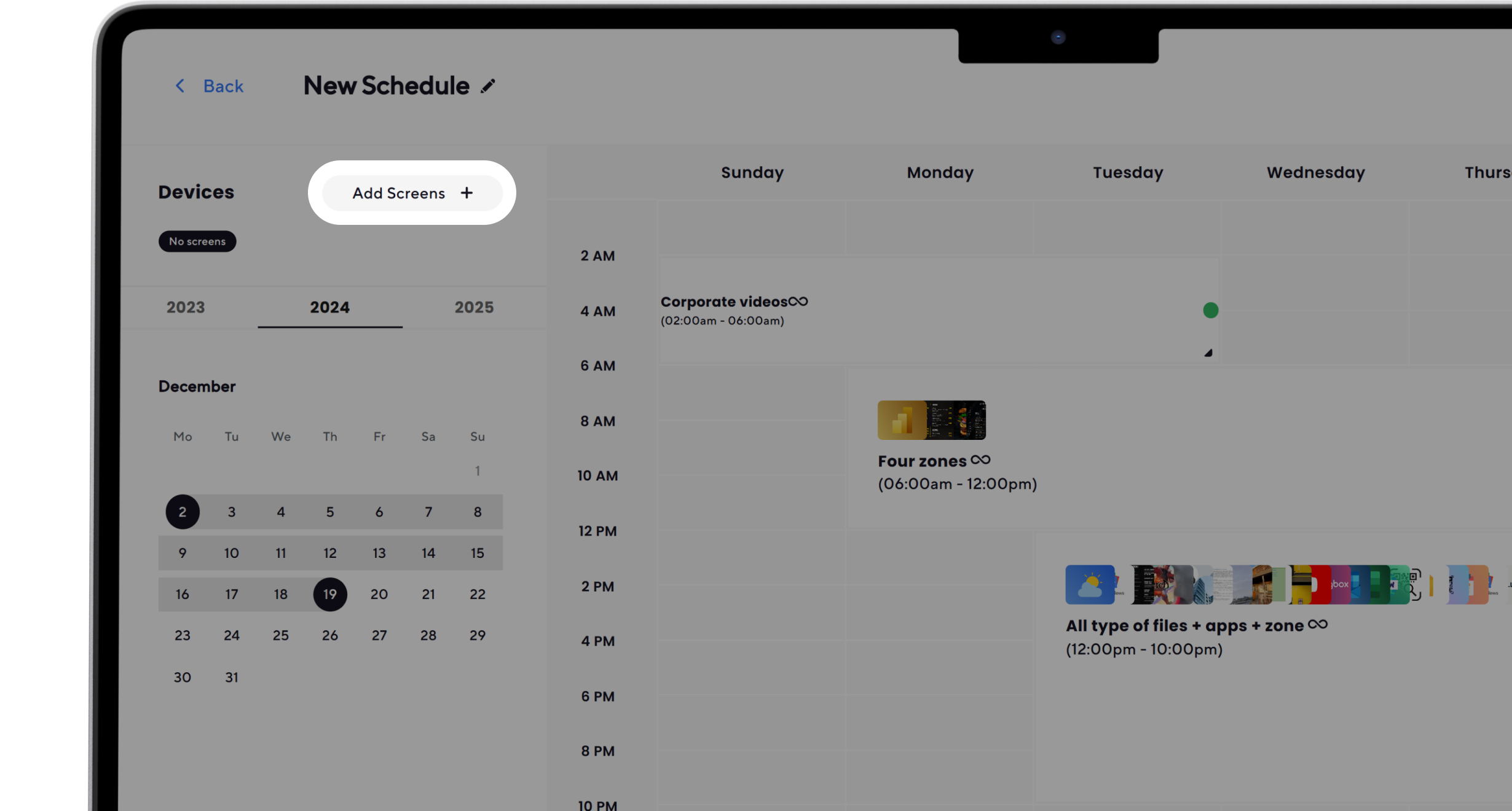
Set up a display schedule and launch content across your chosen screens. Use scheduling tools to align content with business hours, events, or promotional campaigns. Dayparting allows different content to show at different times of the day.
Before going live, test your playlists to confirm smooth playback. By integrating tools to set up display schedule, you can automate content delivery, maintain freshness, and maximize engagement. Smart scheduling content ensures your displays always deliver relevant messaging.
Which Industries Benefit the Most from Digital Signage Solutions?
Industries benefit the most from digital signage solutions when they need to communicate quickly, engage audiences, and streamline operations. The versatility of digital signage applications across industries makes it an essential tool for improving customer experiences and internal communication.
From QSR signage in fast-food chains to corporate communication screens in offices, businesses can display dynamic messages, promotions, or safety updates in real time. These solutions scale across sectors, offering tailored benefits depending on the environment.
Retail accounts for about 25% of digital signage installations, with healthcare (15%), hospitality (18%), and transportation (12%) growing rapidly, according to Market.us.
Here are the industries that see the most significant impact:
- Restaurants: Restaurants rely on digital displays to update menus instantly, highlight seasonal offers, and create engaging dining experiences.
- Coffee Shops: Coffee shops use signage to showcase promotions, loyalty rewards, and visually engaging menu items to help customers make faster decisions.
- QSR (Quick Service Restaurants): QSR signage ensures quick updates of menus, combo deals, and real-time pricing to keep operations efficient during peak hours.
- Pizza Shops: Pizza chains use digital boards to highlight specials, streamline order processing, and showcase custom meal deals.
- Retail: Retail signage displays help stores display promotional offers, seasonal campaigns, and product highlights through retail digital signage that capture attention.
- Education: Schools and universities benefit from digital signage for education, sharing announcements, schedules, and emergency alerts to improve campus communication.
- Manufacturing: Factories adopt digital signage for manufacturing to share production targets, safety alerts, and real-time performance updates on shop floors.
- Corporate: Offices leverage corporate communication screens to improve internal communication, share updates, and boost employee engagement.
- Airports: Digital signage for airports supports passenger navigation, flight schedules, and wayfinding, reducing confusion and improving traveler experience.
- Healthcare: Clinics and hospitals use digital signage for healthcare to provide waiting room updates, health education, and visitor guidance.
- Fitness: Gyms rely on digital signage for fitness to display class schedules, motivational content, and promotional campaigns.
- Events: Event organizers use displays for real-time scheduling, sponsorship promotions, and live updates.
- Hospitality: Hotels and resorts use digital signage to improve guest communication, promote amenities, and share event details.
- Banks: Banks rely on signage to highlight financial products, share real-time market updates, and provide queue management.
- Real Estate: Real estate agencies use signage to showcase property listings, open house schedules, and promotional offers.
- Casinos: Casinos utilize signage to promote events, display jackpot information, and enhance guest entertainment.
- Pharmacy: Pharmacies use signage for health awareness campaigns, promotions, and queue management.
- Convenience Store: Stores display promotions, loyalty offers, and seasonal deals to attract shoppers.
- Grocery Store & Supermarket: Supermarkets use signage to highlight discounts, aisle navigation, and daily offers.
- Logistics: Logistics companies apply signage to track shipments, streamline internal communication, and improve efficiency.
- White Label: Providers offer white label signage solutions for resellers to rebrand and deliver under their own identity.
- Enterprise: Enterprise digital signage supports large-scale deployments across multiple offices, enabling businesses to manage global content centrally.
Digital Signage vs. Traditional Signage
At first glance, both might seem to do the same job, but the difference becomes obvious the moment your message needs to change.
Before comparing them side by side, it helps to understand the foundation. Traditional signage relies on printed, static signs to deliver information, while digital signage systems use electronic displays, software, and connectivity to show dynamic digital content. When people search for digital signage vs. traditional signage: what is the difference?, they’re really asking how modern communication stacks up against fixed messaging.
Digital signage uses digital signage screens, supported by digital signage hardware and a content management system, to deliver multimedia content that can adapt instantly. Traditional signage, on the other hand, depends on physical materials that must be manually replaced.
Key Differences at a Glance
| Feature | Digital Signage | Traditional Signage |
|---|---|---|
| Content Type | Dynamic digital content, multimedia content, interactive content | Static signs with fixed messaging |
| Update Frequency | Real-time updates via content management system | Requires reprinting and replacement |
| Personalization | Targeted messaging by target audience, location, or time | One-size-fits-all content |
| Engagement | Video, animations, social media feeds, electronic displays | Limited visual engagement |
| Long-Term Value | Higher upfront cost, stronger ROI over time | Lower upfront cost, recurring print expenses |
Why the Difference Matters
Digital signage eliminates the delays and limitations of static signs. In corporate buildings, screens can switch from internal updates to visitor messaging instantly.
In retail or outdoor displays, electronic signage adapts promotions based on timing or demand. With modern display technology, digital signs also support interactive content that encourages participation rather than passive viewing.
Traditional signage still has its place for simple, permanent messages, but when engagement, flexibility, and responsiveness matter, digital signage systems clearly deliver more value.
How Digital Signage Fits Your Business? Get a Free Consultation with AIScreen!
Curious ow digital signage fits your business? The answer is simple: no matter the industry, digital signage can help you engage customers, improve communication, and boost efficiency.
With easy-to-use software, flexible templates, and powerful display options, AIScreen makes it effortless to set up and manage your network.
As the leading provider of innovative digital signage solutions, AIScreen gives businesses the tools they need to create dynamic experiences that drive real results. Contact us.
FAQs
What is digital signage software?
Digital signage software is a platform that allows businesses to create, manage, and schedule digital content across multiple screens. It connects with a content management system (CMS) to control displays remotely, enabling updates, promotions, and messaging in real time.
How much does digital signage cost?
Digital signage costs depend on hardware, software, and installation. Basic setups can start from a few hundred dollars, while enterprise-level solutions with multiple screens, players, and advanced features can cost several thousand, depending on scale and customization.
What equipment is needed for digital signage?
The equipment needed for digital signage includes a display screen (LCD, LED, or OLED), a media player or smart TV, and digital signage software for content management. Additional equipment may include mounts, network connectivity, and optional accessories like kiosks or sensors.
Do I need a media player for digital signage software?
The need for a media player for digital signage software depends on the type of screen used. Many smart TVs run apps directly, while others require an external player to connect displays to the CMS. Media players ensure smooth playback and centralized control for multiple screens.
Can I use a regular TV for digital signage?
Using a regular TV for digital signage is possible if the TV supports HDMI or smart apps. However, consumer TVs lack durability for continuous operation compared to commercial displays. For long-term use, commercial-grade digital signage screens are recommended for reliability and performance.